Manufactured Home Preventive Foundation Maintenance Checklist
Preventive manufactured-home foundation maintenance means periodically watching for changes in level, floors, piers, blocks, shims, support contact, drainage, erosion, tie-downs and anchors. The goal is to notice changing conditions before they become larger repair needs. This checklist is for observation and maintenance planning — it is not a guide for homeowners to jack, reblock, shim or structurally repair the home themselves.
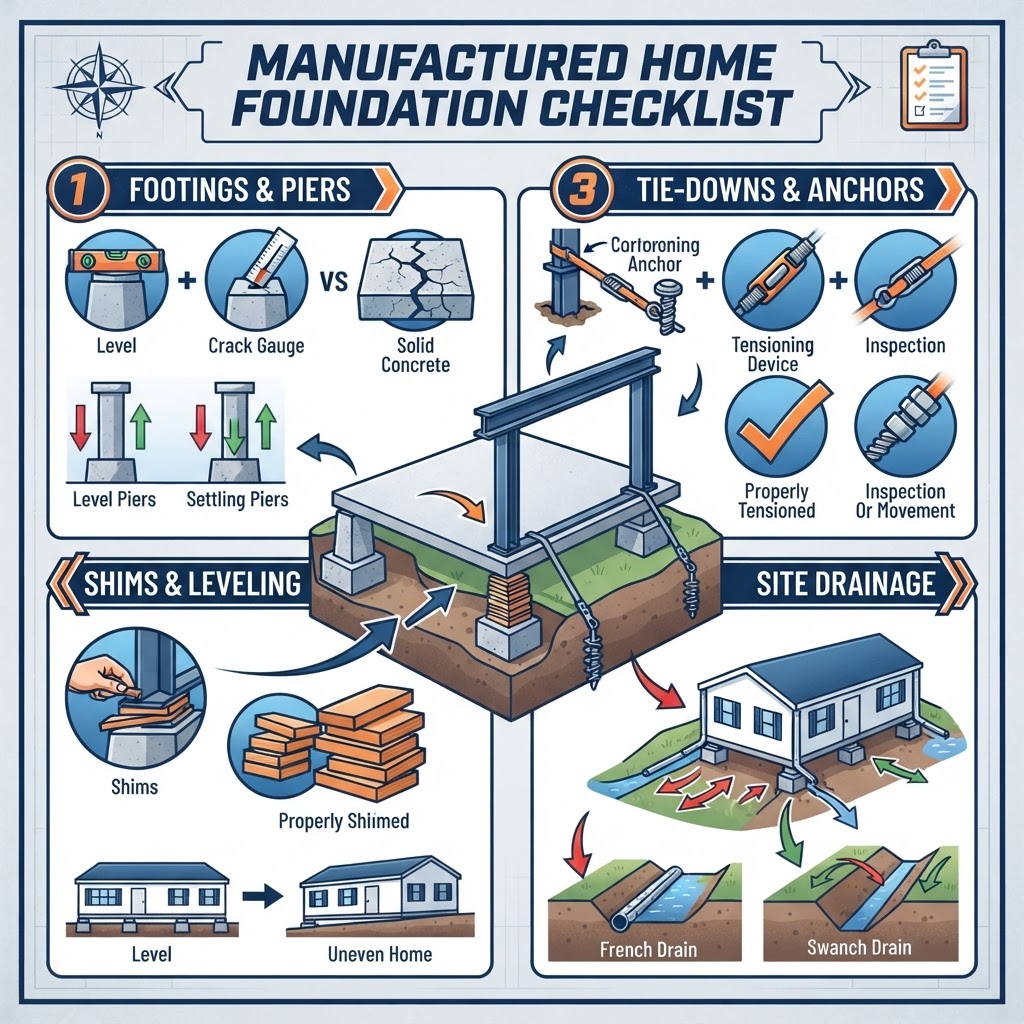
Manufactured Home Foundation Warning Signs to Watch For
Only observe where it is safe to do so. Do not crawl beneath a visibly unstable home.
Inside the Home
- Floors feel newly uneven
- Doors begin sticking
- Windows become difficult to operate
- Floor bounce increases
- Centerline develops a hump or dip
- Wall or ceiling seams change
Around the Home
- Water pools near the home
- Erosion appears around supports
- Ground remains muddy
- Runoff patterns change
- Visible slope or washout develops
Visible Support Conditions
- Leaning block stack (where safely visible)
- Visibly cracked block
- Loose or missing shim
- Support gap at the beam
- Anchor or tie-down deterioration
Observe Safely
Only look where it is safe to do so without entering unsafe areas. Do not crawl beneath a home that appears visibly shifted or unstable. If a support looks unsafe, get professional help rather than inspecting it yourself.
Foundation Conditions That Should Be Professionally Checked
Some conditions go beyond homeowner observation and need a professional evaluation. These categories help you prioritize — they are not formal engineering risk classifications.
Small changes with no obvious structural displacement.
- Slight floor change after a storm
- A door that sticks once then settles
- Minor seasonal symptom that resolves
Recurring or visible support symptoms.
- Sinking pier or footing settlement
- Multiple loose or missing shims
- Marriage-line separation
- Erosion around supports
- Pulled or bent ground anchor
- Broken tie-down strap
- Sudden post-rain settlement
Visibly shifted or unstable support conditions.
- Home shifted off its supports
- Severely leaning pier stack
- Large frame-to-pier gap
- Visible structural instability
When Foundation Checks Can Be Especially Useful
Condition-based inspection is often more meaningful than an arbitrary releveling schedule.
After Heavy Rainfall
Significant rain can expose or worsen drainage, erosion and soil-bearing problems around supports. A check after a major storm can catch changes early.
After Visible Erosion
If you notice soil washing away from piers or footings, the bearing base may have changed. Erosion around supports is a good reason to schedule an evaluation.
After Spring Thaw
Thawing ground and increased moisture can reveal or worsen support problems that were less noticeable during winter. Post-thaw checks are often useful in Southwest Pennsylvania.
After Recurring Seasonal Movement
If the home feels different each season — doors sticking in winter, floors sloping in spring — recurring movement may indicate an underlying support or drainage issue.
After Relocation or Setup
A home that has been moved or reset can settle into its new support configuration. A check after setup helps catch post-relocation level and alignment problems.
After Drainage Changes
If grading, downspout discharge or runoff patterns change on the property, the way water reaches the supports can also change — worth a check.
After a Known Support Repair
If a pier, block, footing or shim has been repaired, a follow-up check helps confirm the correction is holding and the surrounding supports are consistent.
When New Floor Symptoms Appear
Any new uneven floor, bounce, hump or dip is a reason to check the supports beneath — interior symptoms often reflect support movement below.
No Universal Mandatory Schedule
This guide does not prescribe a rigid releveling schedule such as "every X years." Condition-based inspection — checking when symptoms, weather or site changes appear — is often more meaningful than arbitrary releveling.
Related Maintenance & Foundation Resources
Use these guides and services to support your preventive maintenance plan.
Preventive Foundation Maintenance & Adjustment
Foundation & Anchoring Inspection
Mobile Home Leveling
Foundation Stabilization
Drainage & Grading Correction
Related Guides & Resources
Manufactured Home Foundation Maintenance FAQs
Direct answers about preventive maintenance and when to call a professional.
There is no universal mandatory schedule. Condition-based checking — looking after heavy rain, visible erosion, spring thaw, relocation, drainage changes or new floor symptoms — is often more meaningful than an arbitrary calendar interval. Watch for changes rather than releveling on a fixed schedule.
Want Your Manufactured Home Foundation Checked?
Tell us what you have noticed — or let us establish a baseline for your home's supports, drainage and anchoring — so changes are easier to catch early.