Loose, Missing or Damaged Mobile Home Shims Uniontown
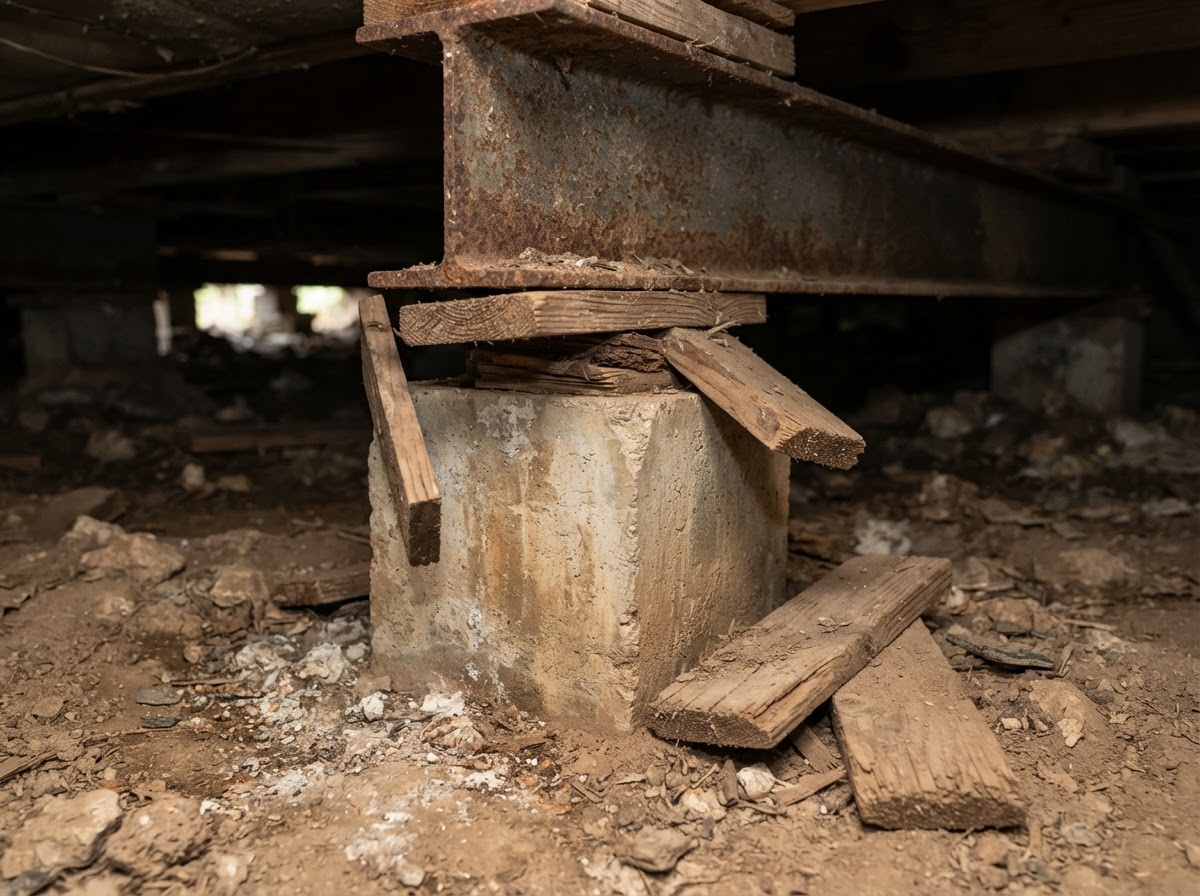
Shims sit at the top of the support assembly, filling the gap between the pier block and the steel chassis so the home bears evenly. A shim that has loosened, fallen out, or been crushed is often a symptom of movement beneath the support rather than the original problem. Uniontown Mobile Home Leveling evaluates the pier, footing, and home elevation beneath a loose shim before correcting it — because pushing a loose shim back into place does not identify why the gap changed.
What Loose or Missing Shims Can Mean
A shim problem is usually a contact problem — and a contact problem usually means something beneath the support has moved.
Visible Gap
A gap opening between the chassis and the pier means the support is no longer in full contact at that point.
Shim Pushed Outward
A shim that has migrated outward suggests the gap it filled has changed shape or size.
Shim Fallen From Position
A shim on the ground beneath a support indicates lost contact that should be evaluated.
Crushed or Damaged Shim
A shim that has compressed or split is no longer filling the gap it was sized for.
Loss of Support Contact
When the shim fails, the chassis can drop at that point, changing the load on neighboring supports.
Floor Bounce or Low Spot
Lost shim contact can produce a bouncy floor or a localized low spot directly above the affected support.
Why would a mobile home shim become loose or fall out?
A shim loosens when the gap it was filling changes. That happens when the pier, the footing, the support base, or the home's elevation moves — settlement drops the support, a shifted block changes the contact, or releveling alters the gap. As the gap changes, the shim that fit it no longer fits, and it can loosen, shift outward, or fall out entirely. The shim is the symptom; the movement beneath it is the cause.
Common Causes of Mobile Home Shim Problems
Shim problems trace back to whatever changed the gap the shim was filling.
Pier Settlement
When a pier drops, the gap above it changes and the shim that filled it loosens or falls.
Footing Movement
A footing that shifts changes the elevation of the entire support, altering the shim gap.
Reblocking Changes
Resetting a support changes the contact and can leave shims loose or displaced.
Chassis / Support Movement
When the frame or support moves, the gap at each shim point changes with it.
Shifting Blocks
A block stack that leans or shifts changes the contact point and can displace the shim above it.
Vibration
Normal movement and vibration over time can work a loose shim out of position.
Deteriorated Material
A shim that has rotted, split, or compressed no longer fills the gap it was sized for.
Marriage-Line Movement
On double-wides, center support changes alter the shim gaps along the marriage line.
Repeated Leveling Changes
Cycles of releveling change contact points and can leave shims loose between adjustments.
How Loose or Damaged Shims Are Evaluated & Corrected
The evaluation checks what moved beneath the shim, so the correction restores contact and addresses the cause.
Shimming & Shim Replacement
Reblocking & Support Resetting
Mobile & Manufactured Home Leveling
Mobile Home Pier Replacement
Mobile Home Footing Repair
Frame & Chassis Support Repair
Replacing a Shim Does Not Find the Cause
Simply inserting a new shim restores contact, but if the pier or footing beneath it is still moving, the new shim will loosen again. The evaluation determines whether shimming alone is enough or whether reblocking, footing repair, or leveling is needed to keep the contact stable.
Why Shim Problems Can Point to a Larger Foundation Issue
A loose shim is often the first visible sign of a chain of movement that starts deeper in the support system.
Support movement
A pier, footing, or base settles or shifts.
Gap / contact changes
The gap the shim filled changes shape or size.
Shim loosens or shifts
The shim no longer fits and moves out of place.
Frame support changes
The chassis loses full contact at that point.
Floor movement or level symptoms
Bounce, a low spot, or uneven floors appear above.
Loose & Missing Mobile Home Shim FAQs
Direct answers about loose, missing, and damaged shims beneath a mobile home.
Shims fill the gap between the top of the pier block and the steel chassis so the home bears evenly across every support. They establish proper contact at each support point.
Seeing Loose, Missing or Damaged Shims?
Describe which support shows the shim problem and whether you are also noticing floor bounce or a low spot. We evaluate the pier, footing, and contact beneath the shim to recommend the correction that addresses the actual cause.