Failed Mobile Home Tie-Down & Anchoring Inspection Uniontown
An anchoring inspection is narrower than a foundation inspection: it looks specifically at the straps, ground anchors, connectors and attachment points that keep the home tied down. When that inspection comes back unfavorable, the findings usually name specific components — a loose strap, a pulled anchor, a corroded connector — and each finding maps to a specific corrective service. Uniontown Mobile Home Leveling reads the written findings, identifies which anchoring components were cited, and scopes the repair to what was actually flagged.
Why a Mobile Home May Fail a Tie-Down or Anchoring Inspection
Anchoring inspections look at a different system than foundation inspections. The findings are about restraint, not vertical support.
Loose Strap
A strap found slack or out of tension is the most common finding and usually points to a strap, connector or anchor correction.
Damaged Strap
A strap with visible corrosion, kinks, crushed sections or a snapped run is flagged for replacement of the affected component.
Corrosion
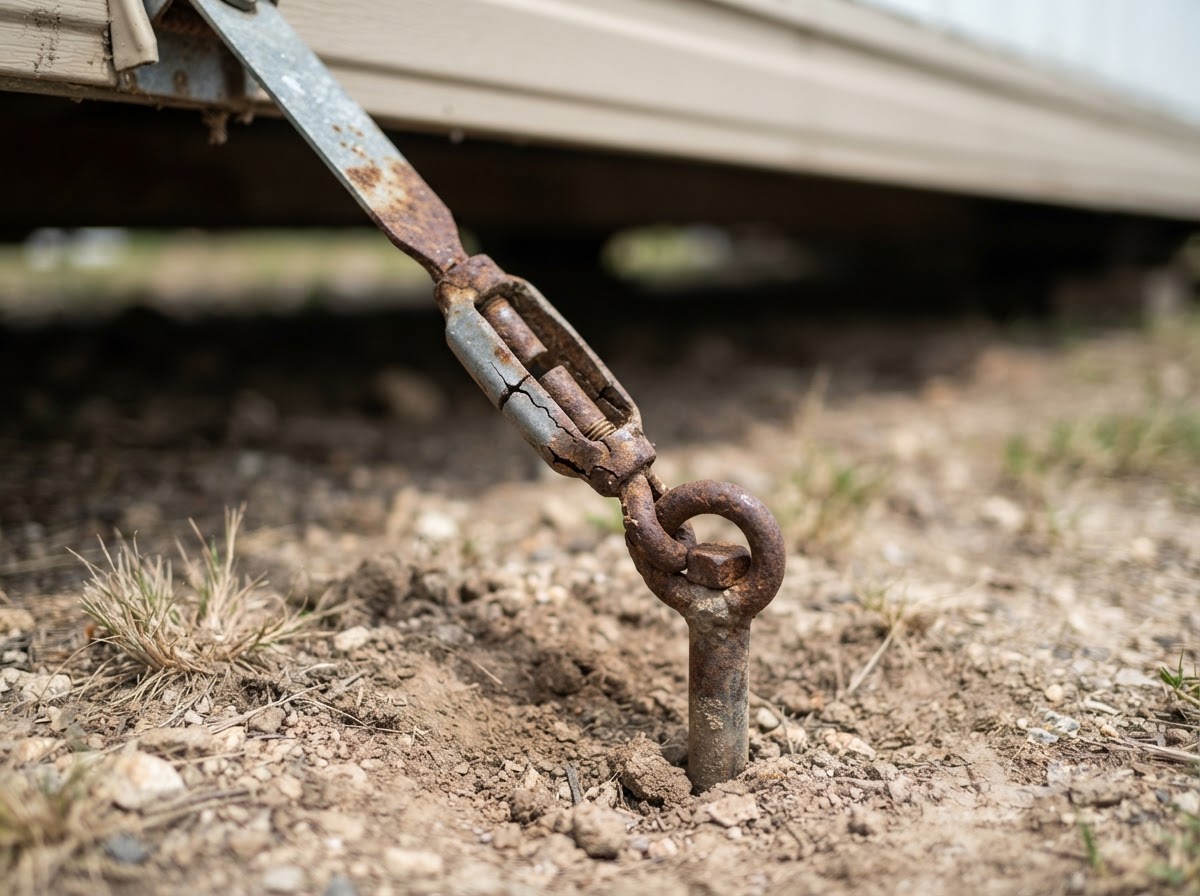
Rust at the strap, buckle, tensioning head or anchor head is flagged because it reduces the capacity of the assembly.
Missing Components
A strap, connector, bolt or anchor that is absent is flagged as a deficiency regardless of why it was removed.
Pulled Anchor
An anchor found leaning, lifted or shifted in the soil is flagged because it no longer engages the ground as installed.
Bent Anchor
A visibly bent shaft or deformed head is flagged because the anchor has been loaded beyond its installed position.
Disconnected Component
A strap separated from its anchor, buckle or frame attachment is flagged because the restraint path is broken.
Deficient Visible Connection
A connection that appears undersized, corroded or improperly assembled is flagged even if it has not yet failed.
Modified Anchoring Arrangement
Anchoring that has been altered, added to or partially removed since installation is flagged for evaluation against the current configuration.
What should I do after a mobile home fails an anchoring inspection?
Read the written findings and identify the specific deficiency — a loose strap, a pulled anchor, a corroded connector, a missing component. Each deficiency maps to a specific corrective service: tie-down repair or replacement, ground anchor installation or replacement, or a broader anchoring-system retrofit. Some findings require one component; others indicate the whole assembly needs correction. Correcting the flagged conditions does not automatically guarantee a passing reinspection — that decision belongs to the party performing or requiring the inspection.
Common Tie-Down & Ground Anchor Inspection Problems
Grouped by the component the finding names — because the repair follows the component.
Loose / Damaged Tie-Down Straps
Ground Anchor Movement
Corrosion / Deterioration
Missing / Damaged Connectors
Attachment-Point Concerns
Broader Anchoring-System Deficiencies
Anchoring inspections apply specific standards. The written findings — not a generic checklist — determine the repair scope on your home.
How Anchoring Inspection Deficiencies Are Corrected Near Uniontown
The repair follows the written findings. Some call for one component; others indicate a broader anchoring-system repair or retrofit.
Foundation & Anchoring Inspection
Tie-Down Installation
Tie-Down Repair & Replacement
Ground Anchor Installation & Replacement
Anchoring System Repair & Retrofit
What Repair Does — and Does Not — Guarantee
Correcting the flagged anchoring conditions fixes those conditions. It does not automatically guarantee HUD certification, FHA approval, engineering certification, lender approval, or code approval — those decisions belong to the party performing or requiring the inspection and may apply standards beyond the specific items flagged. Provide the written inspection findings when requesting repair so the scope matches what was cited, and expect a reinspection by the party that required it.
Tie-Downs, Anchors & Foundation Inspection Findings
A home can have foundation problems without anchoring problems, anchoring problems without major leveling problems, or both at the same time. Knowing which system was flagged keeps the repair on the right track.
Tie-Down Strap
The connected restraint component running from the home's frame to the anchoring assembly. Flagged on an anchoring inspection when loose, corroded, broken or missing.
Ground Anchor
The ground-engaging component that transfers anchoring forces into the soil. Flagged when pulled, bent, shifted or sitting in disturbed soil.
Foundation Support
The pier, block, shim and footing system carrying vertical load. Flagged on a foundation inspection — a separate system from the anchoring assembly.
Related Problems to Watch For
A failed anchoring inspection often shares a cause with these related conditions. If the report or the site shows more than one, check them together.
Failed Tie-Down & Anchoring Inspection FAQs
Direct answers to common questions about what a failed anchoring inspection means and what comes next.
Common reasons include loose, corroded, broken or missing straps; pulled, bent or shifted ground anchors; deteriorated connectors or buckles; damaged or missing attachment points; or an anchoring configuration that does not meet the standard the inspection was checking against. The written findings name the specific components flagged.
Need Tie-Down or Anchor Repairs After an Inspection?
Send us the written inspection findings — or describe what the inspector flagged. We will match each anchoring deficiency to the corrective service it calls for, scope the repair to the actual cited components, and tell you plainly what correction does and does not guarantee.