Double-Wide Marriage Line Separation & Alignment Problems Uniontown
On a double-wide, the two sections are meant to sit flush and level at the marriage line. A visible gap, a height difference, or trim pulling apart at the seam can indicate that the supports beneath one or both sections have moved. Not every seam crack is structural — settlement, pier movement, and shimming changes can all contribute, but so can non-structural factors. Uniontown Mobile Home Leveling evaluates the supports and the elevation of both sections to determine whether the separation is structural.
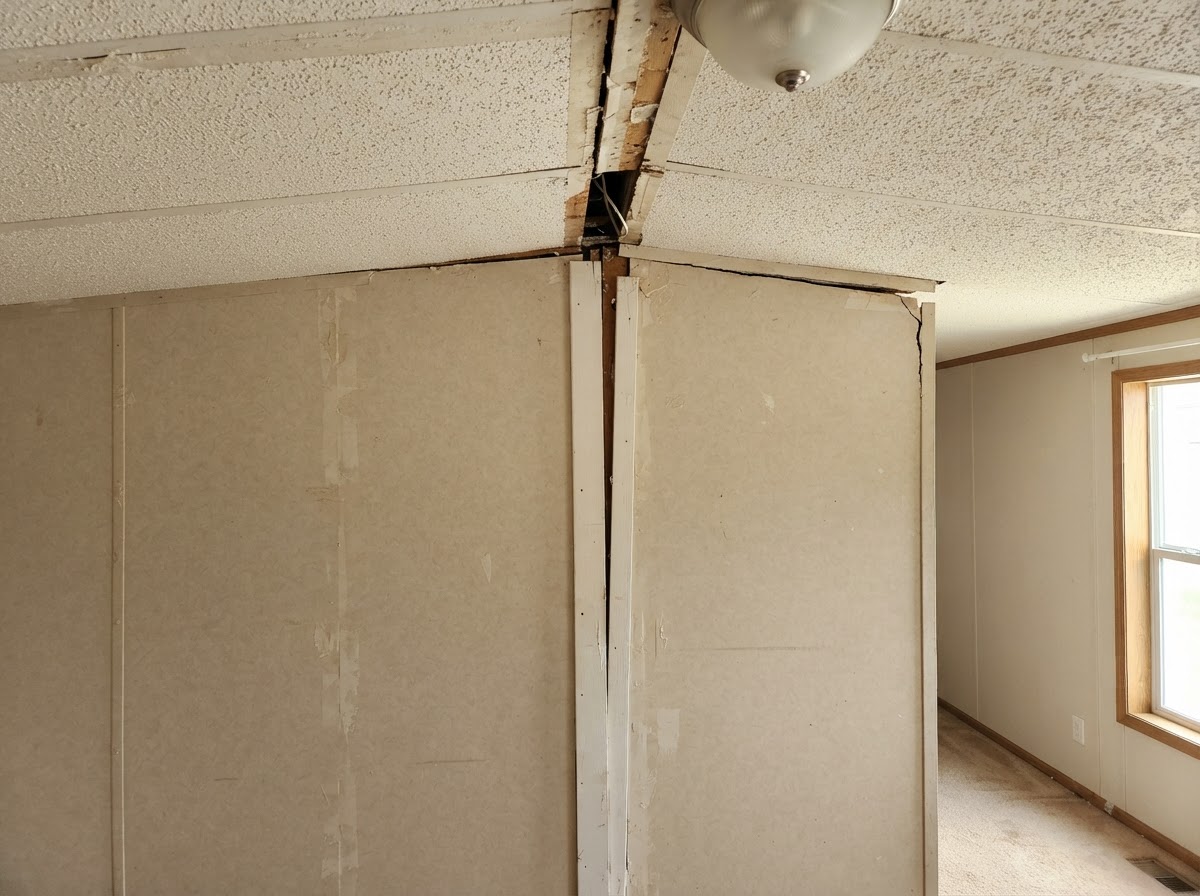
Signs of Double-Wide Marriage Line Separation or Misalignment
Separation shows up at the seam — as a gap, a height difference, or trim and doors that no longer line up across the mating line.
Center Seam Gap
A visible gap opening along the mating line suggests the two sections are no longer flush.
Trim Pulling Apart
Trim that separates at the seam reflects movement at the marriage line.
Floors at Different Heights
A height difference across the seam means the two sections are no longer level with each other.
Wall Alignment Changes
Walls that no longer line up across the mating line indicate the sections have shifted relative to each other.
Ceiling Seam Movement
Separation or cracking at the ceiling seam often accompanies marriage-line movement.
Doors Near Centerline Misaligned
Doors close to the marriage line can bind or sit out of square when the sections misalign.
Visible Gap Between Sections
A gap visible from inside or outside the home at the seam is a direct sign of separation.
One Half Sitting Differently
When one section sits higher or lower than the other, the mating line reflects the difference.
Why would a double-wide separate at the marriage line?
A double-wide separates at the marriage line when the supports beneath one or both sections move differently. Differential settlement, pier movement, footing changes, or shimming differences can let one half shift relative to the other, opening a gap or height difference at the seam. Not every cosmetic seam crack is structural, so the evaluation checks the supports and the elevation of both sections before recommending any correction.
Common Causes of Double-Wide Marriage Line Alignment Problems
Alignment problems come from the two sections moving differently beneath the seam.
One Section Settling More
When one half drops relative to the other, the mating line separates or steps.
Center Supports Settling
Center pier movement changes the mating line and can open a gap at the seam.
Pier Movement
Piers that shift beneath either section change how the two halves relate at the seam.
Footing Settlement
A footing that drops beneath one section changes its elevation relative to the other.
Shim Loss
Lost shims at the center supports change the contact and can let the sections misalign.
Frame / Chassis Support Changes
A bent or poorly supported frame rail changes how the section carries the mating line.
Reblocking Issues
Resetting supports on one section without matching the other can introduce misalignment.
Relocation / Setup Alignment
Sections set together out of alignment can show separation from the start.
Drainage / Erosion
Water or soil movement beneath one section can settle it differently from the other.
How Double-Wide Alignment Problems Are Evaluated Near Uniontown
The evaluation compares both sections and the supports beneath them to determine whether the separation is structural.
Double-Wide Marriage Line Adjustment & Support Repair
Mobile & Manufactured Home Leveling
Frame & Chassis Support Repair
Reblocking & Support Resetting
Shimming & Shim Replacement
Mobile Home Pier Replacement
Mobile Home Footing Repair
Cosmetic Gaps May Not Disappear
If the separation is structural, correcting the supports can restore alignment and reduce the gap. But cosmetic seam gaps from finish or trim issues may not fully close after a foundation correction. The evaluation clarifies what is structural and what is cosmetic so expectations are accurate.
Marriage-Line Movement, Settlement & Related Symptoms
When separation is structural, other symptoms usually appear alongside it.
Differential Settlement
When the two sections settle at different rates, the mating line separates or steps.
One-Sided Settlement
Settlement concentrated beneath one section changes its elevation relative to the other.
Drainage
Water beneath one section can soften soil and contribute to differential settlement.
Seasonal Movement
Freeze-thaw and wet-dry cycles can move the two sections differently over time.
Center Support Changes
Movement at the center supports directly affects the mating line above them.
Double-Wide Marriage Line Separation FAQs
Direct answers about separation and misalignment at a double-wide marriage line.
A gap at the mating line usually means the two sections have moved relative to each other — from differential settlement, pier movement, footing changes, or shimming differences. The cause is beneath the seam, not in the trim.
Seeing Separation or Misalignment at Your Double-Wide Marriage Line?
Describe where the gap or height difference is along the seam and whether you are also seeing floor slope or sticking doors. We evaluate both sections and the supports beneath them to determine whether the separation is structural and recommend the right correction.