
Mobile Home Foundation Problems After Spring Thaw Uniontown
Thawing ground and increased moisture can reveal or worsen support problems that were less noticeable during the winter. A home that felt fine in January can suddenly show a slope, a sticking door, or a loose shim in March — not because something new happened, but because the frozen ground that was holding everything in place has softened. Uniontown Mobile Home Leveling evaluates whether your post-winter symptoms are the result of spring thaw and what correction your foundation actually needs.
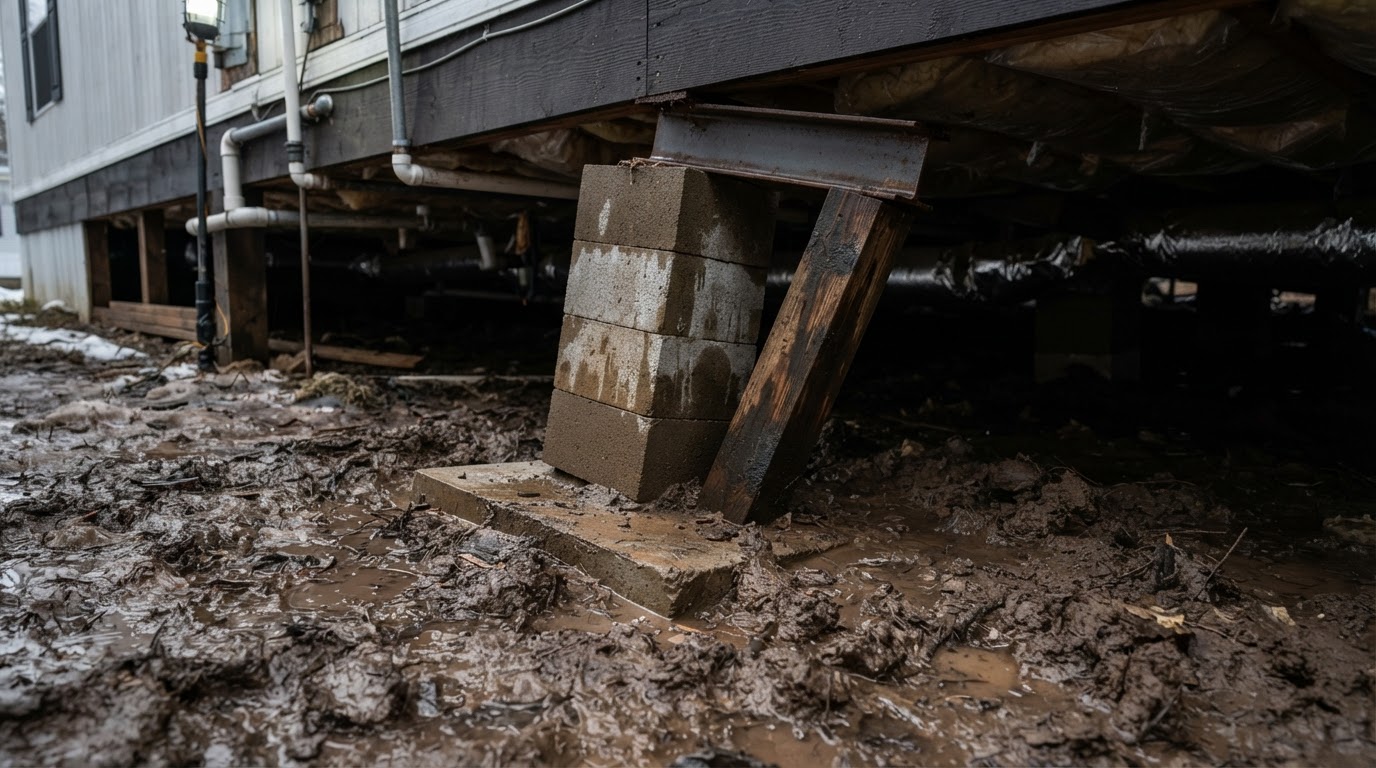
Foundation Symptoms That Can Appear After Winter
Spring thaw does not create new problems from nothing — it reveals problems that were already there by removing the frozen ground that was hiding them.
One Side Sinks
As the ground thaws unevenly, one side of the home can drop as the softened soil beneath it loses bearing while the other side is still frozen.
Floor Slope Changes
A floor that was level — or heaved up — in winter develops a new slope as supports settle into softening ground.
Support Gaps Appear
Gaps open between the chassis and piers as supports drop with the thawing soil, breaking contact that held through the winter.
Shims Become Loose
Shims that were tight against frozen, heaved supports work loose as the supports drop back down with the thawing ground.
Pier Settles
A single pier sinks into softened soil as the frost leaves the ground, taking the floor above it down with it.
Muddy Soil Around Footing
The ground around footings and pads turns wet and soft as snowmelt saturates soil that cannot drain through still-cold layers beneath.
Water Under Home
Snowmelt and spring rain collect beneath the home when the ground is too saturated to absorb or drain it away.
Marriage-Line Changes
In double-wides, the center supports can shift with the thaw, changing the alignment or elevation of the marriage line.
Doors and Windows Begin Sticking
As the home settles unevenly with the thaw, doors and windows that worked all winter can suddenly start to bind.
Why did my mobile home become unlevel after the ground thawed?
As the ground thaws, frozen soil softens and releases the water trapped in it as ice. That softening reduces bearing strength, and the meltwater can saturate soil that cannot drain through still-cold layers beneath. Supports that were held up by frozen ground can settle into the softened soil, and supports that were heaved up by frost can drop — sometimes lower than where they started. The thaw does not create the weakness; it exposes footing, drainage, or pier problems that were already there by removing the frozen ground that was masking them.
What Can Cause Spring-Thaw Foundation Problems?
Spring thaw is a transition. The problems it reveals usually have a cause that was present before winter ever arrived.
Saturated Soil
Meltwater and spring rain soak into soil that cannot drain through still-frozen ground beneath, softening the bearing around supports.
Frost-Heave Reversal
Supports that were pushed up by winter frost drop back as the ground thaws — and may settle lower than where they started if the thawed soil is weak.
Soft Ground
Thawed soil loses the rigidity that frozen ground provided, so supports that held all winter can sink into softened earth.
Snowmelt & Runoff
Melting snow releases water slowly and steadily, saturating the ground around supports over days rather than draining away in a single storm.
Drainage Problems
Water that has nowhere to go collects around the home, keeping the soil soft long after the thaw is complete.
Erosion
Snowmelt flowing across the ground can carry soil away from footings and pads, exposing them just as the bearing beneath them softens.
Footing Settlement
Footings that were marginally supported can settle as the ground beneath them thaws and softens, dropping the supports above them.
Pre-Existing Support Weakness
A pier, footing, or drainage issue that went unnoticed while the ground was frozen becomes visible once the thaw removes that temporary support.
Uneven Thaw
The ground does not thaw uniformly — sunny sides soften first, so one side of the home can settle while the other is still held by frozen ground.
Spring thaw does not automatically damage foundations. It reveals problems that were already present — which is why post-winter symptoms are worth evaluating even if the home felt fine all winter.
How Post-Winter Foundation Problems Are Evaluated Near Uniontown
The evaluation determines whether the thaw is the cause or just the messenger, then separates what drainage must fix from what structural repair must fix.
Mobile Home Leveling
Foundation Stabilization
Pier Replacement
Footing Repair
Reblocking & Support Resetting
Shimming & Shim Replacement
Drainage & Grading Correction
Under-Home Water Drainage Correction
Timing Matters After Spring Settlement
A home that settles in spring may continue to move as the ground finishes thawing and dries. Releveling too early can mean doing it again once the soil stabilizes; waiting too long can let settlement worsen. The evaluation helps determine whether the ground has settled enough to correct, or whether drainage or footing work should come first to stop the movement before any leveling is done.
Spring Thaw, Water & Foundation Settlement
The chain from winter freeze to visible spring settlement follows a predictable path — understanding it helps explain why symptoms appear all at once in March.
- 1
Winter Freeze
Frozen ground holds supports in place — even weak ones — and frost may heave some supports upward.
- 2
Spring Thaw / Snowmelt / Moisture
The ground thaws from the top down, releasing meltwater into soil that cannot drain through still-cold layers beneath.
- 3
Softened or Changing Soil Conditions
Bearing strength drops as the soil softens and saturates, and heaved supports drop back toward — or below — their original elevation.
- 4
Support Movement Becomes Visible
Settlement, gaps, loose shims, and sticking doors appear as the supports finally move with the softened ground.
Related Problems to Watch For
Spring thaw problems often appear alongside these related seasonal issues. If your home shifted after winter, check for these as well.
Spring Thaw Mobile Home Foundation FAQs
Direct answers to the most common questions about foundation problems that appear after spring thaw.
As the ground thaws, frozen soil softens and releases meltwater, reducing bearing strength around supports. Supports that were held up — or heaved up — by frozen ground can settle into the softened soil, and the home goes out of level. The thaw reveals footing, drainage, or pier issues that were already there.
Seeing Foundation Changes After Spring Thaw?
Describe what you are seeing — a slope that appeared in March, doors that started sticking after the thaw, shims that loosened, or muddy ground around your footings. We will evaluate whether spring thaw is the cause and what your foundation needs to stay level through the next cycle.