Signs Your Mobile Home Is Out of Level
Common signs a mobile home may be out of level include sloping or uneven floors, doors or windows that suddenly stick, visible floor humps or dips, changes at a double-wide marriage line, loose or missing shims, support gaps, leaning or shifted piers, and one side of the home feeling lower than the other. One symptom alone does not prove the home needs releveling — but several appearing together, or any symptom that keeps returning, is reason to have the support system beneath the home evaluated.
Common Signs a Mobile Home May Need Leveling
These symptoms describe what a homeowner can notice from inside or around the home. They point toward support movement, but they are not a diagnosis on their own.
Uneven or Sloping Floors
Floors that slope, roll or feel off-level when walking — often the first thing a homeowner notices before any support is visible.
Doors That Suddenly Stick
Interior or exterior doors that begin binding, dragging or failing to latch can indicate the frame has shifted relative to the supports.
Windows Becoming Harder to Operate
Windows that stick, bind or no longer close cleanly can follow the same frame movement that affects doors.
Floor Humps, Dips or Low Spots
A localized high spot, ridge or dip — especially near a single support area or a double-wide marriage line — can reflect a change at one support point.
Double-Wide Marriage-Line Changes
A sag, gap, mismatched elevation or separating trim where the two sections meet often points to centerline support movement.
Floor Bounce or Movement
A floor that bounces, flexes or feels less solid than it once did can indicate a support point has lost contact with the chassis.
Visible Support Gaps
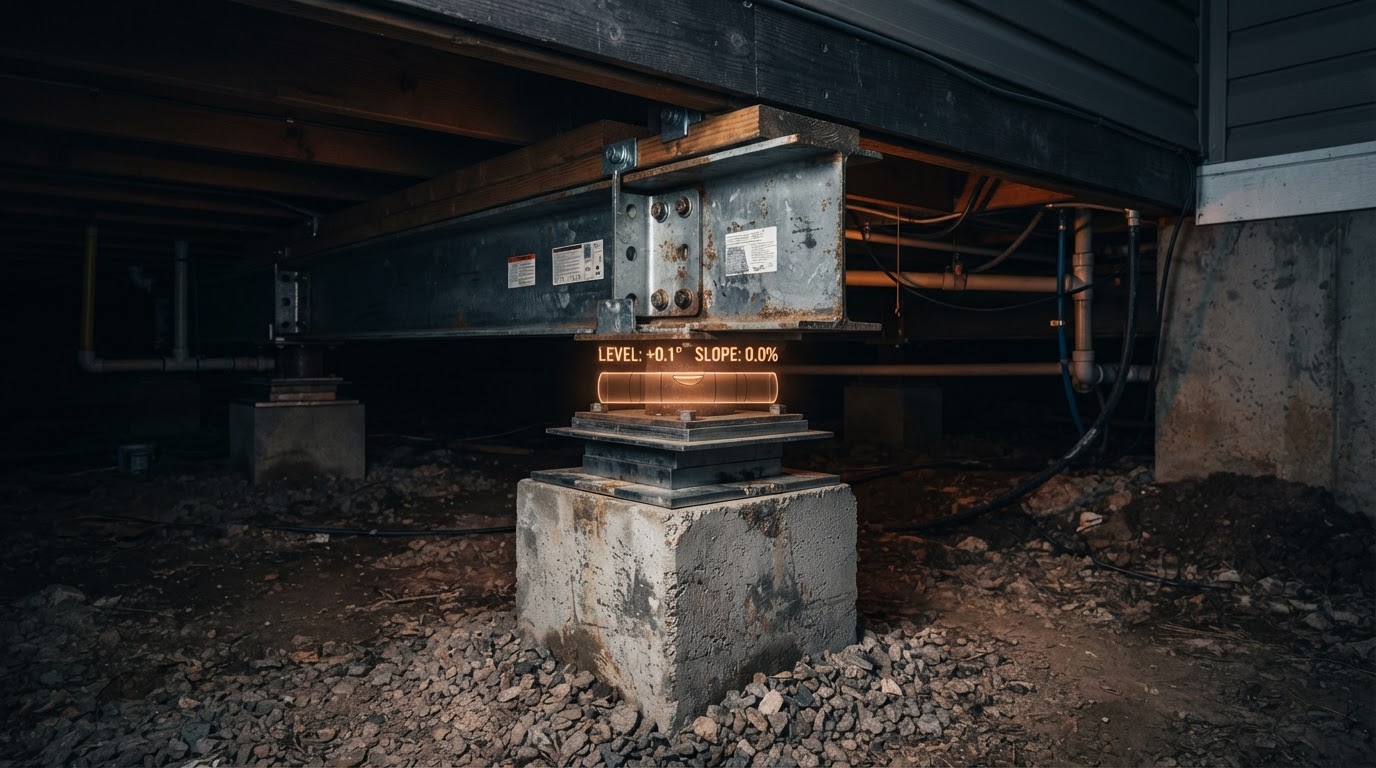
A gap between the frame or I-beam and the pier beneath it means that support point is no longer carrying load the way it was designed to.
Loose or Missing Shims
Shims that have shifted outward, fallen from position or appear crushed suggest the gap they were filling has changed.
Leaning Pier Blocks
A pier or block stack that is visibly leaning, rotated or displaced is no longer providing a straight, stable load path.
One-Sided Settlement
When one end or one side of the home sits lower than the other, the supports beneath that side may have settled or moved.
Does every uneven floor mean a mobile home is out of level?
No. Flooring, subfloor, joist or finish-material problems can create an uneven feel without any foundation movement at all. A localized soft spot in a subfloor, a damaged joist, or a finish floor that has warped can all mimic leveling symptoms. When an uneven floor is the only sign, the cause could be structural or it could be the floor system itself — which is why an evaluation looks at the supports beneath the home, not just the surface above.
What Actually Makes a Mobile Home Go Out of Level?
The symptoms you see inside the home almost always begin beneath it. Understanding the load path explains why one moving support can change a whole room.
Pier Settlement
A pier slowly loses elevation as the soil or footing beneath it compresses, softens or washes away, dropping that support point relative to its neighbors.
Footing Movement
The base beneath a pier shifts or settles. Because the pier sits on the footing, everything above it moves too — including the chassis and the floor.
Shifted Blocks
A block stack that has leaned, rotated or slid sideways no longer transfers load straight down, which changes the contact at the top of the support.
Shim Movement
When a support settles, the shim that once filled the gap can loosen, fall out or crush — leaving the frame with reduced or lost contact at that point.
Reblocking Needs
A support arrangement that has degraded or was never properly set may need full resetting before leveling will hold.
Drainage & Soil Washout
Water directed toward the home can erode soil from around footings and pads, weakening the bearing that keeps a support in place.
Soft or Saturated Soil
Prolonged wet conditions can soften bearing soil so a pad or footing slowly sinks, even without visible erosion.
Freeze-Thaw Movement
Seasonal freezing and thawing can lift and drop support points where moisture and soil conditions allow, creating recurring level changes.
Relocation / Setup Settlement
A home that has been moved or newly set up can settle into its support arrangement as soil compresses and supports adjust.
Differential Section Movement
In a double-wide, one half can settle differently than the other, producing marriage-line sag, separation or mismatched elevation.
Older Support Systems
Mixed block types, deteriorated pads and modified arrangements common in older homes can produce uneven support that worsens over time.
Recurring Symptoms
When the same signs return after each winter, spring or heavy rain, an underlying footing, drainage or soil cause is usually at work — not a one-time level change.
Why Mobile Homes Can Move Over Time in Southwest Pennsylvania
Regional climate and terrain can make some leveling symptoms more likely at certain times of year. Not every home experiences these conditions, but they are common enough to recognize.
Seasonal Moisture Changes
Wet periods soften bearing soil and dry periods can change it again, so support conditions shift gradually through the year rather than staying constant.
Freeze-Thaw Cycles
Where moisture and susceptible soil coincide, freezing and thawing can lift and drop support points, producing symptoms that appear and recede with the seasons.
Spring Thaw
As frozen ground thaws and releases moisture, softened bearing and changing support conditions can make settlement that was hidden over winter become visible.
Heavy Rainfall
Sustained rain saturates soil and can erode material from around footings and pads, especially where water is directed toward the home.
Sloped Lots
On sloped Southwest Pennsylvania properties, runoff tends to affect one side of the home more than the other, producing one-sided settlement.
Older Support Systems
Many older manufactured homes in the region sit on support arrangements that have aged, been modified or were never ideal — making movement more likely over time.
One Symptom Is a Clue, Not a Diagnosis
A single sticking door or one soft spot in a floor can have many causes. What points toward the support system is a pattern — several symptoms appearing together, symptoms that follow the seasons, or any sign that returns after the home has been releveled. An inspection looks at the supports beneath the home to confirm what the symptoms are actually telling you.
Related Leveling & Foundation Resources
Use these guides and services to understand what your home may need and to request the correct evaluation.
Mobile Home Out-of-Level FAQs
Direct answers about the signs of an out-of-level home and what to do next.
Uneven or sloping floors are usually the first thing a homeowner notices — a floor that rolls, slopes or feels off-level when walking. Sticking doors and windows often follow. These are clues, not a diagnosis; an evaluation of the supports beneath the home confirms whether the support system has actually moved.
Think Your Mobile Home May Be Out of Level?
Tell us what you are seeing — sloping floors, sticking doors, a marriage-line change, a visible lean — and we will evaluate the supports beneath your home to confirm what the symptoms actually mean.