
Mobile Home Floor Humps, Dips & Low Spots Uniontown
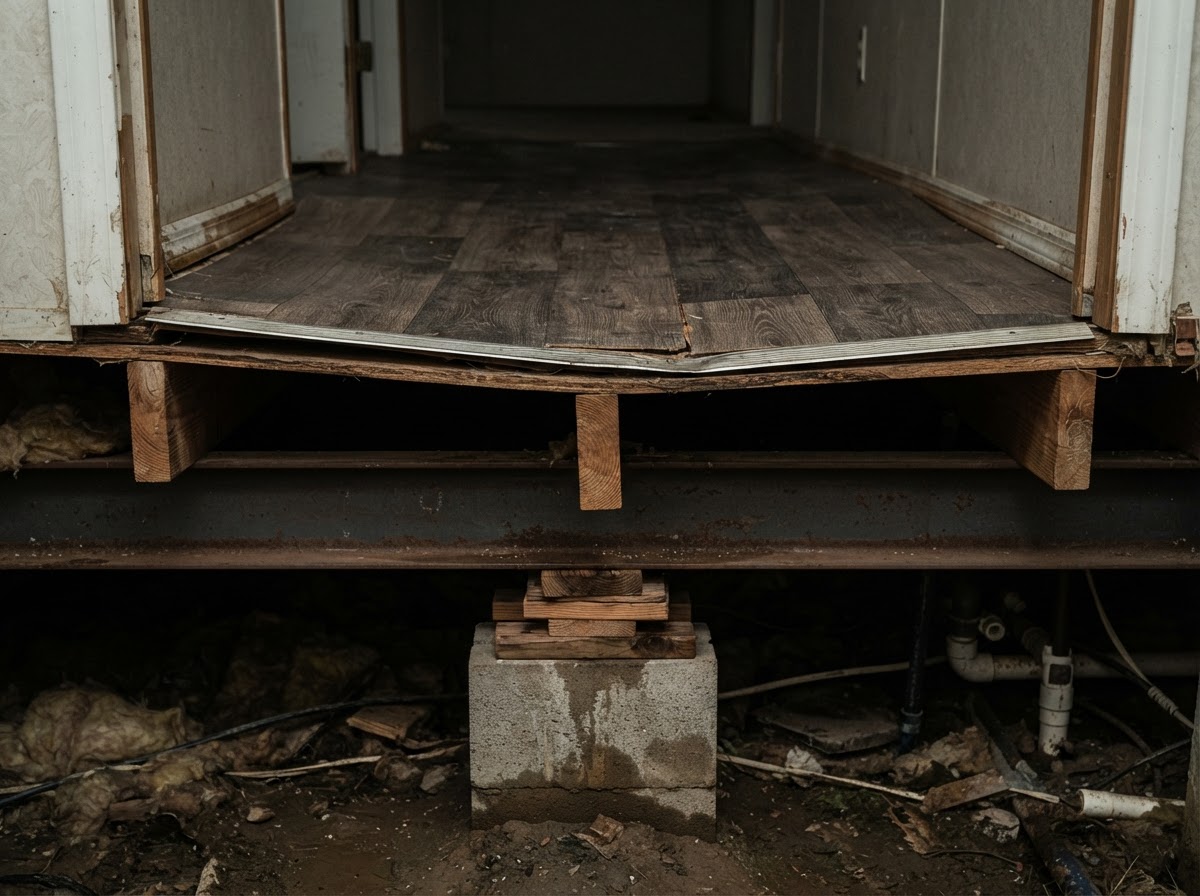
A hump, dip or low spot in one area of a manufactured home floor often points to a change at a single support point beneath the chassis — a pier that has settled, a shim that has shifted or fallen out, a footing that has dropped, or a marriage-line support that has moved on a double-wide. The floor above that support rises or falls to match. Uniontown Mobile Home Leveling evaluates the supports under the affected area before recommending leveling, shimming, reblocking, pier or footing correction, or marriage-line repair.
What Causes Humps, Dips or Low Spots in Mobile Home Floors?
A localized floor change is different from a broad slope. It usually traces to one or two support points rather than the whole home — but the floor system itself can also be the source, so both need to be considered.
Localized Low Point
A dip in one spot often means the support directly beneath it has lost elevation — a pier has settled or a shim has failed.
Ridge Near Marriage Line
A hump or ridge along the center of a double-wide can point to marriage-line support movement relative to the outer chassis.
Dip Over One Support
When the floor drops directly above a single pier location, that support is the first place to evaluate.
Floor Changes Between Rooms
A step or roll where two rooms meet can mean the support under the transition has moved relative to its neighbors.
Recurring Low Spot
A dip that returns after leveling usually means the support beneath it keeps moving — the cause was never corrected.
Floor-System Causes
Subfloor damage, joist issues or finish-material problems can also create humps and dips without any foundation movement.
Why does my mobile home floor have a dip or hump?
A localized dip or hump in a mobile home floor often means the support point directly beneath that area has changed elevation — a pier has settled, a shim has compressed or fallen out, a footing has dropped, or a marriage-line support has moved on a double-wide. The floor above rises or falls to match the support underneath. That said, floor-system and finish-material problems can also create humps and dips without any foundation movement, so the symptom alone is not a diagnosis — the supports under the affected area need to be evaluated.
Foundation Problems That Can Create Localized Floor Changes
Each of these changes the elevation a single support point provides to the chassis. A hump or dip appears directly above the support that moved.
Sinking Pier
One support point settles into the soil or its base, dropping the floor directly above that pier into a dip.
Loose or Missing Shim
A shim that cracks, compresses or falls out opens a gap between the pier and the I-beam, letting the floor drop at that point.
Footing Movement
The base beneath a support drops or shifts, taking the pier and the floor above it down with it.
Shifted Block Stack
A concrete block stack moves out of position, changing the elevation it provides and creating a floor change above.
Frame-Support Gap
Lost contact between the chassis and a pier removes support at that point, letting the floor above move.
Marriage-Line Sag
On double-wides, center support movement creates a ridge or dip along the mating line where the two sections meet.
Differential Section Settlement
When one half of a double-wide settles differently from the other, the floor at the marriage line changes elevation.
Broader Leveling Changes
A home that has shifted out of level overall can produce localized humps and dips as supports carry unevenly.
Drainage & Erosion
Water beneath the home softens soil or washes material from one footing, letting a single support sink while others hold.
These causes are not diagnosed remotely. The pattern helps narrow the possibilities, but the actual condition is confirmed by an under-home evaluation of the affected support points.
How Mobile Home Floor Dips & Humps Are Evaluated Near Uniontown
The evaluation ties the floor change to the support point beneath it. The correct repair depends on which component is actually causing the change.
Mobile & Manufactured Home Leveling
Shimming & Shim Replacement
Reblocking & Support Resetting
Pier Replacement
Frame & Chassis Support Repair
Marriage Line Adjustment
Footing Repair
The Right Repair Depends on the Cause
Leveling alone restores elevation, but it does not fix a sinking footing, a cracked block or a missing shim. When the support beneath a dip keeps moving, the floor will dip again. The evaluation identifies the cause first — then matches it to the correct service.
Settlement & Related Floor Problems Near Uniontown
Fayette County conditions can contribute to localized support changes over time. Not every Uniontown home experiences the same soil or drainage — these are general factors an evaluation accounts for.
Settlement
Gradual support settlement can drop a single pier or footing, creating a localized dip in the floor above it.
Water & Runoff
Water channeling under one side of the home softens soil around specific footings, letting individual supports sink.
Erosion
Moving water can carry supporting soil away from a single footing or pad, removing bearing from one support point.
Freeze-Thaw
Seasonal freezing and thawing can lift and drop individual support points where moisture and soil conditions allow.
Support Movement
A shifted block stack or a shim that walks out changes the elevation at one point, producing a hump or dip above.
Marriage-Line Changes
On double-wides, center support movement creates ridges or dips along the mating line as the two sections shift.
Related Problems to Watch For
A localized floor change often shares a cause with these related symptoms. If you see a dip or hump, check for these as well.
Mobile Home Floor Dip & Hump FAQs
Direct answers to the most common questions about localized floor humps, dips and low spots and the support problems that cause them.
A dip in one spot usually means the support directly beneath it has lost elevation — a pier has settled, a shim has failed, or a footing has dropped. The floor above that support drops to match. A single localized dip points to one or two support points rather than the whole home.
Seeing Humps, Dips or Low Spots in Your Mobile Home Floor?
Describe what you are seeing — a dip in one room, a ridge at the marriage line, or a low spot that came back after a prior adjustment. We will evaluate the supports beneath the affected area and match the cause to the correct service.