Preventive Mobile Home Foundation Maintenance & Adjustment Uniontown
Regular attention to a manufactured home's support system can identify small changes before they become larger repair needs. Preventive foundation maintenance evaluates level, supports, shims, piers, blocks, footings, drainage and anchoring — and makes appropriate minor adjustments where warranted — for homeowners across Uniontown and Fayette County who want to stay ahead of support problems rather than react to them.
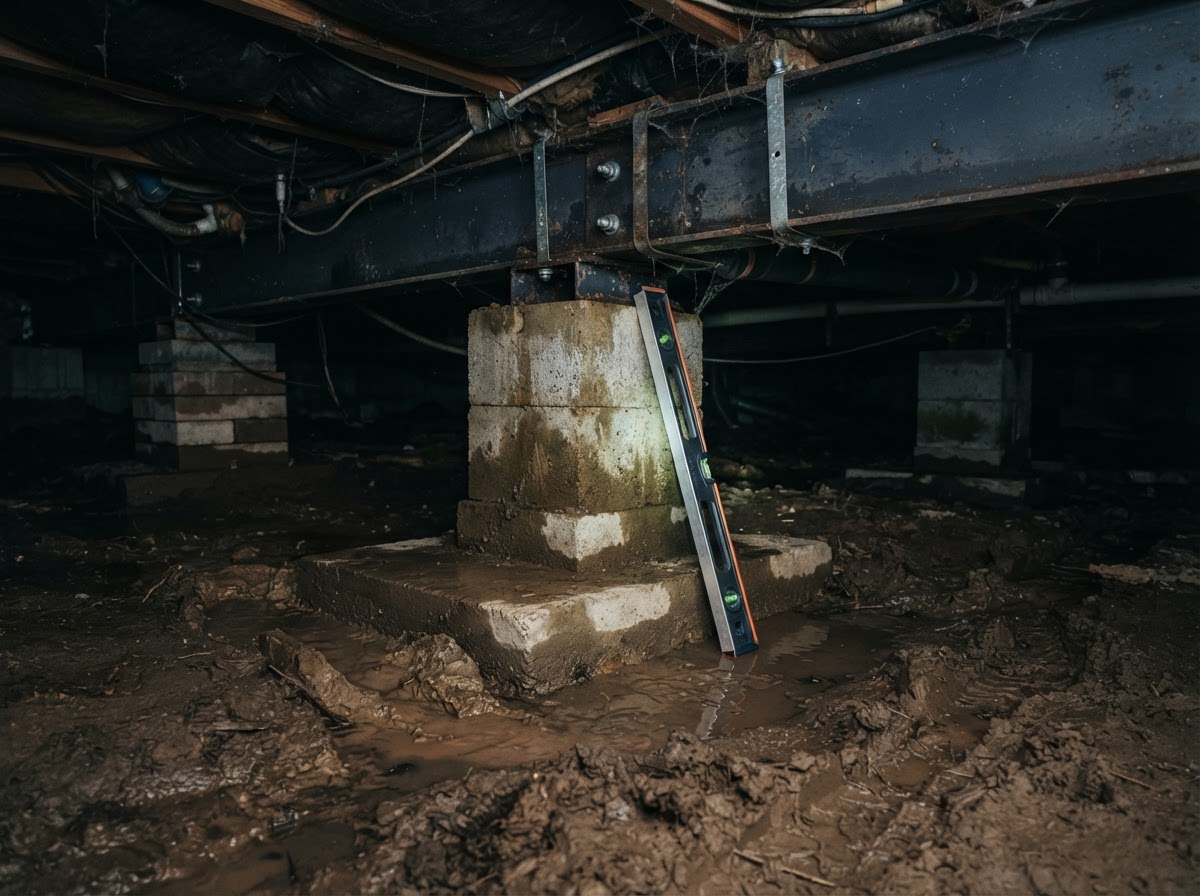
What Preventive Mobile Home Foundation Maintenance Includes
Maintenance is an evaluation-first service. The goal is to observe the current condition of the support system, identify small changes early, and adjust or recommend repair only where the condition warrants it — not to perform unnecessary work on every visit.
How often should a mobile home foundation be checked?
There is no single interval that applies to every home. Inspection frequency depends on the home's age, site conditions, settlement history, drainage, previous repairs and whether visible symptoms have appeared. A home on a sloped lot with active drainage concerns warrants different timing than a level site with no history of movement. The evaluation itself is what determines whether adjustment or repair is needed — not a fixed schedule.
How Preventive Foundation Maintenance Works Near Uniontown
The process reviews what has changed, inspects the structural supports, checks level and drainage, and then makes a clear recommendation — monitor, adjust, repair or evaluate further — so you know exactly where your home stands.
Review Changes Since the Last Evaluation
Ask about new floor slope, sticking doors, bounce, drainage changes, recent heavy rain and any visible support changes since the home was last evaluated.
Inspect Structural Supports
Review piers, blocks, posts, shims, pads, footings and frame contact for early movement, deterioration or loss of contact.
Check Level & Alignment Indicators
Look for early changes in elevation and alignment that may not yet be obvious inside the home but could signal developing support movement.
Check Drainage & Erosion
Identify water-related concerns — new runoff paths, early erosion, low spots — before support loss becomes significant.
Make Appropriate Minor Adjustments or Recommend Repair
Where a small adjustment is warranted, it is made. Where the condition points to a larger issue, the appropriate repair service is recommended. Not every visit requires adjustment.
Create a Clear Maintenance Path
Explain what should be monitored, what should be adjusted, what should be repaired and what should receive further evaluation — so the homeowner has a clear picture rather than a vague recommendation.
Small Foundation Changes That Can Become Larger Problems
Most serious support problems start small. Recognizing these early changes is the purpose of preventive maintenance — catching them before they grow into full repair projects.
Loose or Shifted Shims
A shim that has loosened or shifted may indicate changing support contact — often an early sign that a pier or footing below is beginning to move.
Slight Pier Movement
A pier that has begun to lean or settle slightly may become more significant if the base beneath it continues to move. Early evaluation can identify the cause.
Early Erosion
Small erosion channels around pads or footings can worsen over time. Catching them early allows drainage correction before support loss develops.
Water Accumulation
New or recurring water accumulation beneath or around the home can begin to affect soil conditions and, eventually, the supports sitting in that soil.
Recurring Level Changes
A home that needs frequent releveling may have an underlying support problem — recurring changes are a signal that the cause, not just the level, should be evaluated.
Aging Tie-Down Components
Tie-down straps, connectors and anchors can deteriorate over time. Including them in maintenance helps identify components that may need repair or replacement before they fail.
Marriage-Line Changes
Early centerline symptoms — a slight ridge, dip or trim gap — may signal support movement along the marriage line before it becomes a larger alignment problem.
Block Stack Shift
Blocks that have begun to shift or lean slightly may still be serviceable but can indicate that the support arrangement is under stress and should be monitored.
Drainage Path Changes
A new runoff path or altered grade can redirect water toward supports. Identifying the change early can prevent the erosion and settlement that would follow.
Preventive Maintenance vs. Foundation Repair Near Uniontown
Maintenance is not a substitute for repair. The table below clarifies when each path applies so you know whether your home needs monitoring, adjustment or a specific repair service.
| Situation | Typical Path |
|---|---|
| No major symptoms, wants condition checked | Preventive Maintenance |
| Small shim/contact change | Adjustment / Shimming |
| Home clearly out of level | Leveling |
| Damaged pier/block | Foundation Repair |
| Repeated settlement | Stabilization |
| Water/erosion concern | Drainage Correction |
| Older system has multiple deficiencies | Foundation Retrofit |
General guidance only — an evaluation confirms the right path for your home.
Mobile Home Foundation & Anchoring Inspection
Mobile & Manufactured Home Leveling
Mobile Home Shimming & Shim Replacement
Mobile Home Reblocking & Support Resetting
Mobile & Manufactured Home Foundation Repair
Manufactured Home Foundation Stabilization
Mobile Home Drainage & Grading Correction
Older Mobile Home Foundation Retrofit
Mobile Home Tie-Down Repair & Replacement
Want to Catch Support Problems Before They Grow?
Request an inspection to evaluate your home's support system and get a clear maintenance path — what to monitor, what to adjust and what, if anything, needs repair.
Managing a Park or Community?
For recurring, multi-home maintenance planning, see our Property Management & Park Owner Foundation Services and Community Preventive Foundation Maintenance & Repair Programs pages.
Mobile Home Foundation Maintenance FAQs
Direct answers on preventive maintenance, how often to check a foundation, and when maintenance becomes repair.
There is no universal interval. Frequency depends on the home's age, site conditions, settlement history, drainage, previous repairs and whether symptoms have appeared. A home on a sloped lot with drainage concerns warrants different timing than a level site with no history of movement. The evaluation itself determines whether adjustment or repair is needed.
Request Preventive Foundation Maintenance in Uniontown
Stay ahead of support problems with a preventive foundation inspection. We'll evaluate your home's supports, drainage and anchoring and give you a clear maintenance path — what to monitor, what to adjust and what, if anything, needs repair.