Cracked Walls & Ceilings From Mobile Home Foundation Movement Uniontown
New cracks in mobile home walls or ceilings can have many causes, and not all of them are structural. But when cracks appear alongside uneven floors, sticking doors, marriage-line changes or visible settlement, changes in home level or support alignment may be transferring movement into the interior finishes. Uniontown Mobile Home Leveling evaluates the support system beneath the home to determine whether foundation movement is a contributing cause before recommending any corrective service.
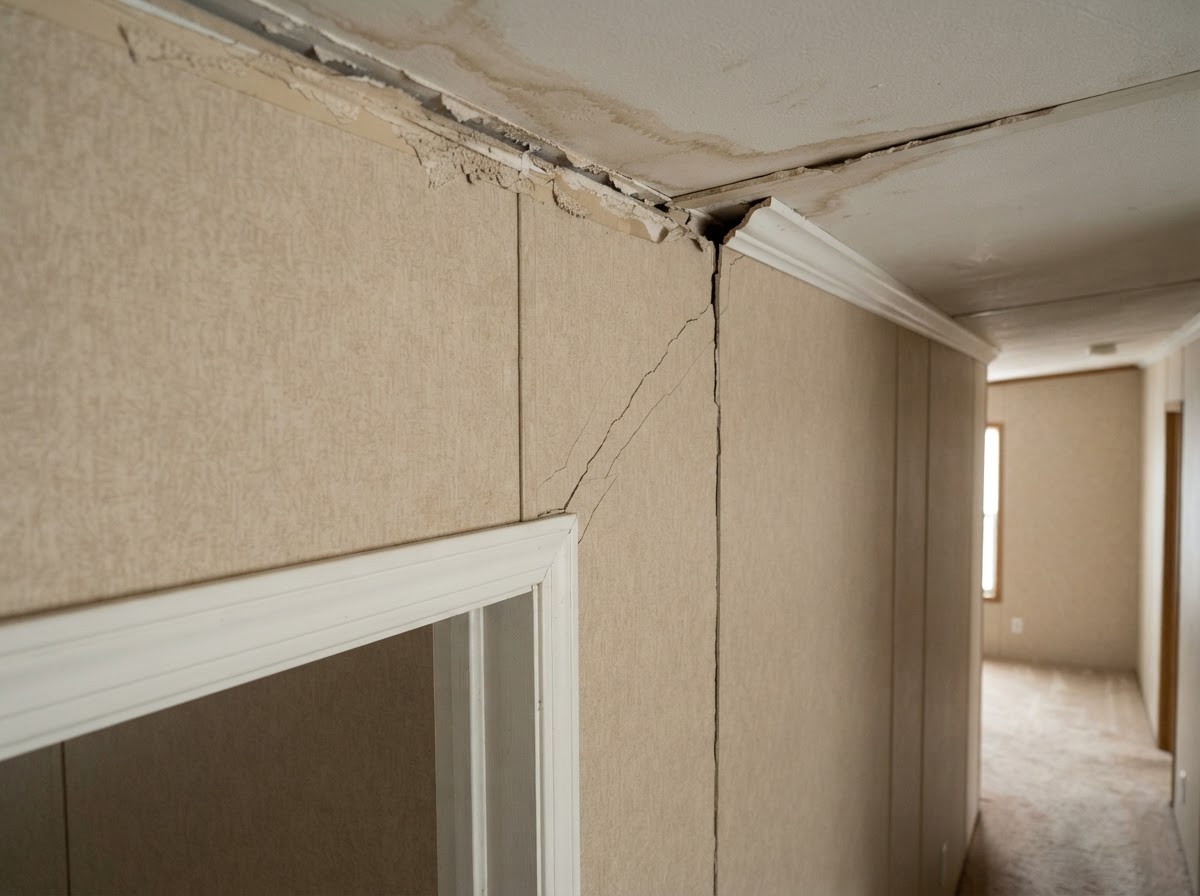
When Wall or Ceiling Cracks May Point to Foundation Movement
A crack by itself is not a diagnosis. The pattern that matters is whether cracks appear alongside other symptoms of support movement — and whether they are new or worsening.
New Cracks With Uneven Floors
Cracks that appear at the same time as a floor slope or dip are stronger evidence that support movement is stressing the finishes.
Cracks Near Marriage Line
Cracks along the center seam of a double-wide can point to marriage-line support movement between the two sections.
Trim Separating
Baseboard or trim pulling away from walls or ceilings can indicate the structure beneath has shifted slightly.
Ceiling Seam Movement
Gaps or cracks opening along ceiling seams, especially near the mating line, can reflect alignment changes above.
Multiple Cracks After Settlement
Several cracks appearing after a noticeable level change suggest the home's frame has moved enough to stress finishes in more than one spot.
Cracks With Sticking Doors
Cracks that arrive with doors or windows beginning to bind are a stronger combined signal of structural alignment change.
Can an unlevel mobile home cause wall or ceiling cracks?
Yes, changes in home level or support alignment can transfer movement into interior finishes and create new cracks, seam changes or gaps. When a pier settles, a footing drops or a marriage-line support moves, the frame shifts slightly and the walls and ceilings above can stress and crack. But cracks can also have non-foundation causes — humidity, material shrinkage, installation or normal aging — so the cracks should be considered alongside other symptoms like floor level and door alignment before concluding the foundation is responsible.
Foundation Conditions That Can Affect Walls & Ceilings
The chain is straightforward: support movement changes frame alignment, and the frame transfers that movement into the interior finishes above it.
Pier Settlement
A support point drops, shifting the chassis and stressing the walls and ceiling directly above that pier.
One-Sided Settlement
When one side of the home settles, the frame tilts and cracks tend to open on the affected side.
Chassis Support Movement
Lost contact or shifted support beneath an I-beam changes the frame's alignment and transfers stress into finishes.
Marriage-Line Movement
On double-wides, center support changes shift the mating line and commonly produce cracks along the center seam.
Footing Settlement
A footing that drops takes the pier, chassis and finishes above it down with it, opening cracks in that area.
Shifted Blocks
A block stack that moves changes the elevation a support provides, stressing the structure and finishes above.
Lost Shim Contact
A shim that fails opens a gap, letting the chassis drop and stress the walls and ceiling at that point.
Broader Leveling Changes
A home that has shifted out of level overall can distribute stress across multiple wall and ceiling areas.
Differential Section Movement
When the two halves of a double-wide move differently, the marriage line and the finishes near it show the strain.
The chain: support movement → frame alignment change → interior finish movement. Not every crack follows this chain — an evaluation confirms whether it does.
How Foundation-Related Interior Cracks Are Evaluated
The evaluation looks past the crack to the support system beneath the home. Cracks are one symptom — floor level, door alignment and support condition tell the rest of the story.
Mobile & Manufactured Home Leveling
Foundation Repair
Foundation Stabilization
Marriage Line Adjustment
Reblocking & Support Resetting
Frame & Chassis Support Repair
Foundation Correction Does Not Automatically Repair Cracks
Correcting the support cause can stop the movement that is stressing the finishes, but existing cracks and gaps do not automatically close or disappear after leveling or stabilization. Cosmetic repair is a separate step. The evaluation determines whether the foundation is a contributing cause first — then addresses that cause.
Other Signs That Can Accompany Foundation Movement
Wall and ceiling cracks rarely arrive alone. When support movement is the cause, these related symptoms often appear alongside it.
Related Problems to Watch For
If you are seeing new cracks, check for these related symptoms — they often share the same support cause and help confirm whether foundation movement is involved.
Mobile Home Wall & Ceiling Crack FAQs
Direct answers to the most common questions about wall and ceiling cracks and when they may point to foundation movement.
Yes. When a pier settles, a footing drops or a marriage-line support moves, the frame shifts slightly and transfers that stress into the walls, which can crack. Cracks that appear alongside uneven floors or sticking doors are stronger evidence of a structural cause.
Seeing New Cracks Along With Foundation or Level Changes?
Describe what you are seeing — new cracks, separating trim, ceiling seam changes — and whether you have also noticed uneven floors or sticking doors. We will evaluate the support system beneath the home to determine whether foundation movement is a contributing cause.