Gaps Between Mobile Home Frame and Support Piers Uniontown
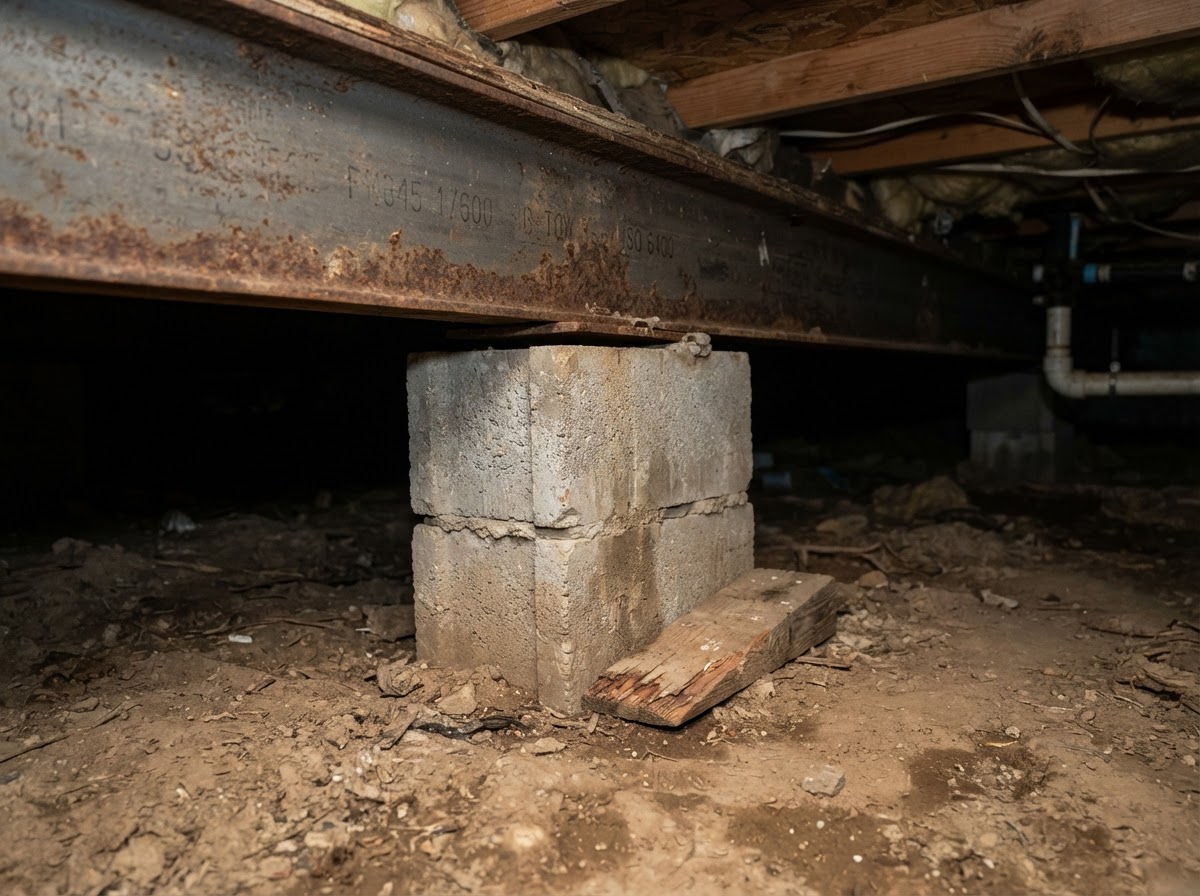
A visible gap between the steel I-beam and the top of a support pier means that support point is no longer carrying the frame above it. The gap can form because a pier has settled, a shim has moved or fallen out, a block stack has shifted, or a footing has dropped. Filling the visible gap without finding out why it formed does not correct the cause. Uniontown Mobile Home Leveling evaluates the support assembly at each gap to determine what moved and which service will restore reliable contact.
What a Gap Between the Frame and Pier Can Mean
A gap is lost support. The question is which layer of the support path dropped, shifted or moved away — and whether the cause is still active.
Support No Longer Contacting Beam
The pier top sits below the I-beam, so that support point is carrying none of the frame's weight.
Missing or Displaced Shim
A shim that fell out or walked away removed the contact layer between the pier and the beam.
Pier Settled
The pier dropped into the soil or its base, opening a gap between its top and the beam above.
Block Stack Shifted
A concrete block stack that moved changed the elevation it provides, leaving a gap at the beam.
Footing Dropped
The base beneath the pier settled, taking the entire support and the beam contact down with it.
Floor Bounce Above Area
A bouncy floor directly above a gap often means that support point is no longer stiffening the frame.
Should there be a gap between a mobile home frame and support pier?
Intended support points should provide appropriate structural contact through the designed support assembly — the beam should bear on the pier through a shim or direct contact, not float above it. A visible, unexpected gap means support elevation has changed, a shim has moved, a pier has settled or the support arrangement is no longer maintaining contact. That gap warrants evaluation to determine why contact was lost — and inserting a shim yourself without understanding the cause is not a safe fix.
What Causes Mobile Home Support Gaps?
A gap forms when something in the support path drops, shifts or moves away. More than one cause can be present at the same support point.
Pier Settlement
The pier drops into the soil or its base, lowering its top away from the beam and opening a gap.
Footing Settlement
The base beneath the pier moves, taking the whole support and the beam contact down with it.
Loose or Missing Shim
A shim that cracks, compresses or falls out removes the contact layer and leaves a gap at the beam.
Shifted Blocks
A block stack that moves out of position changes the elevation it provides, opening a gap above.
Support Pad Movement
A cracked or displaced pad lets a pier settle unevenly, changing the height at the beam.
Reblocking Changes
Supports that were reset without restoring proper contact can leave gaps at the beam.
Chassis Elevation Changes
If the home was lifted or shifted, the beam may no longer align with the original support heights.
Soil Washout
Water carrying soil away from a footing lets the support sink and the gap above it open.
Seasonal Movement
Freeze-thaw and wet-dry cycles can lift and drop supports, opening and closing gaps over time.
These causes are not diagnosed remotely. The gap shows where contact was lost; the evaluation shows why.
How Frame-to-Pier Gaps Are Evaluated & Corrected
The evaluation looks at the exact support point where the gap appears — and the neighboring supports that may now be carrying differently.
Shimming & Shim Replacement
Reblocking & Support Resetting
Pier Replacement
Concrete Block & Pier Block Repair
Footing Repair
Frame & Chassis Support Repair
Mobile & Manufactured Home Leveling
Filling the Gap Is Not the Fix
Pushing a shim into a visible gap may restore contact temporarily, but if the footing beneath is still sinking or the block is still shifting, the gap will reopen. The evaluation identifies why the gap formed — then matches the cause to the correct service, from shimming and reblocking to pier or footing replacement.
Support Settlement & Related Symptoms Near Uniontown
A frame-to-pier gap often appears alongside these related symptoms. Fayette County rainfall, soil movement, erosion and freeze-thaw can all contribute to the support changes that open gaps.
Related Problems to Watch For
If you see a gap at a support point, check for these related symptoms — they often share the same support cause.
Mobile Home Frame-to-Pier Gap FAQs
Direct answers to the most common questions about gaps between the frame and support piers and the support problems that cause them.
A gap above a single pier usually means that support point has lost elevation or contact — the pier has settled, a shim has fallen out, a block stack has shifted, or the footing beneath has dropped. The beam is no longer bearing on that support.
Seeing a Gap Between the Frame and Support Pier?
Describe what you see — a gap above one pier, a shim that has fallen out, or floor bounce above a support point. We will evaluate the support assembly at the gap and match the cause to the correct service.