Poor Drainage Around a Mobile Home Uniontown
Water flowing toward a manufactured home or concentrating near its supports can contribute to erosion, saturated soil and foundation-support problems over time. Poor drainage is not always a foundation issue on its own — but when it directs water toward footings, pads and piers, it can become one. Uniontown Mobile Home Leveling evaluates how water moves around the property, what it is doing to the soil and support areas, and whether drainage correction, structural repair, or both is needed.
Signs of Poor Drainage Around a Manufactured Home
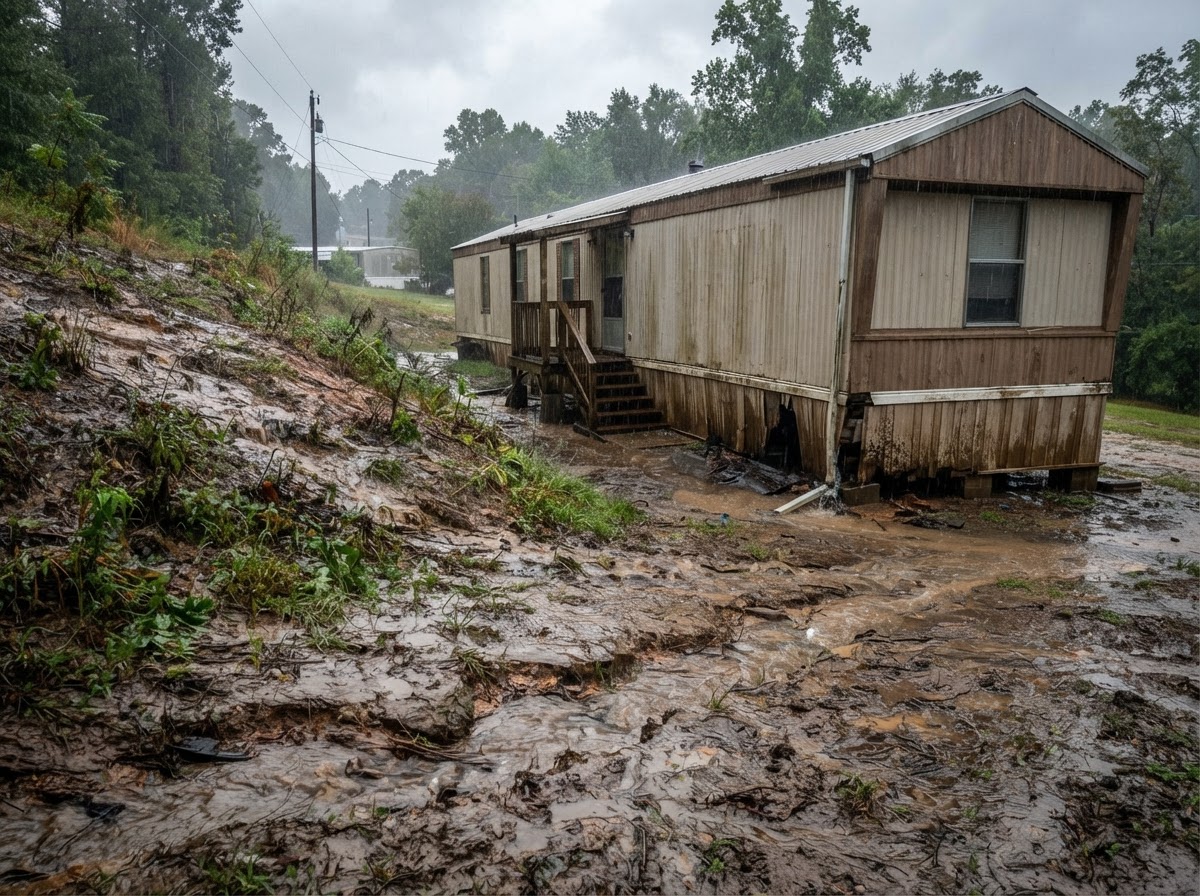
Drainage problems show up as patterns of water movement and ground condition around the home. These signs help identify where water is going and what it is doing.
Water Flows Toward Home
When the ground slopes toward the home, runoff collects against the skirting and perimeter instead of away.
Standing Water Near Skirting
Puddles that linger around the perimeter after rain mean water is not draining away from the home.
Muddy Areas Near Supports
Persistent mud around pier and footing locations means the ground there stays saturated.
Erosion Channels
Visible channels or gullies show where runoff is actively carrying soil away from the home.
Soil Washing Away
Exposed support bases or roots, and accumulating soil downhill, show material is being lost.
Settlement Following Rain
When the home goes out of level after wet periods, water is likely contributing to support movement.
How can I tell if drainage around my mobile home is poor?
Recurring water concentration, standing water near the skirting or perimeter, erosion channels, muddy areas around supports, and runoff flowing toward the home are common indicators that site drainage should be evaluated. If the home also goes out of level after wet periods, water is likely contributing to support movement. Not every wet spot means a foundation problem — but drainage that directs water toward supports can become one over time.
How Poor Drainage Can Affect Mobile Home Foundations
Drainage becomes a foundation problem when it changes the soil and base that supports sit on. Not every drainage issue has caused structural damage — an evaluation confirms whether it has.
Soil Saturation
Ground that stays wet loses bearing strength, letting footings and pads sink under the home's weight.
Erosion
Runoff carrying soil away from the home removes the material that holds footings and pads in place.
Footing Washout
Concentrated flow can wash out material directly beneath or around a footing, undermining its base.
Pier Settlement
As the base beneath a pier weakens from water, the pier sinks and the floor above it drops.
Support-Pad Movement
Saturated or eroded ground beneath a pad lets it shift or settle, changing the support above it.
One-Sided Settlement
When drainage concentrates water on one side, supports on that side settle more than the rest.
Repeated Leveling Problems
A home that needs releveling after every wet period often has drainage driving the settlement.
Perimeter Foundation Exposure
Erosion around a perimeter foundation can expose it to water and reduce its support.
Freeze-Thaw in Wet Areas
Saturated soil that freezes and thaws can heave and drop supports seasonally where conditions allow.
Poor drainage does not always mean structural damage has occurred. The evaluation determines whether water has already affected the supports — or whether correcting it now can prevent future settlement.
How Drainage Problems Are Evaluated & Corrected Near Uniontown
The evaluation looks at how water moves around the property and whether it has already reached and affected the supports beneath the home.
Drainage & Grading Correction
Under-Home Water Drainage Correction
Foundation Stabilization
Footing Repair
Crawlspace Foundation Repair
Perimeter Foundation Repair
Drainage Correction & Structural Repair May Both Be Needed
Correcting drainage stops the cause, but it does not undo settlement that has already occurred. If water has already let supports sink, the home may need leveling, pier or footing correction in addition to drainage work. The evaluation determines which is needed — and in what order.
Rain, Sloped Lots & Seasonal Drainage Conditions
Fayette County rainfall, slope and seasonal conditions can all contribute to drainage problems around a home. Not every Uniontown property has the same conditions — these are general factors an evaluation accounts for.
Heavy Rain
Sustained or repeated rain can overwhelm the ground's ability to absorb and direct water away from the home.
Sloped Terrain
On sloped lots, runoff from uphill flows toward the home and can concentrate against the perimeter and supports.
Runoff
Water that channels along one side of the home can saturate soil and erode material around supports on that side.
Soil Saturation
Ground that stays wet loses bearing strength, letting footings and pads settle over time.
Erosion
Moving water can carry supporting soil away from footings and pads, undermining support bases.
Freeze-Thaw
Saturated soil that freezes and thaws can heave and drop supports seasonally where conditions allow.
Related Problems to Watch For
Poor drainage around a home often appears alongside these related problems. If you see runoff or erosion, check for these as well.
Poor Mobile Home Drainage FAQs
Direct answers to the most common questions about poor drainage around a manufactured home and how it can affect the foundation.
Water runs toward a home when the surrounding ground slopes inward instead of away, when runoff from uphill has no diversion, or when discharge from downspouts releases water near the perimeter. The slope and water sources around the property determine the direction water travels.
Concerned About Drainage Around Your Mobile Home?
Describe what you are seeing — water flowing toward the home, standing water near the skirting, erosion channels, or settlement that worsens after rain. We will evaluate how water moves around the property and what it has done to the supports beneath the home.