Mobile Home Settlement on Hillside & Sloped Lots Uniontown
Sloped properties create different water-flow, erosion, and support conditions from one side of a manufactured home to the other. Water moves downhill, soil shifts with it, and the supports on the lower side can face very different bearing than the ones above. Not every sloped lot is unstable — but when a home on a slope settles, the slope is usually part of the story. Uniontown Mobile Home Leveling evaluates how the grade, runoff, and soil conditions across your lot are affecting the supports beneath the home.
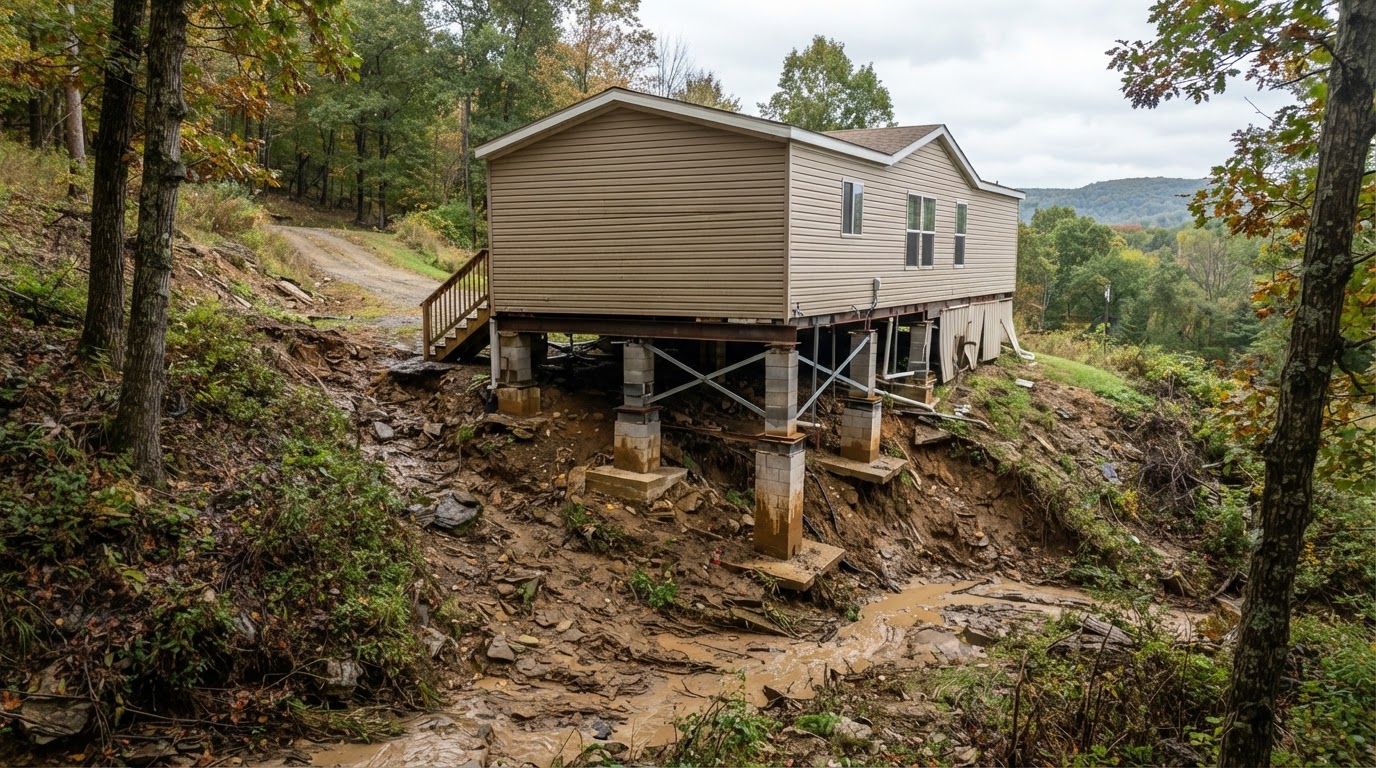
Signs a Sloped Lot May Be Affecting Mobile Home Supports
On a slope, the downhill side usually works hardest. The symptoms often show up there first.
Downhill Side Settling
The lower side of the home drops as runoff, erosion, and softer soil affect the downhill supports more than the uphill ones.
Erosion Below Supports
Water flowing downhill scours soil from around the lower footings and pads, undermining their bearing.
Runoff Channels
Visible paths where water has repeatedly flowed down the slope, often running straight toward or beneath the home.
One-Sided Floor Slope
The floor tilts toward the downhill side as those supports settle while the uphill side stays relatively stable.
Repeated Support Adjustment
The downhill supports need releveling again and again because the conditions beneath them keep changing with each rain.
Exposed Footing
Soil that has eroded away from the downhill side of a footing leaves it exposed and with less bearing than it was designed for.
Pier Leaning
Downhill piers can tilt as soil is removed from their lower side or as the slope itself shifts under the weight of the home.
Water Moving Along Slope
Surface water that sheets down the hill flows across or under the home rather than around it, saturating the soil at the supports.
Uphill Water Pooling
Water collecting on the uphill side of the home can saturate the soil there and seep beneath the home toward the lower side.
Can a mobile home settle differently on a sloped lot?
Yes. On a slope, support conditions can vary significantly from one side of the home to the other. Runoff flows downhill and concentrates at the lower supports, erosion removes soil from around the lower footings, and the soil moisture and bearing can differ between the uphill and downhill sides. The result is differential settlement — one side of the home drops while the other holds — which is exactly the pattern a slope tends to produce. Not every sloped lot settles, but when a home on a slope does, the grade is usually a contributing factor that the evaluation accounts for.
Common Causes of Mobile Home Settlement on Sloped Properties
Slope alone does not cause failure. It creates the conditions — water, erosion, and uneven bearing — that can lead to settlement.
Runoff
Water flowing downhill gains speed and volume as it moves, increasing its ability to erode soil and saturate the ground at the lower supports.
Erosion
Moving water carries soil away from downhill footings and pads, removing the bearing the lower supports depend on.
Soil Washout
Concentrated flow on a slope can cut channels that wash material out from beneath or beside the lower supports.
Drainage Concentration
Natural or built features on the slope can funnel water toward the home, sending a concentrated stream at the downhill supports.
Different Support Elevations
On a slope, piers on the downhill side are taller and bear on different soil than the uphill piers, so they can behave differently under load.
Saturated Downhill Areas
Water collects at the low point of the slope, keeping the soil around the lower supports wet and soft.
Footing Settlement
Downhill footings can settle as the soil beneath them softens or erodes, dropping the supports above them.
Freeze-Thaw
On a slope, frost and thaw can affect the sunny and shady sides differently, so one side heaves or settles while the other does not.
Older Support Configuration
Supports placed for an earlier setup may not account for the slope's current drainage and bearing conditions, leaving the lower supports under-designed.
A slope is a risk factor, not a guarantee. Many hillside manufactured homes stay level for decades. The evaluation determines whether the slope is actually contributing to your settlement or whether another cause is responsible.
How Hillside Mobile Home Settlement Is Evaluated Near Uniontown
The evaluation reads the slope — where water comes from, where it goes, and how the supports differ from one side to the other.
Foundation Stabilization
Drainage & Grading Correction
Footing Repair
Pier Replacement
Reblocking & Support Resetting
Mobile Home Leveling
Under-Home Water Drainage Correction
Structural Support & Water Management Together
On a slope, settlement and drainage are usually linked. Correcting the supports without managing the runoff that caused them to settle often leads to the same problem returning after the next storm. The evaluation determines what water management must address — where the runoff comes from and where it should go — and what structural work the supports need, so both are handled rather than just the visible symptom.
Runoff, Erosion & One-Sided Settlement on Sloped Lots
Fayette County's rolling terrain means many manufactured homes sit on some degree of slope. These are general factors an evaluation accounts for, not conditions that apply to every hillside property.
Water Moving Downhill
Gravity sends runoff to the low point of the lot, so the downhill side of the home sees the most water and the most erosion.
Erosion
Flowing water on a slope carries soil away from lower footings and pads, reducing their bearing over time.
Downhill Support Conditions
The lower piers are often taller and bear on soil that is wetter and more eroded than the uphill supports, so they settle more.
One-Sided Settlement
Because the downhill side faces more water and weaker bearing, the home often tilts toward the downhill side as those supports drop.
Repeated Rain
Each storm sends more water down the slope, so hillside settlement can progress with every wet period rather than all at once.
Seasonal Freeze-Thaw
On a slope, the sunny and shady sides can freeze and thaw at different rates, so one side heaves or settles while the other does not.
Related Problems to Watch For
Hillside settlement often appears alongside these related problems. If your home is on a slope and settling, check for these as well.
Hillside Mobile Home Foundation FAQs
Direct answers to the most common questions about mobile home settlement on hillside and sloped lots.
Yes. The downhill side usually faces more runoff, more erosion, and softer soil than the uphill side, so the lower supports tend to settle more. The result is often a one-sided slope toward the downhill side of the home.
Seeing Settlement on a Hillside or Sloped Lot?
Describe what you are seeing — a downhill tilt, erosion around the lower supports, runoff channels toward the home, or releveling that does not hold. We will evaluate how the slope, runoff, and soil conditions are affecting your supports and what it takes to keep the home level.