Mobile Home Leaning or Tilting Uniontown
A visible lean in a manufactured home often means the support elevation beneath part of the structure has changed. When piers settle, footings drop, block stacks shift, or soil erodes under one side, that side of the chassis drops and the home tilts toward it. Uniontown Mobile Home Leveling evaluates the supports beneath the home to determine whether the lean is a leveling issue, pier or footing movement, a reblocking need, or a broader stabilization problem — then matches the cause to the correct service.
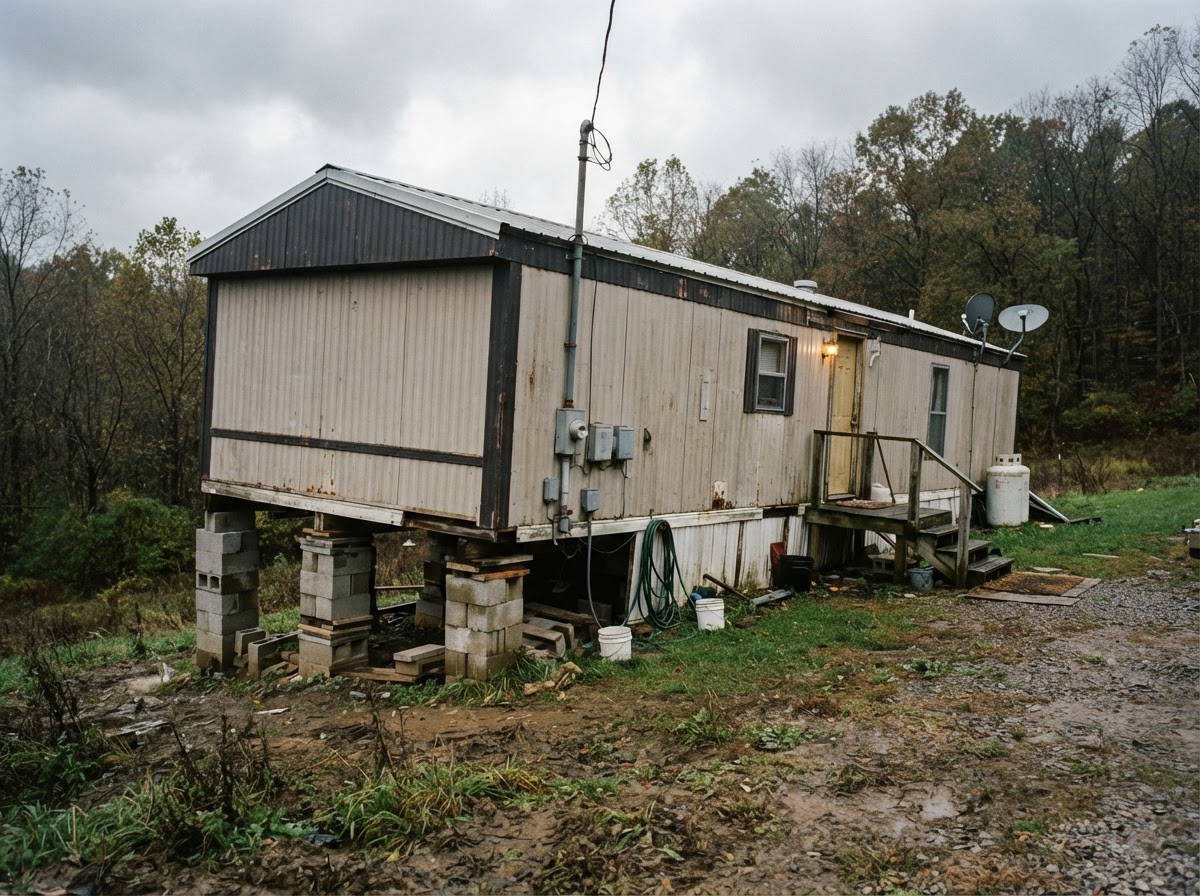
What It Means When a Mobile Home Starts Leaning
A lean is a whole-home symptom. It usually reflects a consistent change in support elevation along one side or one end of the home rather than a single local problem.
Visible Exterior Tilt
The roofline or skirting reads uneven from outside — one end or side sitting lower than the rest.
Floors Slope Consistently
Inside, the floor rolls in one direction rather than dipping in a single spot, suggesting a broad support change.
One End Feels Lower
Walking from one end of the home to the other, the change in elevation is steady and directional.
Doors Swing Open or Closed
Doors that move on their own indicate the frame has racked out of square as the home tilted.
Support Line Appears Uneven
Under the home, a row of piers or blocks along one side sits lower than the opposite row.
Recurring Lean After Adjustment
A home that tilts again after being releveled usually has a footing, soil or drainage cause still unaddressed.
Is a leaning mobile home a foundation problem?
Foundation or support movement is one possible cause of a lean, but it is not the only one. A visible tilt can come from leveling loss, pier settlement, footing movement, shifted block stacks, soil erosion under one side, or a combination. An inspection is needed to determine whether the issue is a simple releveling, a component repair, or a deeper stabilization need — and simply releveling may not be enough if the support beneath the home keeps moving.
Common Causes of a Leaning or Tilting Mobile Home
A lean usually means one side or end of the support system has lost elevation. These are the conditions most often behind that loss.
Uneven Settlement
One side or end of the support system has settled more than the rest, tilting the chassis above it.
Sinking Piers
A row of piers along one side loses elevation, dropping that side of the home.
Shifted Blocks
Block stacks that lean or move out of position reduce the elevation they provide to the chassis.
Footing Movement
Footings that shift or sink below the support line take the piers and the home above them with them.
Soil Washout
Water removes supporting soil from beneath or around footings and pads on one side of the home.
Drainage Problems
Water that repeatedly concentrates on one side softens soil and accelerates settlement there.
Support Loss
A failed, missing or deteriorated support point lets the chassis drop at that location.
Older Foundation Configurations
Mixed or aging support systems can settle unevenly as individual components deteriorate at different rates.
Relocation or Setup Problems
A home that was moved or recently set up may not have settled into a stable, even support condition.
How a Leaning Mobile Home Is Evaluated & Corrected
The evaluation measures the whole home, then works down to the individual supports. Releveling alone is not enough when the support beneath the home keeps moving.
Mobile & Manufactured Home Leveling
Foundation Repair
Foundation Stabilization
Pier Replacement
Footing Repair
Reblocking & Support Resetting
Emergency Releveling & Support Repair
When Releveling Is Not Enough
Releveling restores elevation and alignment, but if a footing is still sinking, a block is still shifting, or soil is still eroding, the home will lean again. When movement keeps returning, the cause points toward stabilization or footing and drainage correction rather than a releveling alone.
Why Site Conditions Can Affect Mobile Home Level
Conditions around a home in Fayette County can contribute to the support changes that produce a lean. These are general factors an evaluation accounts for.
Water Concentration
Runoff or downspout discharge that channels toward one side of the home softens soil and accelerates settlement there.
Erosion
Moving water can carry supporting soil away from footings and pads, letting one side of the support system drop.
Sloped Lots
On a slope, bearing and runoff conditions differ from one side of the home to the other, which can produce uneven settlement.
Seasonal Ground Movement
Wet and dry cycles change soil volume and bearing through the year, gradually shifting support elevations.
Freeze-Thaw
Where moisture sits under the home, freezing and thawing can lift and drop support points over repeated seasons.
Repeated Settlement
A home that has been releveled more than once in the same direction usually has an ongoing soil, footing or drainage cause.
Related Problems to Watch For
A lean often appears alongside other symptoms that share the same support cause.
- Mobile Home Sinking on One Side
- Sinking Piers Under a Mobile Home
- Uneven Floors in a Mobile Home
- Sticking Doors & Windows
Mobile Home Leaning & Tilting FAQs
Direct answers about what a leaning manufactured home can mean and how it is evaluated.
A lean usually means the support elevation beneath one side or end has changed — piers have settled, footings have dropped, blocks have shifted, or soil has eroded. That side of the chassis drops and the home tilts toward it.
Concerned Your Mobile Home Is Leaning?
Describe what you are seeing — a visible exterior tilt, floors that roll in one direction, or doors that swing on their own. We will evaluate the supports beneath the home and determine whether the cause is leveling, pier or footing movement, or a deeper stabilization need.