Frost Heave Under a Mobile Home Uniontown
Freezing moisture in soil can create upward movement in some conditions, pushing a support base higher than its neighbors and changing the level of the home above it. Frost heave is the opposite of settlement — the ground moves up, not down — but it can be just as disruptive to floors, doors, and support contact. Uniontown Mobile Home Leveling evaluates whether seasonal upward movement is actually frost heave and what the appropriate correction is for your foundation and site.
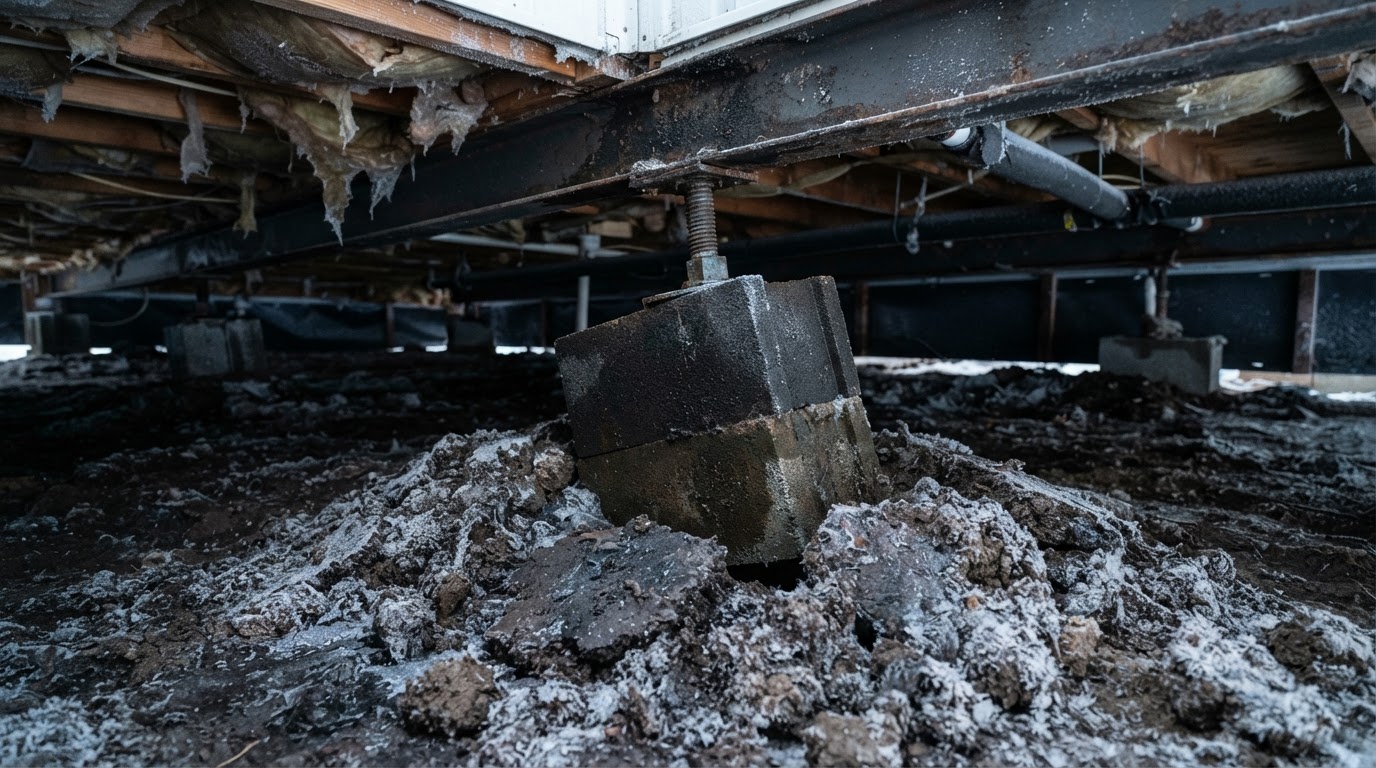
What Frost Heave Can Do to Mobile Home Supports
Frost heave pushes supports up. The symptoms look like a high spot or a hump — the opposite of the settlement most homeowners expect.
Pier Appears Higher
A support that has been pushed upward by freezing ground sits higher than the piers around it, creating a high point in the floor above.
Floor Develops a Hump
An upward bulge or ridge in the floor can appear where a heaved support lifts the chassis above the surrounding supports.
Door Alignment Changes
As one part of the home rises, doors near the heaved area can bind, stick, or swing open or closed on their own.
Support Contact Shifts
Heave can change how the chassis bears on the pier, altering shim contact and the load path through that support.
Shims Loosen
As a support rises, the gap it was shimming changes, and a shim that fit tightly in summer can work loose over the winter.
One Area Rises Relative to Another
Frost heave often affects one support or one side more than the rest, so the home goes out of level in a specific pattern rather than uniformly.
What is frost heave under a mobile home?
Frost heave is upward ground movement caused by freezing moisture in susceptible soil. When water in the soil freezes, it expands and can lift the ground — and anything resting on it — upward. Beneath a manufactured home, that can push a pier, pad, or footing higher than its neighbors, changing the elevation of the support and the level of the home above it. Not every property is vulnerable; it depends on soil type, moisture, and how deeply frost penetrates. An evaluation confirms whether heave is the actual cause.
Why Frost Heave Happens
Frost heave requires three things: freezing temperatures, moisture in the soil, and a soil type that holds that moisture where freezing can act on it.
Freezing Temperatures
Sustained cold drives frost into the ground deep enough to reach support bases, freezing the moisture within the soil.
Moisture in the Soil
Water must be present in the soil to freeze and expand. Dry soil does not heave, regardless of temperature.
Susceptible Soil Conditions
Certain soils — typically fine-grained, moisture-retentive types — hold water in a way that allows freezing to lift the ground.
Frost Penetration
How deep frost reaches depends on temperature, duration of cold, and how well the ground is insulated by cover or snow.
Support / Base Interaction
When frost lifts the soil beneath a pad or footing, it lifts the support with it — and the floor above that support rises too.
Poor Drainage Feeding Moisture
Water that cannot drain away from supports keeps the soil wet, giving frost more moisture to work with when it freezes.
Not every Uniontown property is vulnerable to frost heave. It depends on the soil, the moisture, and the depth of frost at that specific site — an evaluation determines whether heave is the actual cause of the movement you are seeing.
How Frost-Related Support Movement Is Evaluated Near Uniontown
The evaluation confirms whether the movement is actually frost heave, then determines what the foundation and site conditions require.
Foundation Stabilization
Footing Repair
Footing Installation & Replacement
Mobile Home Leveling
Reblocking & Support Resetting
Shimming & Shim Replacement
Drainage & Grading Correction
The Repair Depends on the Actual Foundation & Site
There is no single frost-heave repair. The permanent correction depends on the foundation type, the soil, the drainage, and how the supports are arranged — which is why the evaluation comes first. Leveling alone may relieve the symptom temporarily, but if the heave returns each winter, footing or drainage correction may be needed for a lasting result.
Frost Heave vs. Normal Settlement
These four kinds of movement look similar from inside the home but move in opposite directions and need different corrections.
Frost Heave
Upward movement associated with freezing. The ground — and the support on it — rises, creating a high spot or hump. Seasonal, tied to cold weather.
Settlement
Downward support movement. The support sinks as bearing is lost, creating a low spot or slope. Can happen any season, often tied to water or soil.
Freeze-Thaw Movement
A recurring seasonal pattern across multiple freeze and thaw cycles — the support moves up in winter and may drop or shift as the ground thaws, year after year.
Spring Thaw
Conditions change again as frozen ground thaws. Supports that heaved up in winter may settle as the softened ground loses bearing, sometimes lower than where they started.
Related Problems to Watch For
Frost heave often appears alongside these related seasonal problems. If your home moves in winter, check for these as well.
Frost Heave Under Mobile Homes FAQs
Direct answers to the most common questions about frost heave and how freezing ground can affect mobile home supports.
Yes. When freezing ground lifts one support higher than its neighbors, the floor above it rises and the home goes out of level. The pattern is often a high spot or hump rather than the slope or dip that settlement causes.
Seeing Seasonal Foundation Movement?
Describe what you are seeing — a floor hump in winter, doors that stick when it freezes, shims that loosen in cold weather, or movement that returns every year. We will evaluate whether frost heave is the cause and what your foundation and site conditions require.