Cracked or Broken Mobile Home Pier Blocks Uniontown
Concrete and masonry pier blocks carry a significant share of a manufactured home's weight. When a block cracks, splits, or crushes, the support assembly may lose reliable bearing — and that damage can occur alongside settlement, poor contact, or a shifting base. Uniontown Mobile Home Leveling evaluates the damaged component, the full stack beneath it, and the base below to determine whether the block alone is the problem or a deeper movement caused the break.
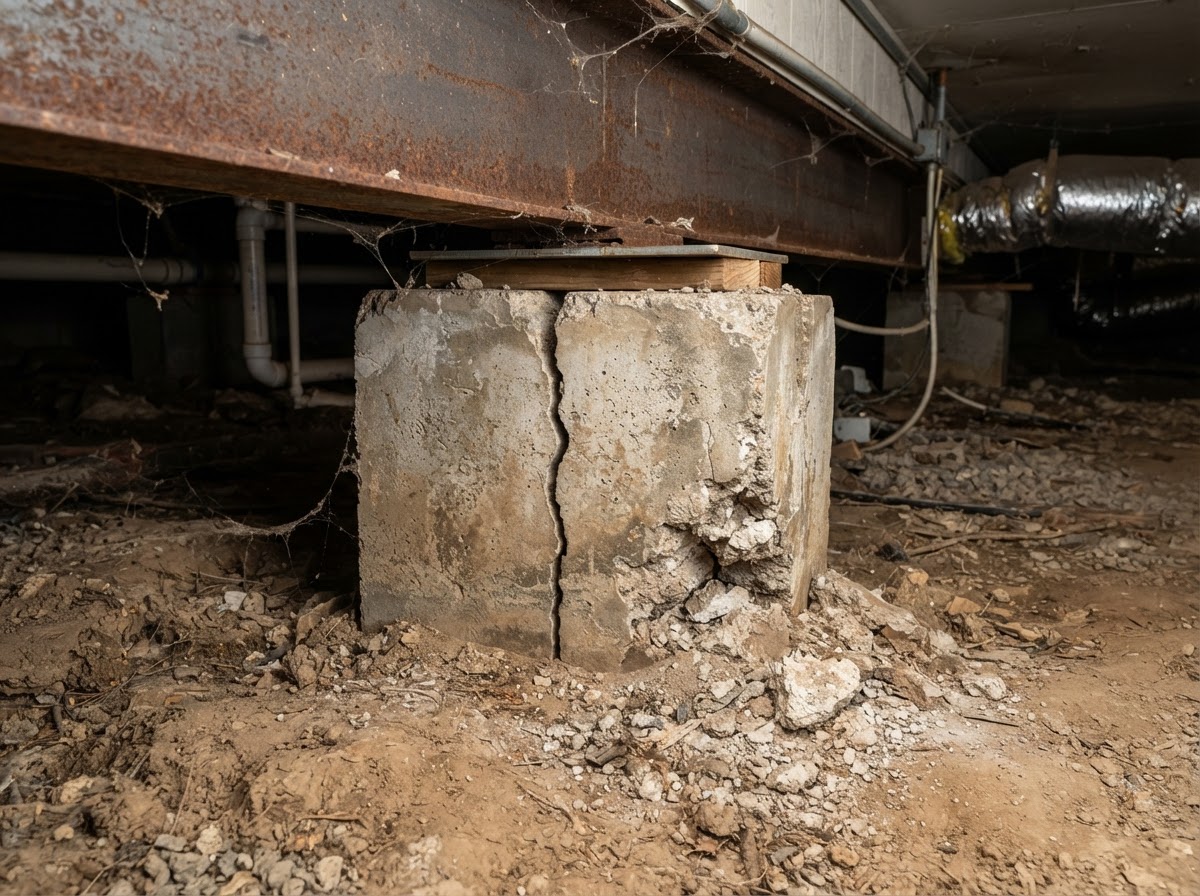
What a Cracked Pier Block Can Mean
Not every crack means the same thing. Surface cracking and a structural break affect the support very differently, so the severity and location matter.
Surface Cracking vs Structural Break
A hairline surface crack may be cosmetic, while a split through the block or a crushed corner can reduce its ability to carry load.
Crushed Corner
When a corner of the block crushes, the contact area shrinks and load concentrates on what remains.
Split Block
A block split through its body may no longer transfer load evenly down the stack.
Deterioration
Long-term wear and moisture exposure can weaken a block so it no longer bears reliably.
Uneven Bearing
A damaged block may no longer carry the chassis evenly, which can change the support above it.
Damage With Settlement
Cracking that appears alongside floor or level changes often points to a shared support movement.
Does a cracked block under a mobile home need replacement?
It depends on the severity, location, and role of the damaged component. A hairline surface crack may not affect bearing, but a block that is split through, crushed at a corner, or no longer carrying load evenly should not be assumed safe based on appearance alone. A professional evaluation determines whether the block can remain, needs repair, or must be replaced — and whether a moving base beneath it caused the break.
What Causes Mobile Home Pier Blocks to Crack or Break?
Block damage usually traces back to how the load is being carried — or how the base beneath it has moved.
Uneven Loading
When weight is not distributed evenly across the block, stress concentrates and can crack or crush one area.
Settlement
As a support settles, the load path through the block changes, which can introduce stress that cracks it.
Shifted Support Stack
A stack that leans or shifts changes how load passes through each block, which can crack a block over time.
Poor Contact
When the block does not sit flat against the pad or chassis, point loading can crack it.
Damaged Footing or Pad
A base that has cracked or settled changes the platform beneath the block, stressing it from below.
Long-Term Deterioration
Age and repeated loading can weaken a block until it finally cracks under normal weight.
Moisture Exposure
Water around the support can contribute to deterioration of the block and the base beneath it.
Freeze-Thaw
Where moisture and temperature cycles combine, repeated expansion can worsen cracking in masonry.
Foundation System Movement
Broader movement of the support system can transfer stress into individual blocks and crack them.
How Damaged Pier Blocks Are Evaluated & Repaired
The damaged block is checked alongside the full stack and the base beneath it, so the repair addresses the cause and not just the broken component.
Concrete Block & Pier Block Repair
Mobile Home Pier Replacement
Reblocking & Support Resetting
Mobile Home Footing Repair
Pier Cap & Support Pad Replacement
Mobile & Manufactured Home Foundation Repair
Replacing One Block May Not Be Enough
If a footing or pad beneath a cracked block has moved, swapping the block for a new one does not stop the base from moving — and the new block may crack again. The evaluation checks whether footing repair, pad replacement, or drainage correction is needed before the support is rebuilt.
Cracked Blocks, Settlement & Water Around Mobile Home Supports
Water and soil movement common to Fayette County can stress supports and contribute to block damage over time.
Support Movement
Movement in the stack or base transfers stress into individual blocks, which can crack them over time.
Erosion
Runoff that removes material from beneath a support changes the base and can stress the blocks above.
Water Around Supports
Standing or flowing water near piers contributes to both soil and block deterioration.
Soil Loss
When supporting material is lost, the load path through the block changes and stress increases.
Seasonal Movement
Repeated settlement and recovery cycles can gradually fatigue a block until it cracks.
Repeated Load Changes
Cycles of releveling and settlement change how weight passes through each block over time.
Cracked Mobile Home Pier Block FAQs
Direct answers about cracked and broken pier blocks beneath a mobile home.
A block usually cracks because the load passing through it changed — from uneven loading, a shifted stack, a settling footing, or a damaged pad. Moisture and long-term deterioration can also weaken a block until it fails.
Have Cracked or Broken Blocks Under Your Mobile Home?
Describe which support shows cracking and whether you are also seeing uneven floors or settlement. We evaluate the damaged block, the full stack, and the base beneath it to recommend the repair that addresses the actual cause.