Leaning or Shifted Mobile Home Pier Blocks Uniontown
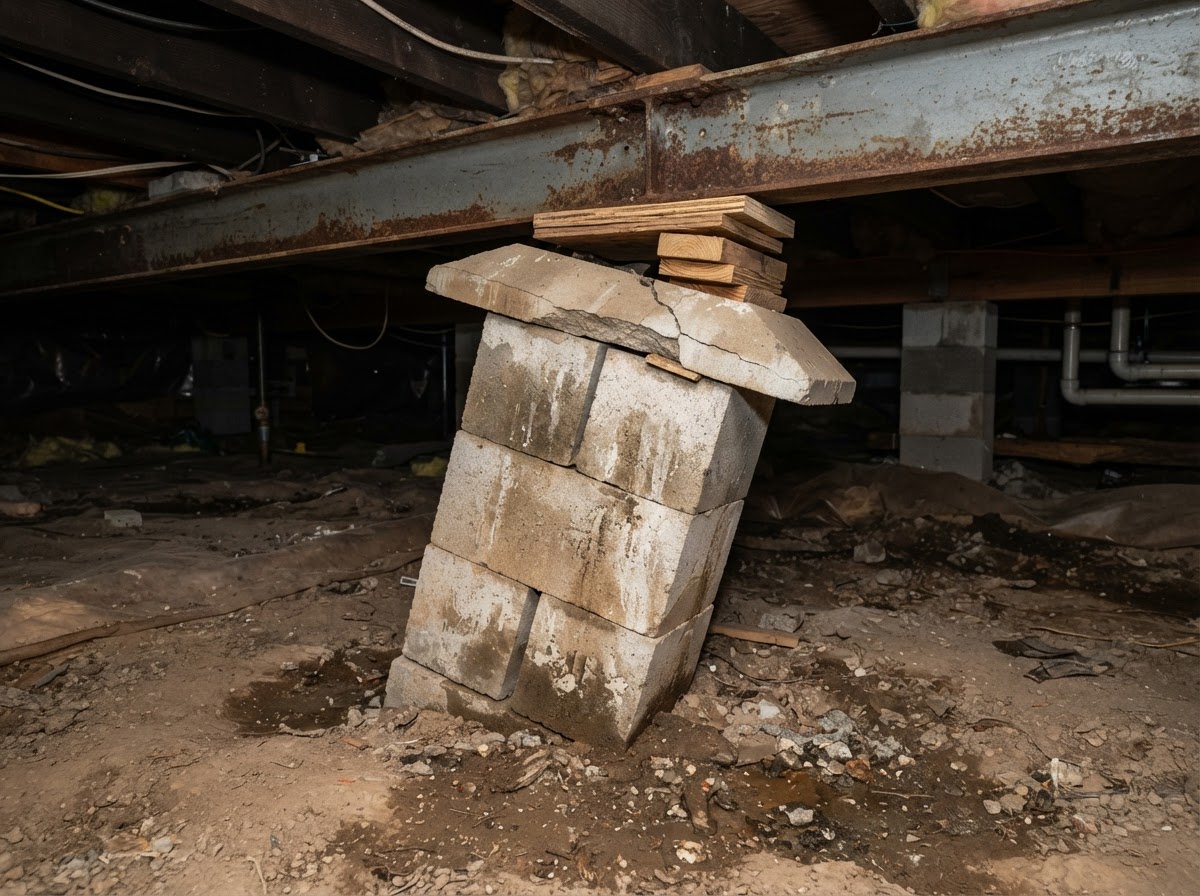
Pier and block supports are meant to transfer the structural load of the home through a stable, vertical support path. When a block stack is visibly leaning, rotated, or shifted sideways, it can indicate movement somewhere beneath it — at the block, the support pad, the footing, or the surrounding soil. Uniontown Mobile Home Leveling evaluates the full support path before recommending any correction, because straightening a block without addressing a moving base may only be temporary.
What Leaning Pier Blocks Can Mean Beneath a Mobile Home
A block stack that is no longer vertical is a visible warning that the support path beneath it has changed. The lean itself is a symptom — the cause is usually lower in the assembly.
Blocks No Longer Stacked Vertically
When a stack tilts or rotates, the load is no longer transferred straight down, which can accelerate further movement.
Support Shifted Sideways
A pier that has moved laterally changes where the chassis is actually being supported versus where it should be.
Chassis Contact Off-Center
When the block leans, the contact point with the I-beam shifts, which can reduce effective bearing area.
Shims Displaced
Movement in the stack often loosens or pushes shims out of position, changing the gap they were filling.
Support Base Movement
A leaning stack frequently traces back to a pad, footing, or soil condition that has shifted underneath it.
Recurring Level Changes
If the same area keeps going out of level after adjustment, an underlying support movement is likely.
Is a leaning mobile home pier block a foundation problem?
It can be. A leaning or shifted support stack often means movement has occurred somewhere in the support path — at the block, the pad, the footing, or the soil beneath. The lean is a visible symptom, not the root cause. An under-home evaluation determines which part of the assembly is actually moving so the correction targets the real problem instead of just straightening the block.
Common Causes of Shifted or Leaning Mobile Home Pier Blocks
Several different conditions can push a block stack out of alignment. The cause is not always the block itself.
Footing Settlement
When the footing beneath a pier drops, the stack above it tilts or shifts as the base moves.
Support Pad Movement
A pad that slides or settles unevenly changes the platform the blocks rest on, allowing the stack to lean.
Soft Soil
Soil that compresses under load can let one side of a support drop more than the other.
Erosion / Washout
Water that removes material from around or beneath a support can undermine the base and let the stack move.
Poor Drainage
Water that repeatedly concentrates near a support softens the ground and contributes to ongoing movement.
Repeated Home Movement
Cycles of settlement and releveling can gradually nudge a stack out of its original position.
Failed Shims
Shims that compress or fall out change the contact above the stack, which can let it shift.
Previous Improper Correction
A support that was reset without addressing the underlying base may lean again as the base keeps moving.
Freeze-Thaw Movement
Where conditions allow, seasonal ground movement can gradually displace a support stack.
How Leaning Pier Blocks Are Evaluated & Corrected Near Uniontown
The evaluation looks at the whole support path, not just the visible lean, so the correction addresses what is actually moving.
Concrete Block & Pier Block Repair
Reblocking & Support Resetting
Mobile Home Pier Replacement
Mobile Home Footing Repair
Shimming & Shim Replacement
Manufactured Home Foundation Stabilization
Mobile & Manufactured Home Leveling
Straightening a Block Is Not Always Enough
If the footing, pad, or soil beneath a leaning stack is still moving, simply resetting the blocks may only be a temporary fix. The evaluation determines whether the base needs stabilization, drainage correction, or footing repair before the support is reset — so the correction holds.
Settlement, Drainage & Pier Movement Near Uniontown
Conditions common to Fayette County and Southwest Pennsylvania can contribute to support movement. Not every Uniontown home faces the same soil or drainage, so the evaluation is specific to the site.
Heavy Rainfall
Saturated ground around supports can soften soil and contribute to base movement that shifts a stack.
Erosion
Runoff that removes material from beneath or around a support undermines the base and lets the stack lean.
Saturated Soil
Ground that stays wet loses bearing strength, which can let one side of a support settle more than the other.
Sloped Lots
On sloped properties, runoff and bearing conditions can vary from one support to the next.
Freeze-Thaw
Seasonal ground movement can gradually displace supports over repeated cycles.
Recurring Movement
When the same stack keeps leaning after being reset, an underlying base or drainage issue is likely.
Leaning Mobile Home Pier Block FAQs
Direct answers about shifted and leaning pier block supports beneath a mobile home.
A block stack usually leans because something beneath it has moved — a settling footing, a shifted pad, softened or eroded soil, or a failed shim. The lean is the visible symptom; the cause is typically lower in the support path.
Seeing Leaning or Shifted Pier Blocks?
Describe which support stack is leaning and whether you are also noticing uneven floors or recurring level changes. We evaluate the full support path beneath the home and recommend the correction that addresses the actual cause.