
Mobile Home Out of Level After Relocation or Setup Uniontown
A manufactured home that was level when it left the dealer does not always stay level once it is placed on a new lot. Transport flexes the frame, the new site's soil compresses under the pads, shims settle into their gaps, and a double-wide's two halves rarely land in perfect alignment on the first set. Post-setup movement is common and usually correctable — but it is not the same problem as a home that has been sitting for years and slowly settling. Uniontown Mobile Home Leveling evaluates what actually changed after placement: which supports moved, whether the soil is still compressing, and whether the marriage line or frame needs adjustment.
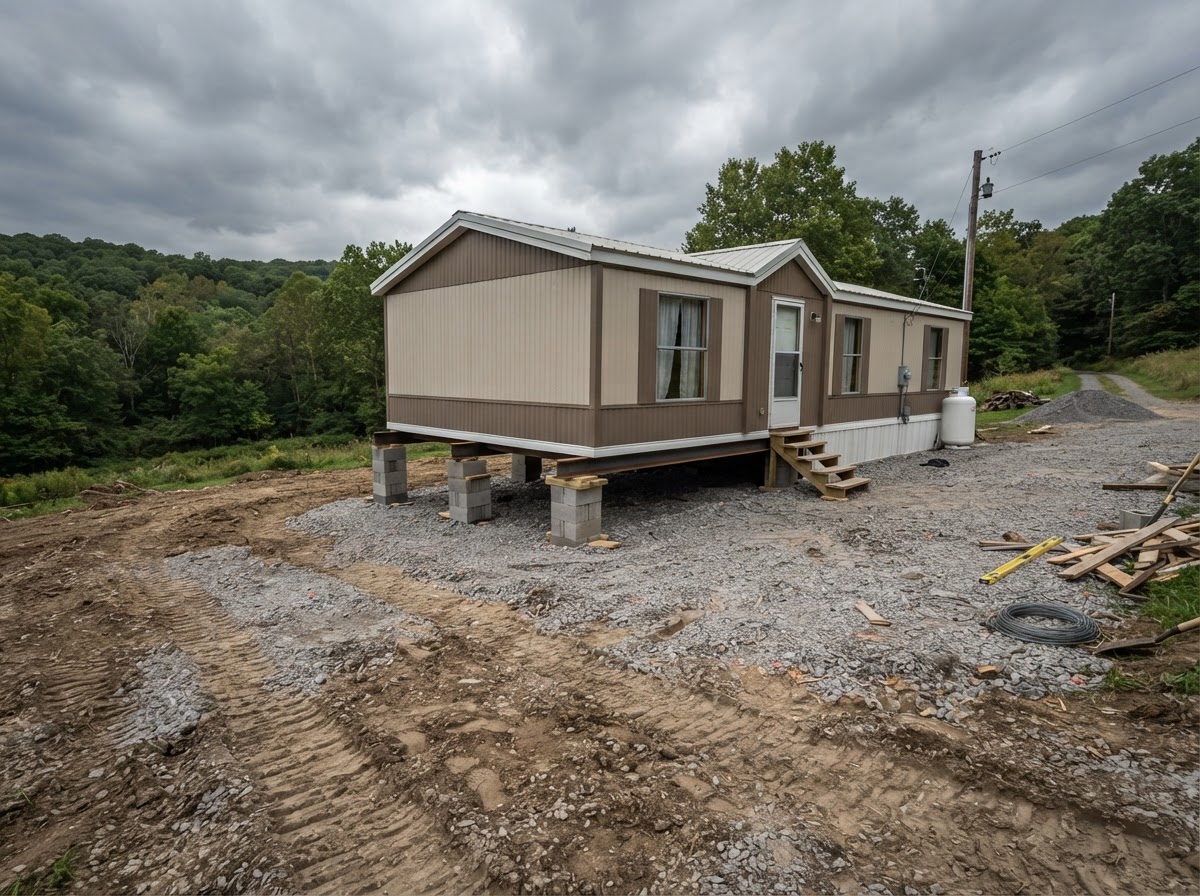
Signs a Mobile Home Has Settled After Setup or Relocation
Post-setup settlement shows up inside the home and underneath it. The pattern tells you which part of the support system moved.
Floor Changes After Placement
A floor that was flat on delivery develops a slope, dip or hump in the weeks after the home is set — a sign the supports are still adjusting to the site.
Home Becomes Unlevel
An overall out-of-level reading that appears after setup usually means the soil under the pads or footings is compressing unevenly.
Doors or Windows Bind
Openings that worked on delivery start sticking after the home settles, indicating the frame geometry has shifted relative to the walls.
Double-Wide Seam Changes
A gap, ridge or sag at the marriage line means the two halves are no longer aligned — one section settled or shifted relative to the other.
Shim Gap Appears
A shim that was tight on setup works loose as the support beneath it settles, opening a gap between the frame and the pier cap.
Pier Shifts
A block stack that was plumb on setup leans or slides as the pad or footing beneath it adjusts to the new soil load.
One End Settles
One end of the home drops while the other holds — common when the soil is softer or wetter at one end of the lot than the other.
Support Contact Changes
A pier that made full contact on setup later bears on only part of the cap, or a shim that was centered slides to the edge.
Recurring Minor Movement
Small level changes that continue for weeks after setup are usually the soil still consolidating, not a new failure.
Why would a mobile home become unlevel after relocation or setup?
Several things change when a home is placed on a new site: the soil compresses under the new pad and footing loads, shims settle into their gaps, the frame relaxes from the stresses of transport, and on a double-wide the two halves have to be realigned to each other as well as to the supports. Some movement in the first weeks is normal; what matters is whether it stops, whether it is one-sided, and whether the marriage line or frame stays aligned. An evaluation distinguishes normal post-setup consolidation from a support or soil problem that will keep progressing.
Common Causes of Post-Setup Mobile Home Level Problems
The home was level when it left the dealer. What changed is the ground, the supports, or the alignment between the two sections.
Support Settlement
Pads and footings compress into the new soil under the home's weight, dropping the supports below their setup elevation.
Footing Movement
A footing that was adequate on delivery can settle, tilt or crack as the soil beneath it consolidates or softens after the first rains.
Pad Movement
A support pad can shift on the gravel or soil bed as the load above it changes or as water softens the surface beneath it.
Shims Losing Contact
Shims that filled the gap at setup can loosen or fall as the support beneath them settles, opening a gap that was not there on delivery day.
Reblocking Need
Block stacks that were plumb on setup can lean or shift as the pad beneath them moves, requiring a reset of the stack.
Soil Compression or Settlement
The new site's soil compresses under the home's weight — especially if the pad was placed on fill, loose soil or a wet area.
Drainage Changes
Water that collects at the new site can soften the soil under one side of the home, causing that side to settle more than the rest.
Double-Wide Section Alignment
The two halves of a double-wide rarely land at exactly the same elevation; the marriage line shows the difference and may need adjustment.
Setup Support Deficiencies
An undersized pad, a short stack, or an inadequate footing at setup can hold for weeks and then begin to settle as the soil consolidates.
Post-setup movement is usually correctable. The evaluation determines whether the home simply needs releveling, whether a support or footing needs correction, or whether the soil or drainage at the new site is the underlying cause.
How Post-Relocation Level Problems Are Evaluated Near Uniontown
The evaluation reads what moved, what is still moving, and what it takes to make it stop.
Mobile & Manufactured Home Leveling
Reblocking & Support Resetting
Shimming & Shim Replacement
Pier Replacement
Footing Repair
Marriage Line Adjustment
Frame & Chassis Support Repair
Foundation Stabilization
Emergency Releveling & Support Repair
The Right Repair Depends on What Changed
A home that needs simple releveling after the soil settles is a different job from one whose footings are still moving, or whose marriage line is out of alignment. The evaluation determines which supports moved, whether the soil is still consolidating, and whether the frame or marriage line needs adjustment — then scopes the repair to what actually changed rather than releveling blindly and hoping it holds.
Relocation, Settlement & Double-Wide Alignment Problems
A newly placed home faces three separate adjustments: the soil under the supports, the alignment of the frame, and — on a double-wide — the alignment of the two sections to each other.
Settling After Placement
Soil compresses under the new load for weeks after setup; small level changes during this window are usually consolidation, not a new failure.
Section-to-Section Alignment
On a double-wide, the two halves must be aligned at the marriage line as well as leveled individually — a setup that misses one leaves a ridge or gap at the seam.
Support Adjustment
Shims, blocks and pads placed at setup may need a reset as the soil settles, especially if the home was placed on fill or wet ground.
Drainage at New Site
Water that collects at the new site — from runoff, a low spot or poor grading — can soften the soil under one side and cause one-sided settlement after setup.
Seasonal Movement
A home placed in late fall may settle one way; the same home placed in spring on wet ground may settle differently. The season at placement matters.
Transport Flex Relaxation
The frame flexes during transport and relaxes after placement, which can change door and window alignment even when the supports are still level.
Related Problems to Watch For
Post-relocation settlement often appears alongside these related conditions. If the home was just moved and is showing symptoms, check for these as well.
Mobile Home Leveling After Relocation FAQs
Direct answers to common questions about mobile homes that go out of level after relocation or setup.
Yes. Some adjustment after placement is common — the soil compresses, shims settle, and a double-wide's two halves align. What matters is whether the movement stops, whether it is one-sided, and whether the marriage line stays aligned. An evaluation tells you whether what you are seeing is normal consolidation or a problem that needs correction.
Is Your Mobile Home Out of Level After Setup or Relocation?
Tell us what changed after the home was placed — a sloping floor, a marriage-line gap, doors that stick, or shims that have worked loose. We will evaluate what moved, whether the soil is still consolidating, and what it takes to bring the home back to level and keep it there.