Sagging Mobile Home Frame & I-Beam Support Problems Uniontown
A manufactured home's steel chassis depends on multiple support points beneath the I-beams. When those supports settle, lose contact or shift, sections of the frame may appear to sag or feel poorly supported — and the floor, walls and doors above reflect that change. The issue is usually beneath the frame, not the steel itself. Uniontown Mobile Home Leveling evaluates the piers, shims, blocks, pads and footings under the chassis to find the support cause before recommending correction.
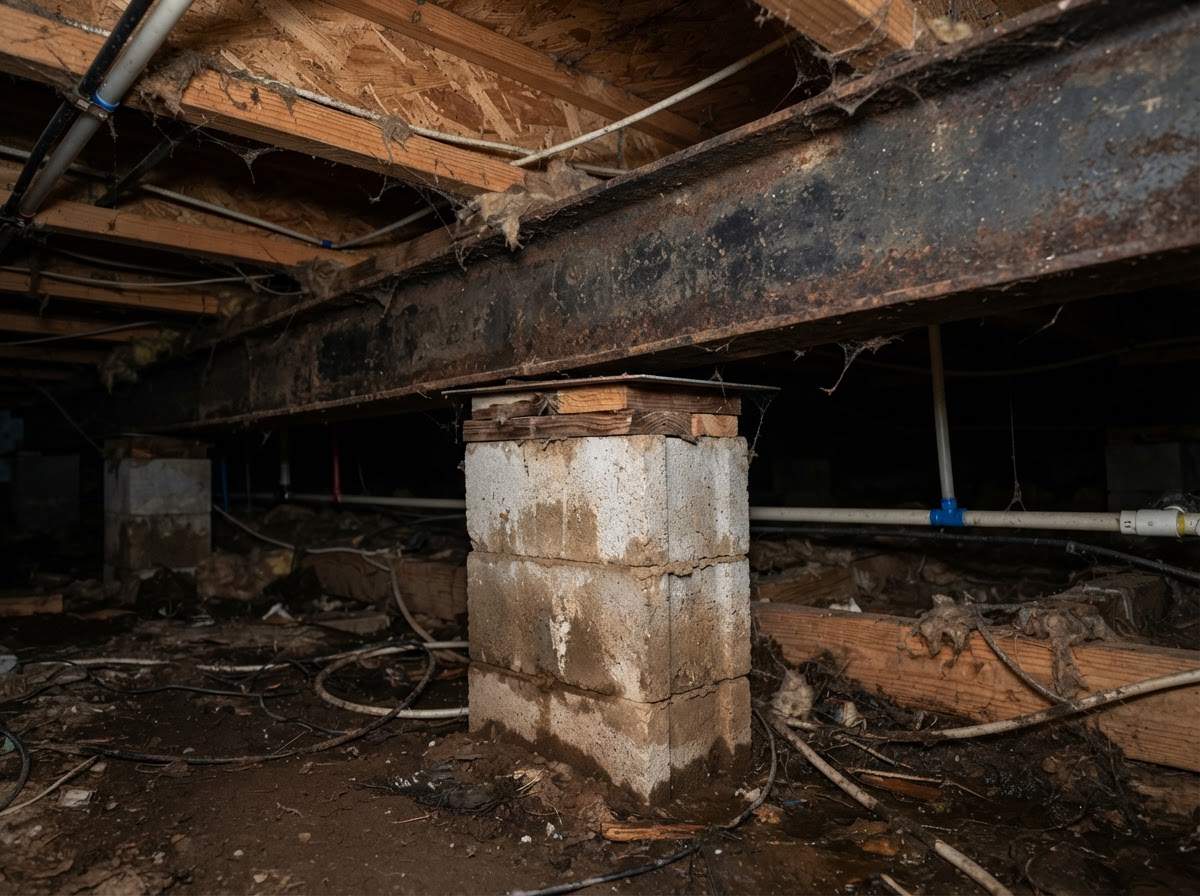
Signs of Mobile Home Frame or I-Beam Support Problems
The frame does not usually sag on its own — it sags because the support beneath it has changed. These signs point to which support points need to be evaluated.
Visible Support Gap
A gap between the I-beam and the top of a pier means that support point is no longer carrying the frame.
Floor Sag Above Frame Support
A low spot in the floor directly above a support location often traces to that pier or shim beneath the beam.
Low Spot
A localized dip in the floor or a section that feels lower can mean the support under that area has lost elevation.
Bouncing
A bouncy or moving floor above a support point can mean the support has lost contact and is not stiffening the frame.
One Beam Supported Differently
When one I-beam sits on its supports differently from the other, the frame can twist and the home feels uneven.
Shifted Pier or Missing Shim
A pier that has moved or a shim that has fallen out directly changes the support the beam receives at that point.
What supports the I-beams under a mobile home?
The steel chassis and I-beams of a manufactured home rest on a series of support points running beneath the frame. At each point, the load travels from the I-beam through a shim or direct contact, into a pier or block stack, onto a support pad or cap, and down through a footing into the ground. If any layer in that path settles, shifts or loses contact, the beam above it loses support and the frame can appear to sag — even though the steel itself is intact.
Common Causes of Sagging or Poor Frame Support
These are support conditions beneath the frame — not damage to the steel I-beam itself, which can only be confirmed by inspection.
Sinking Pier
A pier that settles into the soil or its base drops the beam above it, creating a sag at that support point.
Lost Shim Contact
A shim that cracks, compresses or falls out opens a gap, removing support and letting the beam drop.
Shifted Block
A concrete block stack that moves out of position changes the elevation and contact it provides to the beam.
Footing Settlement
The base beneath a support drops, taking the entire pier, beam contact and the frame above it down.
Support Pad Movement
A cracked or displaced pad distributes load poorly and lets a pier settle unevenly beneath the beam.
Reblocking Need
Supports that have moved or deteriorated need to be reset to restore proper contact with the chassis.
Marriage-Line Support Issue
On double-wides, center support movement changes how the two chassis relate at the mating line.
Drainage & Erosion
Water beneath the home softens soil or washes material from footings, letting supports under the beams sink.
Broader Foundation Settlement
When multiple supports settle together, the entire frame can shift and sag rather than one local point.
The steel I-beam itself is rarely the problem — the support beneath it is. An inspection confirms whether the cause is settlement, lost contact or a shifted support.
How Frame & I-Beam Support Problems Are Evaluated Near Uniontown
The evaluation follows the load path — from the beam down through every layer of support to the ground — to find where contact or elevation has been lost.
Frame & Chassis Support Repair
Pier & Beam Foundation Repair
Reblocking & Support Resetting
Shimming & Shim Replacement
Pier Replacement
Footing Repair
Mobile & Manufactured Home Leveling
Foundation Stabilization
The Right Repair Depends on the Cause
Restoring contact at the beam does not hold if the footing beneath it is still sinking or the block is still shifting. The evaluation identifies which layer of the support path has failed — then matches it to the correct service, from shimming and reblocking to pier or footing replacement.
Why Frame Support Problems Can Affect Floors & Alignment
The frame is the link between the supports and the living space above. When support beneath the beam changes, the symptoms travel upward through the home.
Related Problems to Watch For
Frame support problems rarely show up alone. These related symptoms often share the same support cause.
Mobile Home Frame & I-Beam Support FAQs
Direct answers to the most common questions about sagging frame and I-beam support problems and the support conditions that cause them.
The steel chassis and I-beams rest on a series of support points beneath the frame. At each point, load travels from the beam through a shim or direct contact, into a pier or block stack, onto a support pad, and through a footing into the ground. Any layer in that path can settle or lose contact.
Concerned About Sagging or Poor Frame Support?
Describe what you are seeing — a gap at a beam support, a sag above a pier, floor bounce, or a low spot that came back after leveling. We will evaluate the supports beneath the I-beams and match the cause to the correct service.