Uneven Floors in a Mobile Home Uniontown
Uneven floors in a manufactured home usually start beneath the home, not in the floor covering. When the support system under the chassis changes — a pier that settles, a block stack that shifts, a shim that compresses or falls out, a footing that drops, or a marriage-line support that moves on a double-wide — the floor above reflects that change as a slope, dip or roll. Uniontown Mobile Home Leveling evaluates what is actually happening under the home before recommending leveling, shimming, reblocking, pier or footing correction, or stabilization.
What Uneven Floors Can Mean in a Mobile Home
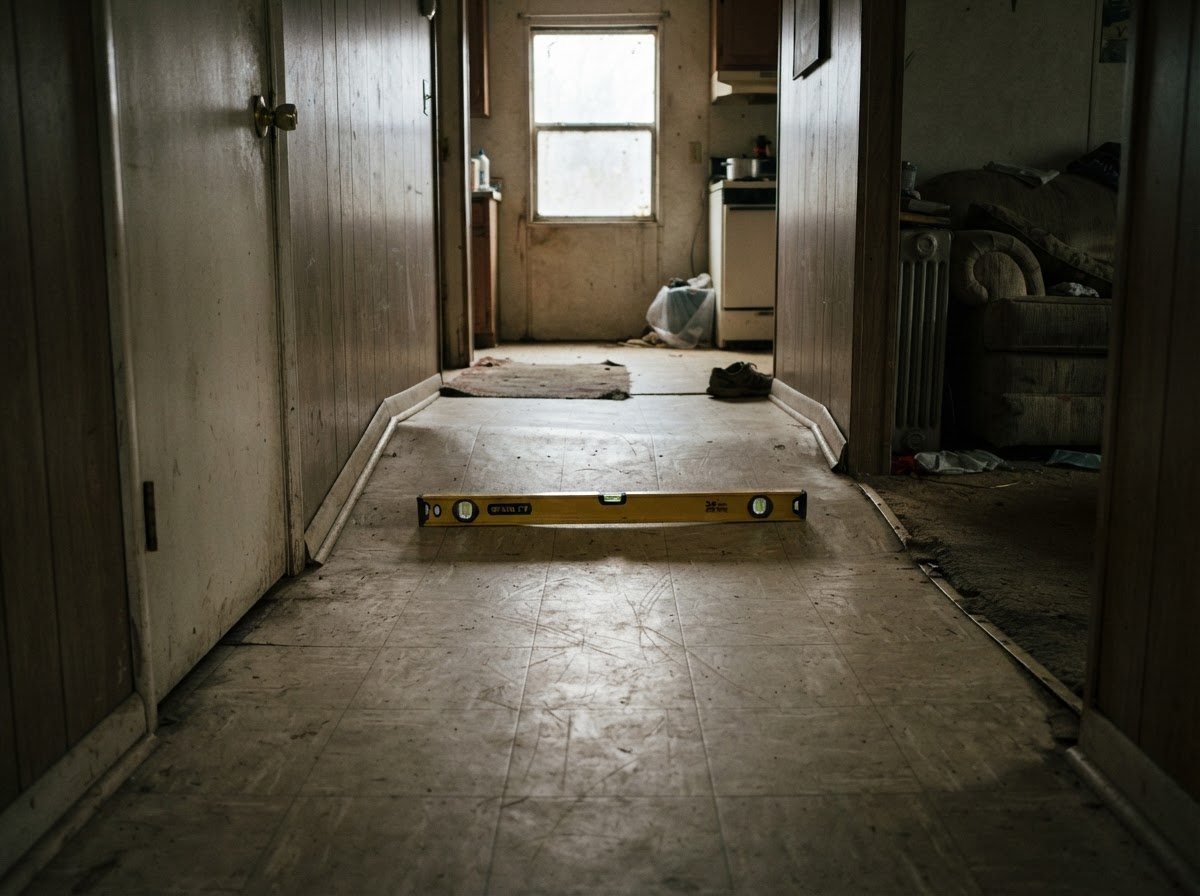
An uneven floor is a symptom, not a diagnosis. The same slope can come from several different support problems, and the correct repair depends on which one is actually present under your home.
Gradual Slope
A slow roll across a room or down a hallway often means one side or end of the chassis has lost elevation relative to the rest.
One End Lower
When one end of the home sits noticeably lower, a row of piers or footings along that side may have settled.
Centerline Change
On a double-wide, a floor that changes near the mating line can point to marriage-line support movement.
One Room Different
A single room that feels uneven while the rest is flat often traces to one or two local support points.
Recurring Unevenness
Floors that go uneven again shortly after a prior adjustment usually mean the underlying cause was never corrected.
Accompanying Symptoms
Uneven floors that arrive with sticking doors, gaps at trim or a bouncy feel are stronger evidence of support movement.
Why does my mobile home floor feel uneven?
An uneven mobile home floor usually means the support system beneath the chassis has changed — a pier has settled, a block stack has shifted, a shim has compressed or fallen out, a footing has dropped, or a marriage-line support has moved on a double-wide. The floor itself is reacting to a change in elevation or bearing underneath. Because the same slope can come from several different causes, uneven floors cannot be accurately diagnosed from the symptom alone — the piers, blocks, shims, pads and footings under the home need to be evaluated.
Common Causes of Uneven Mobile Home Floors
Each of these changes the elevation the support system provides to the chassis. More than one can be present at the same time — an inspection confirms which.
Home Out of Level
Support elevations across the home have changed, so the chassis — and the floor above it — no longer sits in a single plane.
Sinking Pier
One support point settles into the soil or its base, dropping the floor directly above that pier.
Shifted Blocks
A concrete block stack moves out of position, reducing or removing the elevation it was providing.
Loose or Missing Shims
Shims that crack, compress or fall out open a gap between the pier top and the I-beam, letting the floor drop.
Footing Settlement
The base beneath a support moves, taking the entire pier and the floor above it down with it.
Marriage-Line Support Changes
On double-wides, movement at the center supports changes the alignment of the mating line and the floor near it.
Drainage & Erosion
Water moving under the home softens soil or washes material away from footings, letting supports sink.
Damaged Support Pads
Cracked or deteriorated pads distribute load poorly and allow a pier to settle unevenly.
Freeze-Thaw Movement
Seasonal freezing and thawing can lift and drop support points where site conditions allow.
These causes are not diagnosed remotely. A symptom pattern helps narrow the possibilities, but the actual condition is confirmed by an under-home evaluation.
How Uneven Mobile Home Floors Are Evaluated Near Uniontown
The evaluation looks at the whole support system, not just the floor. The correct repair depends on which component is actually causing the change.
Mobile & Manufactured Home Leveling
Shimming & Shim Replacement
Reblocking & Support Resetting
Pier Replacement
Footing Repair
Marriage Line Adjustment
Foundation Stabilization
The Right Repair Depends on the Cause
Leveling alone corrects elevation and alignment, but it does not fix a sinking footing, a cracked block or a missing shim. When the underlying component keeps moving, the floor will go uneven again. That is why the evaluation identifies the cause first — then matches it to the correct service.
Settlement, Water & Seasonal Movement Near Uniontown
Fayette County conditions can contribute to support changes over time. Not every Uniontown home experiences the same soil or drainage — these are general factors an evaluation accounts for.
Heavy Rain
Sustained rainfall can saturate the ground beneath a home and reduce the bearing soil can provide to footings and pads.
Drainage & Runoff
Water that channels under or along one side of a home can soften soil and erode support material unevenly.
Erosion
Moving water can carry supporting soil away from footings and pads, leaving supports with less bearing.
Soil Softening
Saturated or bearing-poor soil lets supports sink gradually under the weight of the home.
Freeze-Thaw
Seasonal freezing and thawing can lift and drop support points where moisture and soil conditions allow.
Sloped Properties
On sloped lots, runoff and bearing conditions can vary from one side of the home to the other.
Related Problems to Watch For
Uneven floors rarely arrive alone. If you are seeing a slope, check for these related symptoms — they often share the same support cause.
- Mobile Home Sinking on One Side
- Sinking Piers Under a Mobile Home
- Mobile Home Leaning or Tilting
- Sticking Doors & Windows
Uneven Mobile Home Floor FAQs
Direct answers to the most common questions about uneven floors and the support problems that cause them.
A sudden change usually means something beneath the home has moved — a pier has settled, a block stack has shifted, a shim has failed, or a footing has dropped. Sudden unevenness after heavy rain or a freeze-thaw cycle can also point to water or soil changes under the supports.
Have Uneven Floors in Your Mobile Home?
Describe what you are seeing — a slope, a dip, a roll, or a floor that went uneven again after a prior adjustment. We will evaluate the supports beneath the home and match the cause to the correct service.