Water Pooling Under a Mobile Home Uniontown
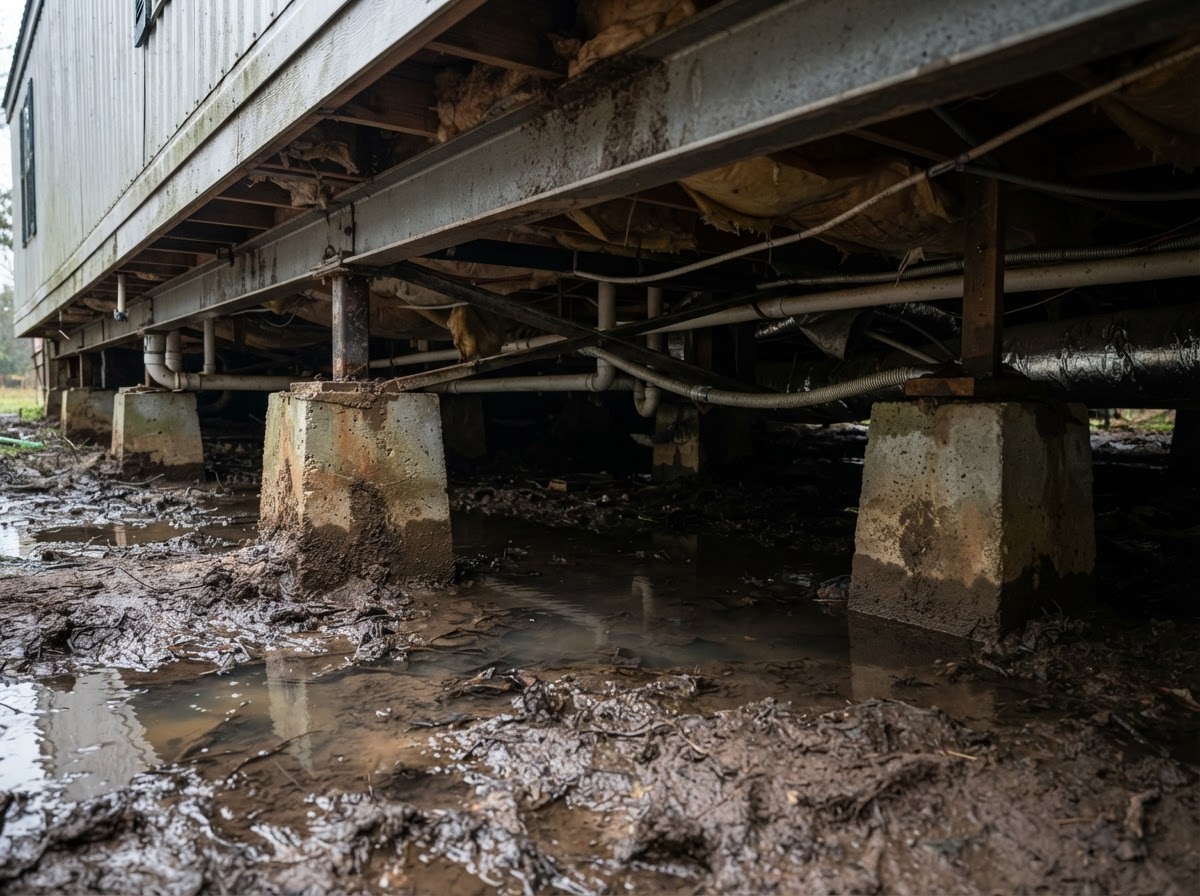
Standing or recurring water beneath a manufactured home is primarily a drainage and moisture condition — but it can become a foundation concern when it softens soil, erodes material around footings and pads, or contributes to support settlement. The water itself is one problem; the effect it has on the supports beneath the home is another. Uniontown Mobile Home Leveling evaluates where the water is coming from, what it has done to the soil and support bases, and whether drainage correction, structural repair, or both is needed.
Why Water May Be Collecting Under Your Mobile Home
Water beneath a home arrives from somewhere. Identifying the source and path is the first step — the supports are affected only if the water reaches them.
Grade Directing Water Inward
When the surrounding ground slopes toward the home instead of away, runoff collects beneath it.
Low Spot Beneath Home
A natural or formed depression under the home gives water a place to pool instead of draining away.
Runoff From Uphill
On sloped lots, water flowing from higher ground can run beneath the home before it can exit.
Blocked Drainage Path
An existing drain or natural exit path that is clogged, collapsed or ineffective lets water sit.
Water Entering Beneath Skirting
Gaps or low skirting can let surface water flow under the home rather than around it.
Concentrated Discharge
Downspouts or discharge that releases water near the home can send it straight underneath.
Is standing water under a mobile home a foundation problem?
Standing water beneath a mobile home is primarily a drainage and moisture condition, not a foundation problem on its own. But it can become a foundation concern when it saturates soil, erodes material around footings and pads, or contributes to support settlement over time. The water is the source; the effect on the supports is the structural risk. An evaluation looks at both — where the water comes from and what it has already done to the support bases beneath the home.
How Water Beneath a Mobile Home Can Affect Supports
Water does not directly break a pier — it changes the soil and base beneath it. Those changes are what let supports move.
Saturated Soil
Water-logged soil loses bearing strength, letting footings and pads sink under the weight of the home.
Erosion
Moving water carries supporting soil away from footings and pads, removing the material that holds them up.
Washout
Concentrated flow can wash out channels beneath or around supports, undermining their base.
Footing Exposure
Eroded or softened material around a footing leaves it with less bearing and more prone to settlement.
Pad Movement
Saturated or eroded ground beneath a support pad lets it shift or settle, changing the support above it.
Pier Settlement
As the base beneath a pier weakens, the pier sinks and the floor above it drops.
Recurring Releveling
Supports that sink after every wet period mean the water problem is driving the settlement.
Freeze-Thaw in Wet Areas
Saturated soil that freezes and thaws can heave and drop supports seasonally where conditions allow.
Moisture & Deterioration
Persistent dampness can accelerate deterioration of wood shims, pads and other support components.
The chain: water → soil changes → support-base changes → settlement symptoms. Stopping the water is the first step; correcting settlement that already occurred is the second.
How Water Pooling Under a Mobile Home Is Evaluated Near Uniontown
The evaluation has two parts: the water — where it comes from and how it moves — and the supports, to see whether it has already caused settlement.
Under-Home Water Drainage Correction
Drainage & Grading Correction
Crawlspace Foundation Repair
Foundation Stabilization
Footing Repair
Pier Replacement
Drainage Correction & Structural Repair Are Separate Needs
Correcting the water stops the cause, but it does not undo settlement that has already occurred. If water has already let supports sink, the home may need leveling, pier or footing correction in addition to drainage work. The evaluation determines which is needed — and in what order.
Heavy Rain, Drainage & Foundation Settlement
Fayette County rainfall, slope and seasonal conditions can all contribute to water collecting beneath a home. Not every Uniontown property has the same drainage — these are general factors an evaluation accounts for.
Heavy Rainfall
Sustained or repeated rain can overwhelm the ground's ability to absorb and drain water away from the home.
Slope
On sloped lots, runoff from uphill can flow beneath the home before it can exit the crawlspace.
Saturated Soil
Ground that stays wet loses bearing strength, letting footings and pads settle over time.
Erosion
Moving water can carry supporting soil away from footings and pads, undermining support bases.
Freeze-Thaw
Saturated soil that freezes and thaws can heave and drop supports seasonally where conditions allow.
Repeated Wet Periods
Homes that go through wet cycles year after year can show cumulative support settlement.
Related Problems to Watch For
Water pooling beneath a home often appears alongside these related problems. If you see standing water, check for these as well.
Water Pooling Under a Mobile Home FAQs
Direct answers to the most common questions about water pooling beneath a manufactured home and how it can affect supports.
Water pools beneath a home when the surrounding grade directs it inward, a low spot gives it a place to collect, runoff from uphill flows underneath, or an existing drainage path is blocked or ineffective. The source and path of the water have to be identified before it can be corrected.
Seeing Water Pooling Beneath Your Mobile Home?
Describe what you are seeing — standing water after rain, persistent dampness, muddy ground around supports, or settlement that worsens in wet periods. We will evaluate the source of the water and what it has done to the supports beneath the home.