Sinking Piers Under a Mobile Home Uniontown
A pier under a manufactured home sinks when the support beneath it changes — a footing settles, the soil softens, water washes material away, or the support pad deteriorates or shifts. As the pier drops, a gap opens at the chassis, the floor above it sinks, and the home goes uneven. Uniontown Mobile Home Leveling evaluates the pier, its base, the soil and the drainage to find what is actually causing the drop and match it to the correct service — pier or block repair, footing work, pad replacement, reblocking, stabilization, or drainage correction.
Signs a Mobile Home Pier Is Sinking
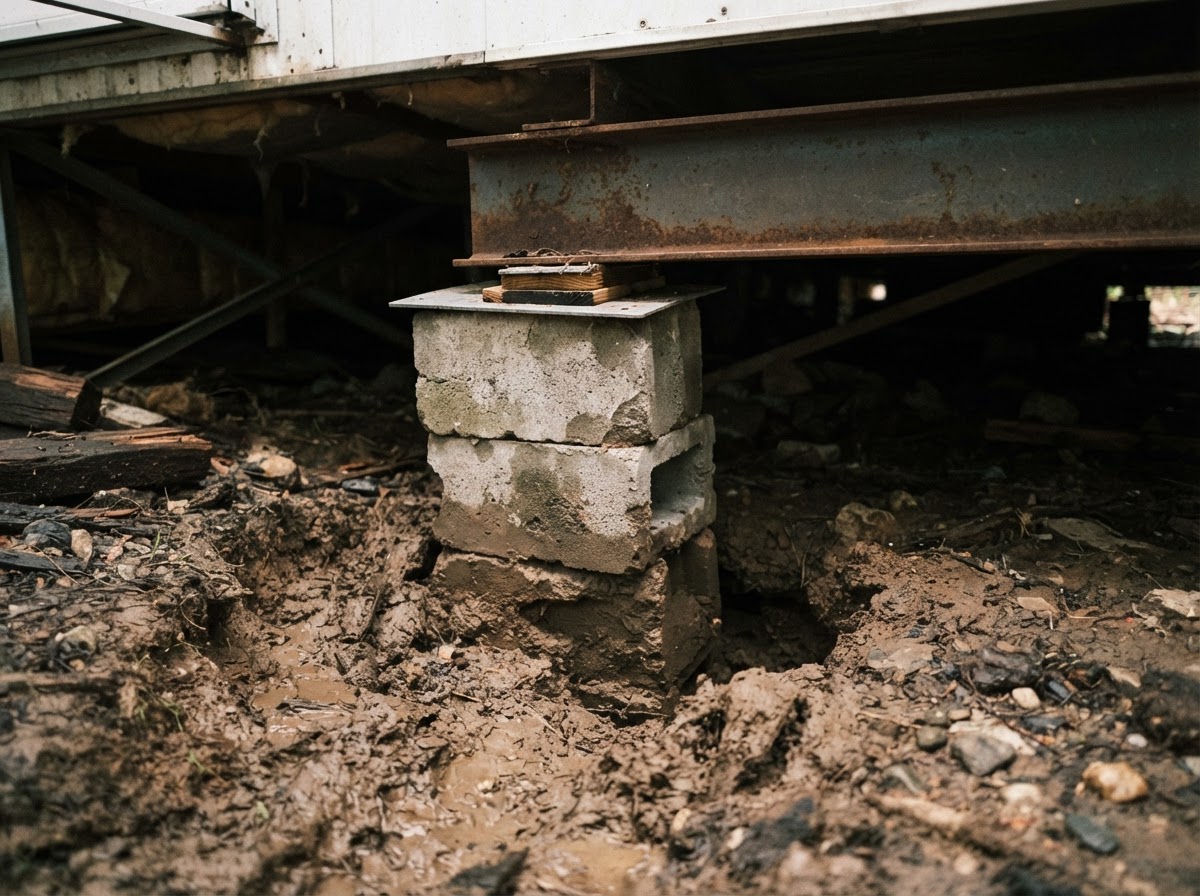
A sinking pier leaves a trail of symptoms both under the home and above it. The pattern usually centers on the support that has dropped.
Pier Lower Than Adjacent Supports
The sinking pier sits visibly lower than the piers next to it along the same chassis.
Block Stack Begins Leaning
The blocks beneath the pier lean or shift as the base drops unevenly under them.
Gap at Chassis Contact
A gap opens between the top of the pier and the I-beam it was supporting.
Shims Loosen or Fall Out
Shims that once filled the contact point crack, compress or drop out as the pier sinks.
Floor Sinks Above Support
The floor directly above the sinking pier dips or slopes toward that point.
Nearby Door Alignment Changes
Doors closest to the dropped support begin to stick or swing as the opening racks.
Repeated Leveling at Same Location
A home that has been releveled more than once at the same spot usually has a pier or base still sinking there.
Pad or Footing Appears Displaced
The support pad or footing under the pier looks cracked, tilted or pushed down into the soil.
Why do mobile home piers sink?
A pier usually sinks because the support beneath it has changed. The footing may have settled, the soil may have softened or become saturated, water may have washed material away from around the base, or the support pad may have deteriorated or shifted. The pier itself can also be damaged or improperly aligned, which reduces its bearing. In most cases the pier is the symptom — the base, the soil, or the drainage underneath it is the actual cause, which is why replacing the pier alone does not always stop the sinking.
Common Causes of Sinking Mobile Home Piers
The pier is usually the visible part of a problem that starts below it. These are the conditions most often beneath a sinking support.
Footing Settlement
The base beneath the pier loses elevation and takes the pier and the chassis above it down with it.
Soft or Saturated Soil
Soil that has softened or become saturated loses bearing capacity and lets the support sink under load.
Soil Washout
Water removes supporting material from around the footing or pad, leaving the support with less bearing.
Drainage Problems
Water that concentrates near a support softens soil and accelerates settlement at that location.
Damaged Support Pad
A cracked or deteriorated pad distributes load poorly and lets the pier settle unevenly into the soil.
Freeze-Thaw Movement
Where moisture sits beneath a support, freezing and thawing can lift and drop it over repeated seasons.
Improper or Shifted Support
A pier that was set poorly or has shifted loses reliable bearing and can sink or lean.
Bearing-Poor Soil
Where the soil was never well-compacted or lacks bearing capacity, supports sink gradually under the home.
Older Support Systems
Aging pads, blocks and footings deteriorate and lose the firm base the pier needs to hold elevation.
How Sinking Piers Are Evaluated & Repaired Near Uniontown
The evaluation looks at the pier and everything beneath and around it. Replacing a pier without correcting a failing base may not stop the sinking.
Pier Replacement
Pier Block Repair
Footing Repair
Footing Installation & Replacement
Pier Cap & Support Pad Replacement
Reblocking & Support Resetting
Foundation Stabilization
Mobile & Manufactured Home Leveling
Drainage & Grading Correction
Replacing a Pier Is Not Always the Answer
If the footing is still sinking, the soil is still soft, or water is still washing material away, a new pier will sink too. When the same pier keeps settling, the cause is usually beneath it — and the correct service is footing repair, pad replacement, stabilization, or drainage correction, not just a new pier.
Why Sinking Piers Can Affect More Than One Part of the Home
A single sinking pier sets off a chain. The drop at the support travels up through the chassis and into the floors, doors and marriage line above it.
Pier / base settlement
The pier, its pad or its footing loses elevation.
Support elevation changes
The support no longer holds the chassis at its original height.
Chassis contact changes
A gap opens between the pier top and the I-beam, or the chassis drops to meet it.
Home becomes uneven
The floor above the dropped support dips, and the home tilts toward it.
Floors, doors & marriage line show symptoms
Sloping floors, sticking doors and marriage-line changes appear above the affected support.
Related Problems to Watch For
- Uneven Floors in a Mobile Home
- Mobile Home Sinking on One Side
- Mobile Home Leaning or Tilting
- Sticking Doors & Windows
Sinking Mobile Home Pier FAQs
Direct answers about why piers sink and how the cause is evaluated and corrected.
The support beneath the pier has changed. The footing may have settled, the soil may have softened or become saturated, water may have washed material away, or the support pad may have deteriorated. The pier drops because the base holding it up has lost elevation or bearing.
Concerned About Sinking Piers Under Your Mobile Home?
Describe which pier or area is dropping and whether you are also seeing water, a gap at the chassis, or repeated releveling at the same spot. We will evaluate the pier, its base, the soil and the drainage beneath it and match the cause to the correct service.