Soft or Muddy Soil Causing Mobile Home Settlement Uniontown
Saturated or softened ground can change the bearing conditions around pads and footings, even when there is no visible washout. When soil loses strength, a support that held steady for years can begin to sink under the weight of the home. Uniontown Mobile Home Leveling evaluates whether soft ground is actually driving the settlement you see, and whether the right answer is drainage correction, structural stabilization, or both.
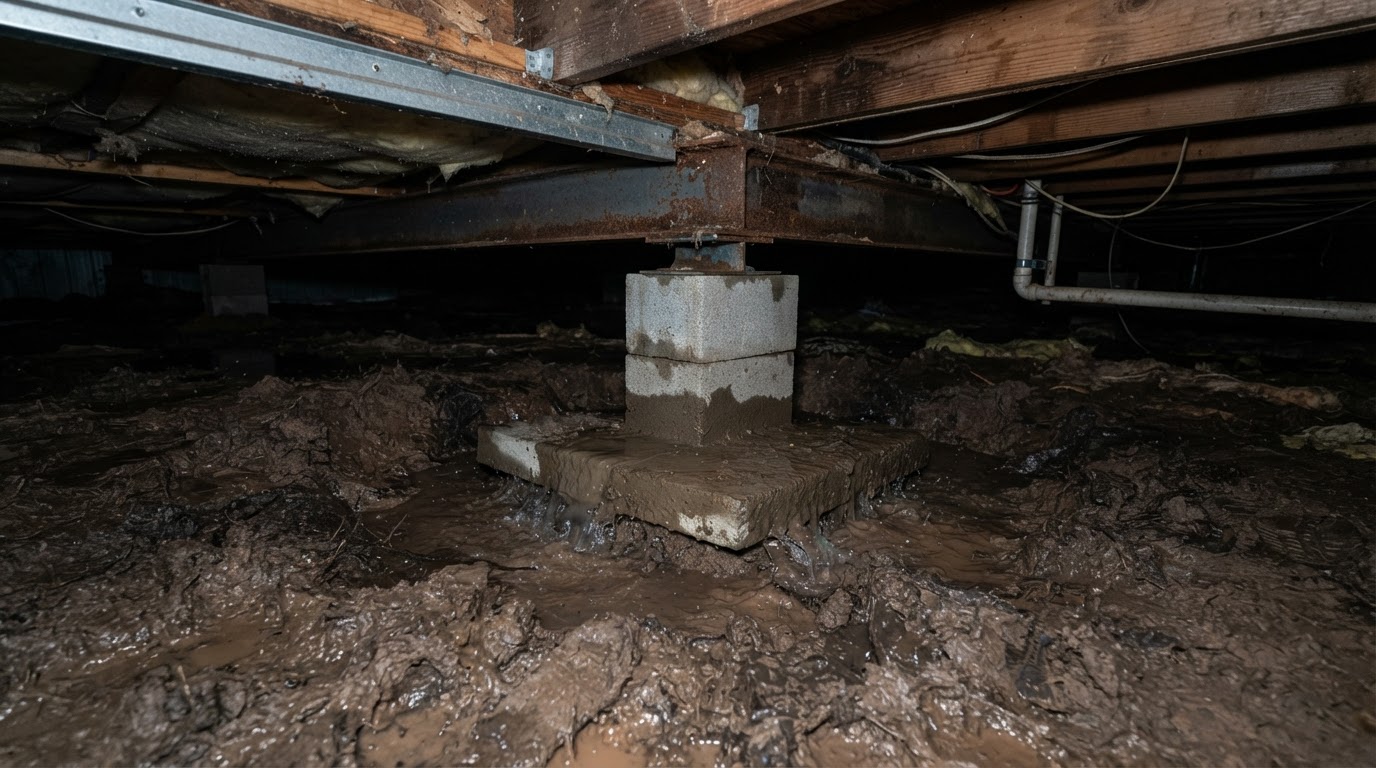
Signs Soft Ground May Be Affecting Mobile Home Supports
Soft soil is a bearing problem, not an erosion problem. The soil is still there — it has just lost the strength to hold the support up.
Muddy Soil Around Supports
Ground near piers or pads stays wet and soft long after rain has stopped, indicating persistent saturation rather than a single event.
Support Area Stays Wet
Water does not drain away from the support base, so the soil beneath it never dries enough to regain bearing strength.
Pier Slowly Sinks
A support loses elevation gradually over weeks or months as the soft ground beneath it compresses or gives way.
Pad Settles
A support pad sinks into softened soil, taking the pier and the floor above it down with it.
Repeated Level Change After Wet Weather
The home goes out of level after every rainy period, then may partially recover when the ground dries — a cycle driven by soil moisture.
Depression Around Support
A visible footprint or bowl-shaped depression forms where a pad or footing has pressed into soft ground.
Can soft or muddy soil make a mobile home settle?
Yes. When soil becomes saturated or softened, it loses bearing strength, so a pad, footing, or pier can lose elevation or shift under the weight of the home. But an inspection is needed to confirm that soil conditions are actually the cause — settlement can also come from footing failure, pier damage, or drainage problems that look similar from above. The evaluation determines whether soft ground is driving the movement or merely accompanying it.
What Can Make Soil Around Mobile Home Foundations Soft?
Soft soil is a moisture problem. The question is where the water comes from and why it stays.
Poor Drainage
When water cannot move away from the home, it collects in the soil around supports and keeps it saturated long after the rain stops.
Prolonged Rain
Extended wet periods saturate the ground faster than it can drain or dry, leaving support bases in soft soil for days or weeks.
Water Pooling
Standing water beneath or near the home keeps the surrounding soil continuously wet and weak.
Runoff
Surface water flowing toward the home saturates the soil it passes through on the way to the supports.
Low Areas
Depressions around the home collect and hold water, softening the soil beneath nearby supports.
Inadequate Water Movement Away
Without a clear path for water to exit, it soaks into the ground around the home instead of draining off.
Seasonal Thaw
As frozen ground thaws in spring, meltwater saturates soil that cannot drain through still-cold layers beneath it.
Repeated Saturation
Soil that goes through wet and dry cycles year after year can lose structure and stay softer when wet.
High Water Table
Where groundwater sits close to the surface, the soil around supports may never fully dry out.
Soil composition varies from one Uniontown property to the next. The evaluation assesses the actual bearing conditions around your supports rather than assuming a single soil type.
How Soft-Soil Settlement Is Evaluated & Corrected
The evaluation confirms whether soft soil is the cause, then separates what water management must fix from what structural repair must fix.
Foundation Stabilization
Footing Repair
Footing Installation & Replacement
Pier Replacement
Reblocking & Support Resetting
Drainage & Grading Correction
Under-Home Water Drainage Correction
Mobile Home Leveling
Structural Repair & Water Management May Both Be Needed
Soft soil is a moisture problem that becomes a structural problem. Drainage correction stops the cause, but it does not lift supports that have already sunk. If piers or footings have settled into soft ground, the home may need leveling, stabilization, or footing correction in addition to drainage work — and the evaluation determines which is needed and in what order.
Wet Ground, Seasonal Conditions & Mobile Home Settlement
Southwest Pennsylvania's wet seasons, snowmelt, and spring thaw can all soften the ground around supports. These are general regional factors, not conditions that apply to every Uniontown property.
Repeated Rain
Wet periods that return before the ground can dry keep soil around supports continuously soft.
Snowmelt
Melting snow releases water slowly into soil that may still be frozen or poorly drained beneath the surface.
Spring Thaw
As the ground thaws from the top down, meltwater saturates the upper soil with nowhere to drain.
Low Spots
Depressions around the home collect and hold water, softening the soil beneath nearby supports.
Runoff
Surface water flowing toward the home soaks into the soil it passes through on the way to the supports.
Freeze-Thaw
Soil that freezes and thaws can loosen and lose structure, staying softer when wet than stable ground would.
Related Problems to Watch For
Soft soil settlement often appears alongside these related problems. If the ground around your supports stays wet, check for these as well.
Soft Soil & Mobile Home Settlement FAQs
Direct answers to the most common questions about soft or muddy soil and how it can cause mobile home settlement.
Yes. When soil becomes saturated and soft, it loses bearing strength, so a pier or pad can sink under the weight of the home. The soil is still there — it has just lost the ability to hold the support up until it dries or is stabilized.
Concerned About Soft Ground Beneath Your Mobile Home?
Describe what you are seeing — muddy soil around supports, a pad that has sunk, settlement that worsens after wet weather, or ground that never seems to dry. We will evaluate whether soft soil is driving the movement and what it will take to correct it.