
Mobile Home Shaking or Bouncing When Walking Uniontown
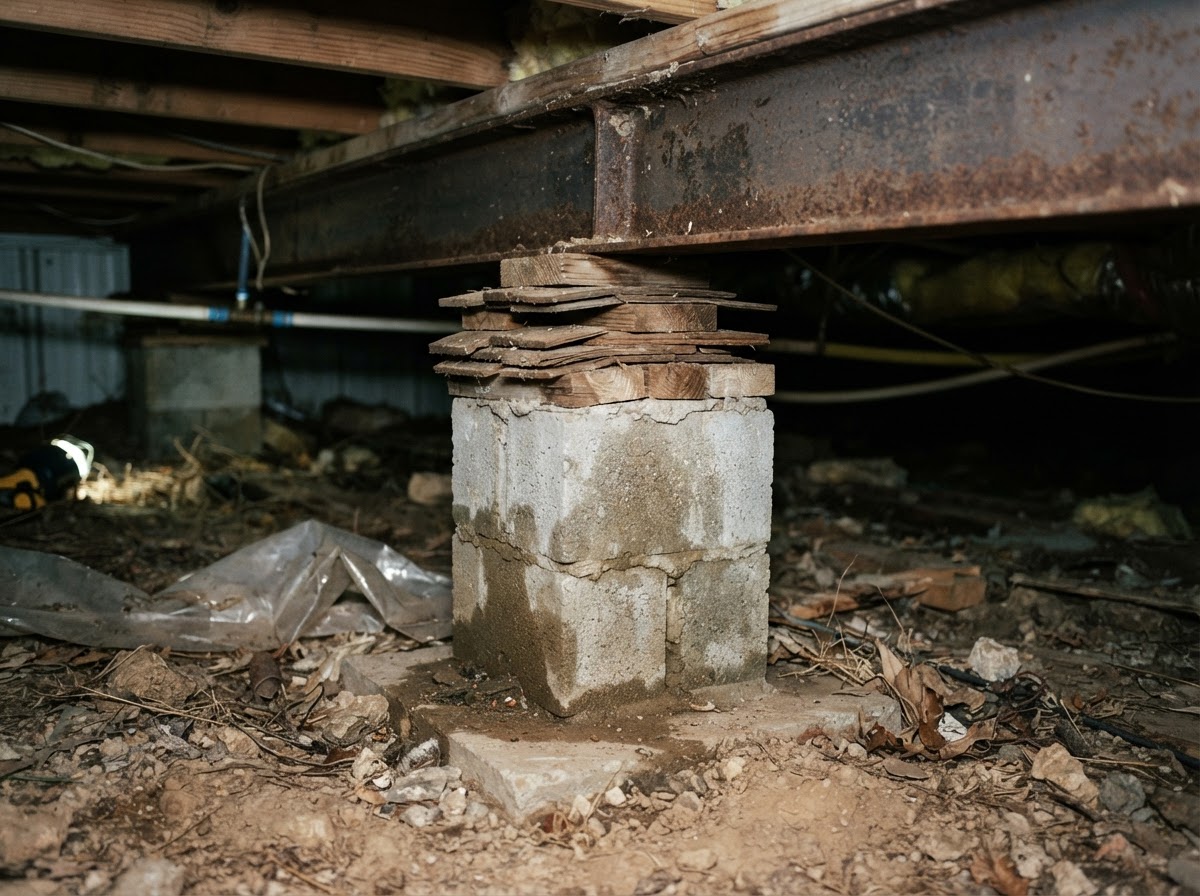
A manufactured home that bounces or shakes when someone walks across it can be a sign that the support system beneath the chassis is no longer making full, firm contact. A support gap, a loose or missing shim, a shifted pier, or a block stack that has moved can all let the chassis flex underfoot. Uniontown Mobile Home Leveling evaluates the supports beneath the home to find what is actually moving and match it to the correct service — shimming, reblocking, pier or chassis support repair, or leveling.
Why Does a Mobile Home Feel Bouncy or Shake When You Walk?
Some bounce is normal in a manufactured home, but a noticeable change — or movement that worsens over time — can point to a support contact problem beneath the home.
Localized Bounce
Movement concentrated in one area often points to a single support point that has lost contact with the chassis.
Whole-Home Vibration
A general springiness across the home can mean several supports are no longer bearing evenly.
Movement Around the Centerline
On a double-wide, bounce near the mating line can point to marriage-line support changes.
Floor Movement in One Area
A specific room or hallway that bounces while the rest is firm suggests a local support issue.
Worsening Over Time
Bounce that becomes more noticeable over months usually means a support condition is changing, not static.
Bounce With Other Symptoms
Floor bounce alongside uneven floors or sticking doors is stronger evidence of support movement.
Why does my mobile home bounce when someone walks across it?
A bouncy floor usually means a support point beneath the chassis is no longer making full, firm contact — a shim has compressed or fallen out, a pier has shifted, a block stack has moved, or the chassis itself has lost bearing at that location. When the support is not firmly engaged, the chassis flexes underfoot. Some flexibility is normal in a manufactured home, but a noticeable change or worsening bounce should be evaluated, because the same conditions can also let the home go out of level.
Common Foundation Causes of Mobile Home Shaking & Floor Bounce
The pattern is consistent: movement at a support point reduces contact or stiffness, and the chassis above it becomes free to flex.
Support Gap
A gap between the pier top and the I-beam lets the chassis drop and flex at that point before the support engages.
Loose or Missing Shim
Shims that crack, compress or fall out remove the precise fit between pier and chassis, creating movement.
Shifted Pier
A pier that has moved out of position may no longer bear directly under the I-beam it was supporting.
Block Movement
A block stack that has leaned or shifted reduces the firm, even bearing the chassis needs.
Poor Chassis Contact
When the I-beam no longer rests fully on its supports, the floor above can bounce underfoot.
Support Settlement
A support that has sunk leaves the chassis above it unsupported until the home is releveled.
Marriage-Line Support Issue
On double-wides, movement at center supports lets the mating line flex when the home is walked across.
Frame / Chassis Support Change
A bent or poorly supported I-beam changes how the floor above carries load and can feel bouncy.
Deteriorated Support Pad
A cracked or crumbling pad distributes load poorly and can let a pier settle enough to lose contact.
Movement at a support point reduces contact or stiffness, which produces the noticeable interior movement. The actual cause is confirmed by an under-home evaluation.
How Mobile Home Floor Bounce Is Evaluated & Corrected
The evaluation finds what is actually moving. The service depends on whether the cause is a shim, a pier, a block stack, the chassis, or the marriage line.
Shimming & Shim Replacement
Reblocking & Support Resetting
Pier & Beam Foundation Repair
Frame & Chassis Support Repair
Mobile & Manufactured Home Leveling
Marriage Line Adjustment
The Service Depends on What Is Moving
A missing shim needs shimming. A shifted block stack needs reblocking. A pier that has dropped needs pier or footing work. A bent chassis needs frame and chassis support repair. Leveling alone may not stop the bounce if the underlying contact problem is not corrected.
Support Movement, Settlement & Site Conditions Near Uniontown
The same conditions that settle a home can also produce bounce — when a support drops enough to lose contact, the chassis above it becomes free to move.
Seasonal Settlement
Wet and dry cycles change soil bearing through the year, which can let a support drop enough to lose contact.
Water Around Supports
Standing water or runoff softens soil beneath piers and pads, letting them sink and the chassis lose contact.
Erosion
Material washed away from a footing or pad can let a support drop, opening a gap at the chassis.
Older Supports
Aging block stacks, pads and shims deteriorate and lose the firm bearing the chassis needs.
Footings Settling
A footing that drops takes the pier above it down with it, opening a gap at the I-beam.
Repeated Level Changes
A home that has been releveled more than once in the same area often has an ongoing support cause producing the bounce.
Related Problems to Watch For
- Uneven Floors in a Mobile Home
- Sinking Piers Under a Mobile Home
- Mobile Home Leaning or Tilting
- Sticking Doors & Windows
Mobile Home Shaking & Floor Bounce FAQs
Direct answers about what floor bounce and shaking can mean in a manufactured home.
The shake usually means a support point beneath the chassis is no longer making full, firm contact — a shim has failed, a pier has shifted, or a block stack has moved. When the support is not firmly engaged, the chassis flexes underfoot.
Does Your Mobile Home Feel Bouncy or Move When Walking?
Describe where the bounce is — one room, a hallway, or near the center of a double-wide — and whether it is getting worse. We will evaluate the supports beneath the home and match the cause to the correct service.