Freeze-Thaw Mobile Home Foundation Movement Uniontown
Repeated seasonal freezing and thawing can change ground and moisture conditions around supports, creating movement that returns year after year. A single frost heave or one spring settlement is an event; freeze-thaw movement is a pattern — the home shifts in winter, shifts again as it thaws, and never quite settles back to where it started. Uniontown Mobile Home Leveling evaluates whether your symptoms are part of a recurring seasonal cycle and what it takes to break it.
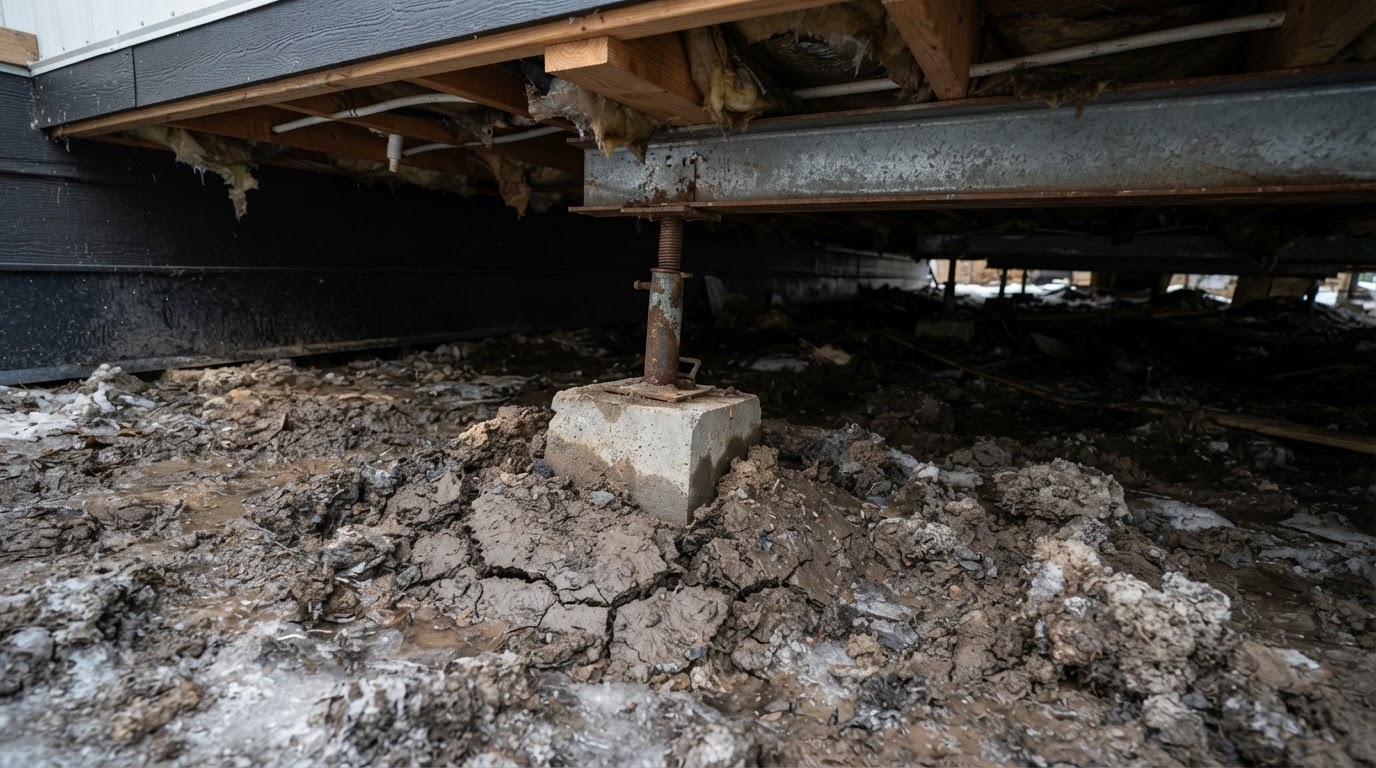
Signs Your Mobile Home Foundation Is Moving With the Seasons
The hallmark of freeze-thaw movement is that it comes back. If the same symptom appears at the same time each year, the seasons are likely driving it.
Home Feels Different in Winter vs Spring
The floor slope, door alignment, or bounce changes between seasons — a high spot in winter, a dip in spring — as the ground freezes and thaws.
Recurring Floor Slope
The same area of the home goes out of level each year, sometimes in opposite directions as the ground freezes and then softens.
Doors Stick Seasonally
Doors bind in cold weather and free up in warm weather, or vice versa, as the supports beneath them shift with the seasons.
Shim Gaps Appear and Disappear
A gap opens above a support in winter and closes in spring, or shims loosen and tighten as the support elevation changes with the ground.
Centerline Changes
In double-wides, the marriage line may shift seasonally as the center supports move with freezing and thawing ground.
One Support Repeatedly Changes Elevation
A single pier rises in winter and drops in spring, year after year, while the rest of the home stays relatively stable.
Previous Leveling Does Not Hold
The home was releveled, but by the next season it is out of level again in the same place — a sign the underlying cycle was never addressed.
Cracks Open and Close
Wall or ceiling cracks may widen in one season and narrow in another as the home moves with the ground beneath it.
Wet Ground Around Supports in Spring
As the ground thaws, the soil around supports stays wet and soft, contributing to the spring half of the freeze-thaw cycle.
Can freeze-thaw cycles make a mobile home go out of level?
Yes. Where moisture and soil conditions allow, seasonal freezing and thawing can change the elevation of support bases — pushing them up in winter and letting them drop or shift as the ground thaws. Over multiple cycles, the home can go out of level repeatedly, often in the same place each year. But recurring symptoms should be evaluated to confirm the cause; drainage problems, footing settlement, or pier movement can produce similar patterns. The evaluation determines whether the freeze-thaw cycle is actually driving the movement.
How Freeze-Thaw Cycles Affect Foundation Supports
Each cycle does a little more than the last. The damage is cumulative, and the pattern repeats.
Moisture Enters Soil
Rain, snowmelt, or poor drainage puts water into the soil around supports, giving the freeze-thaw cycle something to work with.
Freezing Changes Ground
When the soil freezes, the water within it expands, which can lift the ground and any support resting on it upward.
Thawing Changes Bearing
As the ground thaws, the frozen soil softens and releases its water, reducing bearing strength and letting supports drop or shift.
Supports May Shift
Through each half of the cycle, supports can move — up in winter, down or sideways in spring — and not always back to where they began.
Drainage Influences Moisture
How much water sits in the soil determines how much the freeze-thaw cycle can move it. Better drainage often means less movement.
Cycles Expose Weakness
An existing footing, pier, or drainage weakness may go unnoticed until repeated freeze-thaw cycles make it visible through recurring movement.
Not every home that freezes and thaws moves. Whether the cycle causes problems depends on the soil, the moisture, the footing depth, and the drainage at that specific site.
How Seasonal Foundation Movement Is Evaluated
The evaluation looks for the pattern — when the movement happens — and the conditions that let the cycle repeat.
Foundation Stabilization
Preventive Foundation Maintenance & Adjustment
Footing Repair
Reblocking & Support Resetting
Shimming & Shim Replacement
Mobile Home Leveling
Drainage & Grading Correction
Releveling Alone May Not Break the Cycle
Releveling the home fixes the symptom, but if the freeze-thaw cycle is still driving the supports, the home will go out of level again next season. A lasting correction usually requires identifying what lets the cycle repeat — footing depth, drainage, or support arrangement — and addressing that, not just resetting the level. Repeated seasonal releveling without finding the cause is rarely the best long-term strategy.
Frost Heave, Thaw & Settlement: What Is the Difference?
These three are related but distinct. Knowing which one is happening determines the right correction.
Frost Heave
Upward movement from freezing ground. A single-season event where the ground lifts a support. The opposite direction of settlement.
Thaw-Related Settlement
Downward movement or change as frozen ground softens and loses bearing. The spring half of the cycle, often leaving supports lower than they started.
Freeze-Thaw Movement
The recurring seasonal pattern across both halves — up in winter, down in spring — that repeats year after year and never fully resolves.
Related Problems to Watch For
Freeze-thaw movement often appears alongside these related seasonal problems. If your home moves every winter and spring, check for these as well.
Freeze-Thaw Mobile Home Foundation FAQs
Direct answers to the most common questions about recurring freeze-thaw foundation movement.
If the home goes out of level at the same time each winter, freeze-thaw movement is a likely cause. Freezing ground can lift supports, and thawing ground can let them drop, so the home shifts with the seasons. An evaluation confirms whether the cycle is the cause or whether something else is driving the movement.
Dealing With Recurring Seasonal Foundation Movement?
Describe what you are seeing — a home that shifts every winter, doors that stick seasonally, shims that loosen in cold weather, or leveling that never holds from one year to the next. We will evaluate whether a freeze-thaw cycle is driving the movement and what it takes to break it.