How Freeze-Thaw Cycles Affect Mobile Home Foundations
Freeze-thaw cycles can affect manufactured-home foundations when changing moisture and ground conditions cause support bases to move between seasons. Depending on the site, supports may experience upward movement during freezing, downward settlement during thaw, or repeated changes in elevation that never fully resolve. The exact response depends on soil, moisture, drainage, footing and support design, and the existing condition of the foundation.
What Happens to Foundation Supports During Freezing & Thawing?
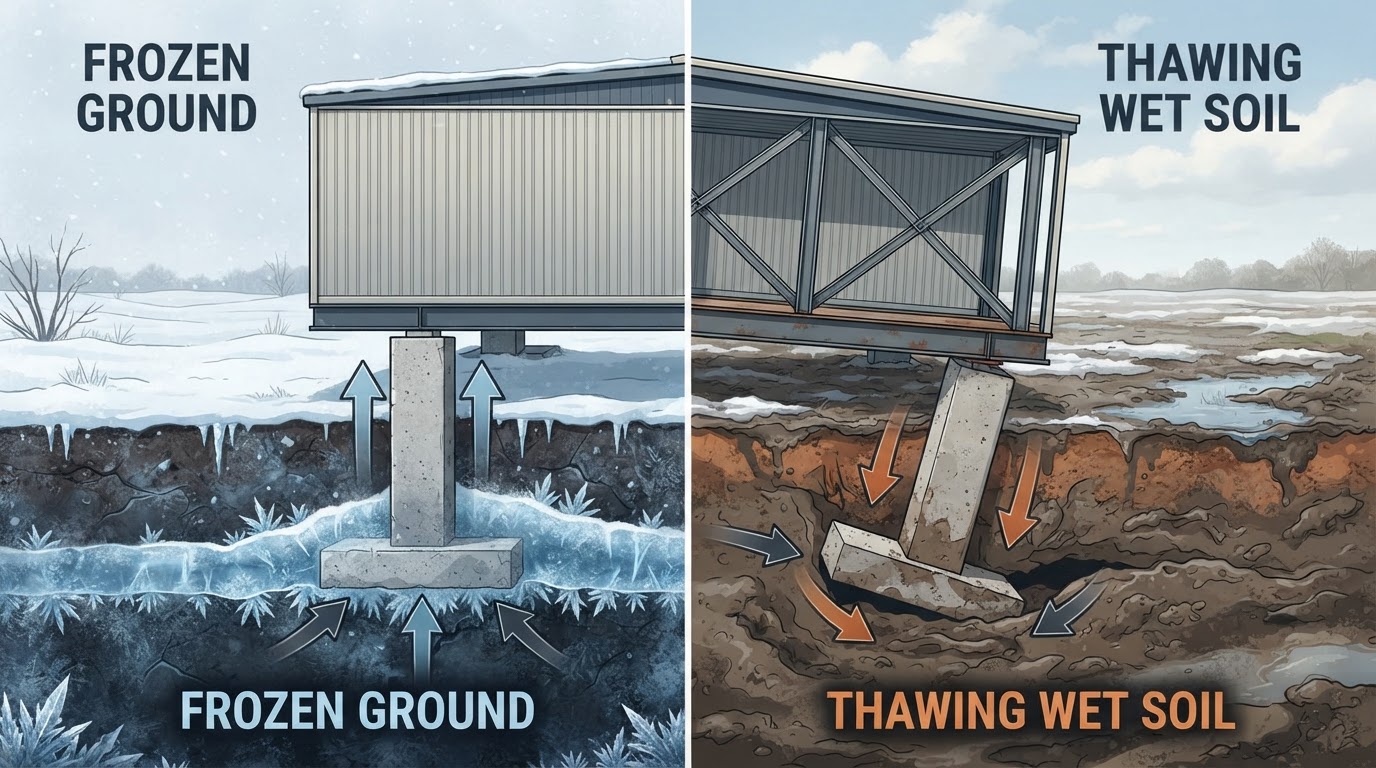
A freeze-thaw cycle is a sequence. Not every phase happens on every home — but understanding the sequence explains why seasonal movement recurs.
Wet Ground
Rain, snowmelt or poor drainage puts moisture into the soil around footings and pads before freezing even begins.
Freezing Conditions
Below-freezing temperatures penetrate the ground. Under susceptible soil conditions, freezing moisture can expand.
Potential Upward Movement
Where frost heave occurs, a footing, pad or support base can be pushed upward, lifting one support relative to its neighbors.
Thaw
As temperatures rise, frozen ground thaws and releases moisture back into the soil.
Softened / Changing Bearing Conditions
Thawed, saturated soil can lose bearing strength, so supports that heaved up may now sink or settle.
Possible Settlement
The home may end up lower than it started, back where it started, or unevenly settled — and the cycle repeats next season.
How do freeze-thaw cycles affect mobile home foundations?
Freeze-thaw cycles affect mobile home foundations when changing moisture and ground conditions cause support bases to move between seasons. Freezing can push a support upward; thawing can soften soil and let it settle back or sink further. Over many cycles, supports can end up unevenly settled — and because the movement recurs each season, releveling alone rarely holds unless the underlying footing, drainage and soil conditions are addressed.
Signs a Mobile Home Foundation May Be Moving Seasonally
Seasonal movement has a pattern. Recognizing the pattern is what separates a freeze-thaw problem from a one-time settlement.
Doors Stick in One Season
Doors that bind in winter and free up in spring — or the reverse — suggest the frame is moving with the ground rather than settling once.
Floors Change Slope
A floor that slopes one way in winter and differently in spring is moving with the supports beneath it, not staying put.
Shim Gaps Appear and Disappear
A shim that loosens in cold weather and tightens in warm weather is responding to a support that is changing elevation with the seasons.
Recurring Floor Hump
A hump or ridge that returns each winter points to a support heaving upward, then settling back when the ground thaws.
One Pier Changes Relative Elevation
A single support that sits higher or lower than its neighbors depending on the season is a classic freeze-thaw signature.
Marriage-Line Symptoms Change
A double-wide marriage line that shifts between seasons can reflect centerline supports moving with freeze-thaw while perimeter supports do not.
Home Repeatedly Needs Adjustment
If the home goes out of level predictably each winter or spring, an underlying footing, drainage or soil cause is usually at work.
Spring Settlement Follows Winter Movement
Symptoms that appear in winter from heaving and again in spring from thaw settlement are a strong clue that freeze-thaw is the driver.
Symptoms Ease, Then Return
Movement that partially resolves on its own and then comes back is rarely a one-time event — it is a cycle.
One-Time Settlement vs. Recurring Seasonal Movement
| Feature | One-Time Settlement | Recurring Freeze-Thaw |
|---|---|---|
| Timing | Develops once, then stays | Appears and recedes with seasons |
| Direction | Usually downward | Upward, downward or both |
| Releveling result | Often holds if cause is fixed | Returns next season |
| Underlying cause | Footing, soil or drainage | Frost, moisture, drainage |
Freeze-Thaw, Drainage & Spring Conditions in Southwest Pennsylvania
Southwest Pennsylvania's winters create the freezing conditions freeze-thaw requires. Whether a specific home is affected depends on its soil, moisture and drainage — not the region alone.
Winter Freezing
Sustained below-freezing temperatures allow frost to penetrate the ground — the first requirement for freeze-thaw movement.
Snow & Rain Moisture
Winter precipitation and rain-on-snow events add moisture to the soil that freezing then acts on, and that thaw later releases.
Spring Thaw
As frozen ground thaws, moisture returns to the soil and bearing conditions change — a common time for settlement to become visible.
Wet Ground
Soil that stays wet through the cold months gives freeze-thaw more to work with than soil that drains well.
Drainage Influence
Where drainage moves water away from supports, freeze-thaw has less effect. Where water pools or runs toward the home, the cycle is more active.
Erosion Interaction
Thaw can release runoff that erodes material from around footings and pads, so freeze-thaw and erosion often work together in spring.
Why Repeated Releveling Is Not a Fix
A home that goes out of level each winter and spring can be releveled repeatedly — but if the footing, drainage or soil condition driving the cycle is still active, the movement returns. Stabilization, footing correction or drainage work that addresses the cause is a more durable path than adjustment alone.
Related Seasonal & Foundation Resources
Use these guides and services to understand what your home may need and to request the correct evaluation.
Foundation Stabilization
Mobile Home Leveling
Footing Repair
Preventive Foundation Maintenance
Drainage & Grading Correction
Related Problems & Guides
Freeze-Thaw Mobile Home Foundation FAQs
Direct answers about freeze-thaw cycles and recurring seasonal movement.
Yes. When changing moisture and ground conditions move support bases between seasons, the home can go out of level repeatedly. Freezing can push a support upward and thawing can let it settle, so the level changes with the weather rather than once and for all.
Does Your Mobile Home Keep Moving With the Seasons?
Tell us what you are seeing — doors that stick in winter, a floor that changes slope in spring, a marriage line that shifts — and we will evaluate the supports beneath your home to find what is driving the cycle.