Frost Heave and Manufactured Home Foundations in Pennsylvania
Frost heave is upward ground movement associated with freezing moisture in susceptible soil conditions. If that movement occurs beneath or around a manufactured-home footing, pad or support base, it can change support elevation and affect the home's level. Not every mobile home experiences frost heave, not every seasonal level problem is frost heave, and a proper evaluation considers drainage, footings and the rest of the support system before pointing to frost as the cause.
What Is Frost Heave?
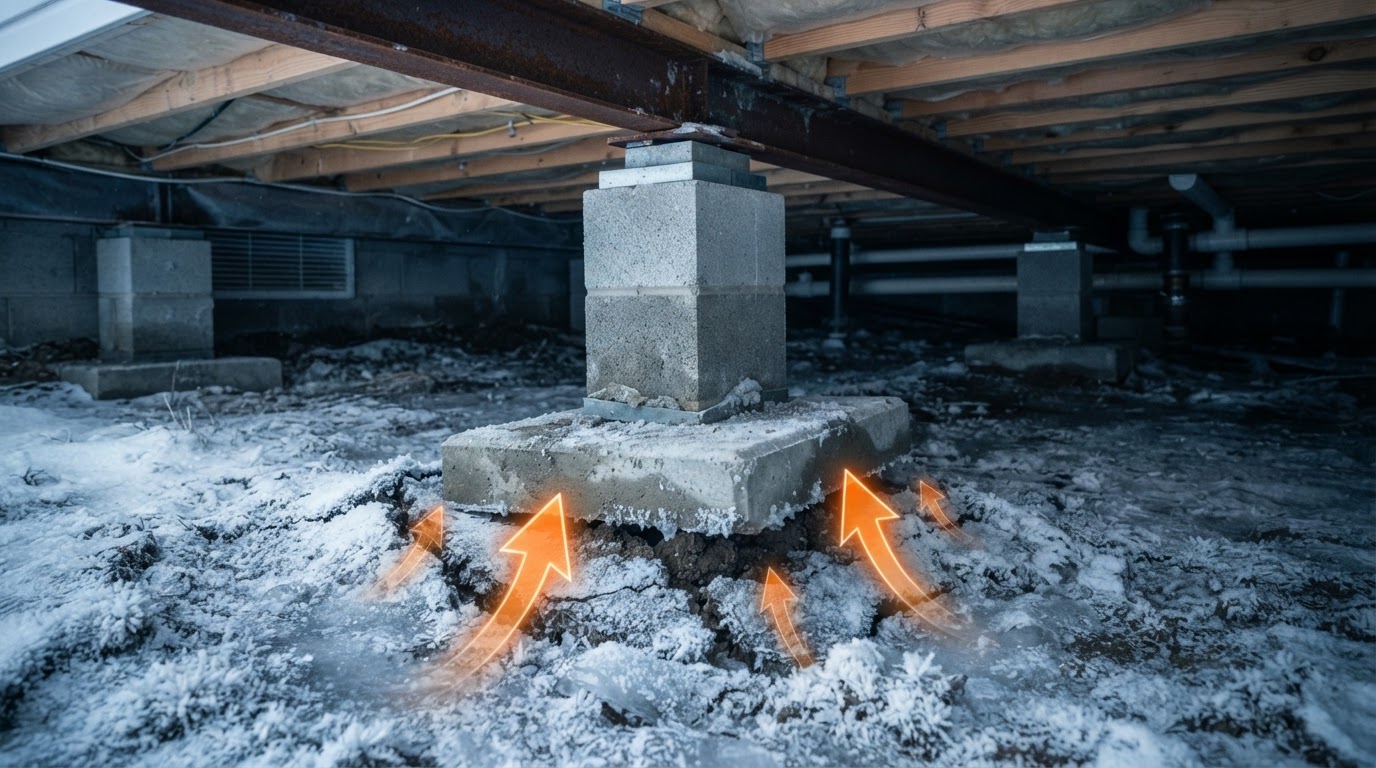
Frost heave is a ground-movement process. Understanding the simple mechanism helps explain why it can affect a support that looks fine in summer.
Frost Heave
Upward ground movement associated with freezing moisture in susceptible soil. It pushes a support base upward rather than letting it settle downward.
Footing
The base beneath a pier that spreads the load onto the soil. A footing that sits in a frost-susceptible zone can be lifted by frost heave.
Support Pad
The bearing surface a pier or block stack rests on. Like a footing, a pad can move if the ground beneath it heaves.
Pier
The vertical support stack that carries load from the chassis down to the pad or footing. A pier moves when the base beneath it moves.
Seasonal Movement
Foundation changes that appear and recede with the seasons — often a clue that frost, thaw or moisture is involved rather than a one-time event.
Thaw Reversal
When frozen ground thaws, a heaved support may drop back — or settle further as softened soil loses bearing. The result is not always a clean return to the original elevation.
What is frost heave under a manufactured home?
Frost heave is upward ground movement associated with freezing moisture in susceptible soil conditions. When it occurs beneath or around a manufactured-home footing, pad or support base, it can change the elevation of that support and affect the home's level. It is one possible cause of seasonal foundation movement — not the only one — and an evaluation considers drainage, footings and the rest of the support system before attributing movement to frost.
How Frost Heave Can Affect a Manufactured Home Support System
Frost heave does not lift the whole home evenly. When one support heaves and its neighbors do not, the chassis is no longer evenly supported — and symptoms appear.
One Pier Rises Relative to Others
Frost heave often affects one support more than its neighbors, creating a high point in the chassis rather than a uniform lift.
A Floor Hump Appears
When a single support heaves upward, the floor above it can develop a hump or ridge that was not there before the cold weather.
Shims Lose Proper Contact
A heaved support changes the gap the shim was filling, so the shim can loosen, crush or fall out as the contact changes.
Doors and Windows Change Alignment
Frame movement from an unevenly heaved support can make doors bind or windows stick — symptoms that may ease when the ground thaws.
Marriage Line Changes
In a double-wide, a heaved centerline support can push the marriage line upward on one side, producing a mismatched elevation between the two halves.
Symptoms Differ Between Winter and Spring
A support that heaves in winter and settles in spring produces symptoms that appear, recede and return — a strong clue that frost is involved.
Separating Frost Heave From Other Causes
A proper diagnosis must separate frost heave from problems that produce similar symptoms but need very different repairs:
Frost Heave, Moisture & Pennsylvania Winters
Pennsylvania winters create the freezing conditions frost heave requires. Whether a specific home is affected depends on its soil, moisture, drainage and footing conditions — not on the season alone.
Freezing Weather
Sustained below-freezing temperatures allow frost to penetrate the ground — the first requirement for frost heave to occur.
Wet Ground
Moisture in the soil is what freezing acts on. Wet bearing soil from rain, snowmelt or poor drainage gives frost heave the water it needs.
Snowmelt Contributions
Melting snow adds moisture to the ground that can later freeze, so the heave risk can follow snowmelt as well as rainfall.
Drainage Influence
Where drainage keeps water away from supports, frost has less moisture to work with. Where water pools or runs toward the home, frost risk rises.
Repeated Freeze / Thaw
A winter with many freeze-thaw cycles can move a support more than one sustained freeze, because each cycle lifts and drops the ground.
Spring Thaw Reversal
When frozen ground thaws, a heaved support may settle back — or sink further as softened soil loses bearing, producing a different symptom in spring.
Not Every Pennsylvania Home Has Frost-Heave Risk
Frost heave requires a combination of freezing temperatures, moisture and susceptible soil — and a footing or pad that sits within the zone that moves. Many manufactured homes in Pennsylvania never experience it. The question is whether a specific home's soil, drainage and footing conditions make frost heave a plausible cause of the symptoms being seen.
Related Frost & Foundation Resources
Use these guides and services to understand what your home may need and to request the correct evaluation.
Foundation Stabilization
Footing Repair
Mobile Home Leveling
Reblocking & Support Resetting
Drainage & Grading Correction
Related Problems & Guides
Frost Heave & Manufactured Home Foundation FAQs
Direct answers about frost heave and manufactured home foundations.
Frost heave is upward ground movement associated with freezing moisture in susceptible soil conditions. When it occurs beneath or around a footing, pad or support base, it can change that support's elevation and affect the home's level. It is one possible cause of seasonal foundation movement, not the only one.
Concerned About Seasonal Foundation Movement?
Tell us what you are seeing — a winter floor hump, doors that stick in cold weather, a marriage-line change — and we will evaluate the supports beneath your home to determine whether frost heave is the cause or something else is at work.