Soft Soil, Soil Bearing Capacity & Manufactured Home Foundations
Manufactured-home supports ultimately transfer loads into the ground. If the soil or support base beneath a footing or pad cannot reliably carry that load, the support can settle or move. Soft ground may be associated with saturation, disturbed soil, erosion, poor drainage, seasonal thaw or localized weak areas. Not every soft-looking soil condition is structurally inadequate — but when bearing weakens, supports are often the first place the change shows up.
What Does Soil Bearing Capacity Mean for a Manufactured Home?
A few terms describe how the ground beneath a home carries the load above it. They are related, but they are not interchangeable — and confusing them leads to the wrong repair.
Soil Bearing Capacity
The ability of the ground to support load without excessive settlement. Higher bearing capacity means the soil can carry more weight before it compresses or gives way; weaker bearing means supports are more likely to move under the same load.
Footing / Support Pad
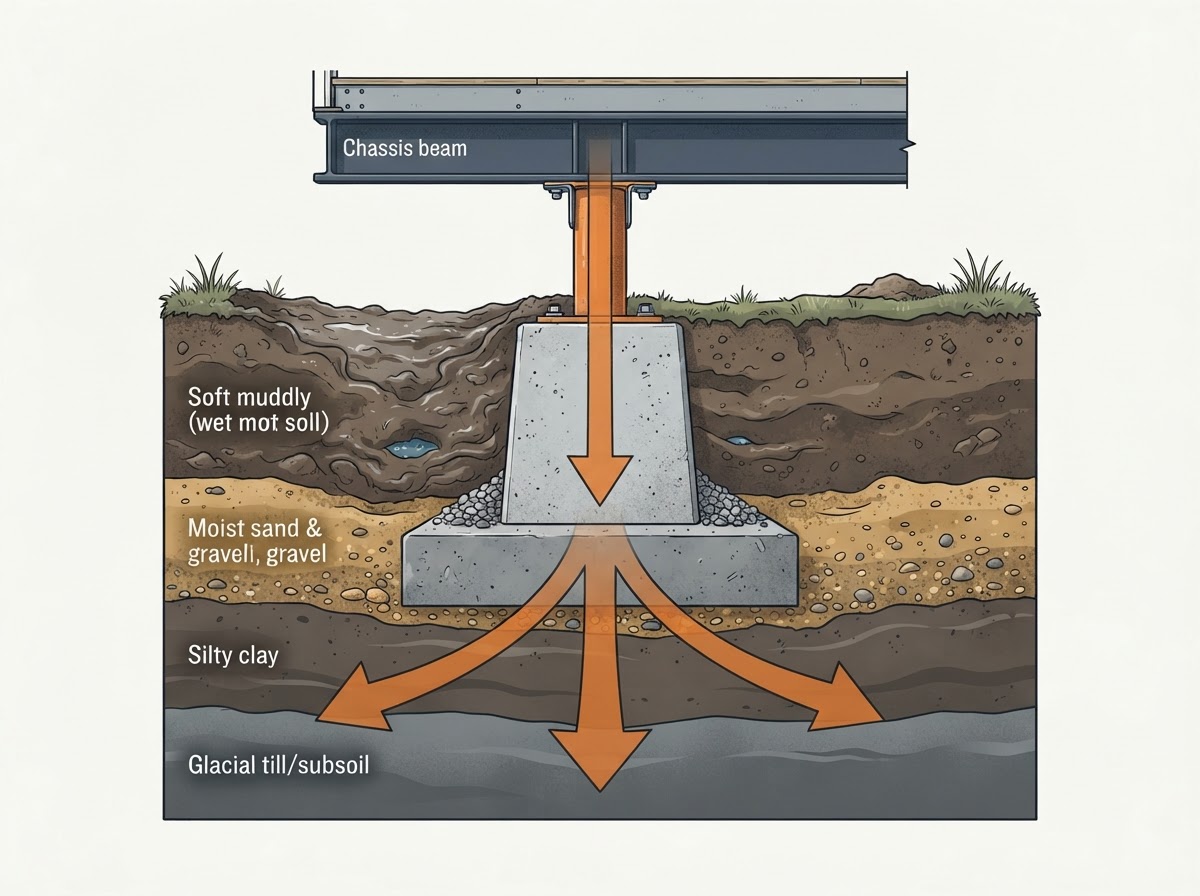
A base intended to distribute support loads across a wider area of soil. A footing spreads the pier's load so the ground beneath it sees less pressure per square inch than it would from a narrow point.
Pier
The component that transfers load from the chassis or I-beam downward toward the footing or pad. The pier concentrates the load; the footing spreads it. If either is wrong, the soil can be overloaded.
Settlement
Downward movement that occurs when a support or its base loses elevation. Settlement can happen because the soil compresses, the footing sinks, the pad shifts, or material is washed away from beneath the support.
Saturated Soil
Soil with high moisture content that may behave very differently than dry, stable ground. Saturated soil can soften, lose strength, and compress more under the same load — which is why wet periods often precede settlement.
Disturbed Soil
Soil that has been excavated, filled, compacted unevenly or otherwise altered. Disturbed soil can settle over time as it reconsolidates, sometimes years after the home was placed.
How Soft Ground Can Affect Piers, Pads & Footings
A manufactured home's weight travels down a defined path. When the bottom of that path — the soil — weakens, everything above it has to adjust.
One Support Settles
When the soil beneath a single footing or pad weakens, that one support drops. The result is a localized floor slope, dip or bounce directly above the moving pier — while the rest of the home stays put.
Several Supports Settle
When broader soil conditions weaken — a wet area, a soft layer, a drainage problem affecting multiple supports — several piers settle together, changing the level of a whole section of the home.
One Side Is Wetter
Where water affects only one side of the home, the soil on that side softens while the other stays firm. The wetter side's supports settle, producing one-sided settlement that worsens with each wet period.
Soil Washout Occurs
When water physically removes soil from around or beneath a footing, the bearing area changes. The support can drop, lean or expose itself — even if the remaining soil is otherwise strong.
Footing Is Unsuitable for the Conditions
A footing that is too small or otherwise not matched to the actual soil and load conditions can overload the bearing soil. The required size, depth and bearing area depend on the home, loads, soil and applicable requirements — not a universal number.
Disturbed or Fill Soil
Soil that was filled, excavated or unevenly compacted during setup can settle for years afterward. Supports placed on that soil may move as the ground slowly reconsolidates beneath them.
Moisture, Spring Thaw & Soil Conditions in Southwest Pennsylvania
Regional weather patterns can change soil moisture dramatically through the year. Those moisture changes are what connect soft ground to foundation movement — but actual soil conditions vary property by property.
Heavy Rain
Sustained rainfall saturates soil around supports, reducing bearing strength in the wettest areas and letting piers and pads settle where the ground softens most.
Prolonged Wet Periods
When the ground stays wet for weeks, soil never fully recovers its strength, and supports in consistently wet areas tend to move first and most often.
Snowmelt
Melting snow releases water into soil that may still be partly frozen or already saturated, producing a surge of moisture exactly when bearing is weakest.
Spring Thaw
As frozen ground thaws, it releases trapped moisture and softens. Supports that held all winter can suddenly settle as the bearing beneath them changes.
Freeze-Thaw
Repeated freezing and thawing loosens and redistributes soil particles around supports, widening gaps that water then exploits on the next wet cycle.
Sloped Sites
On sloped Southwest Pennsylvania properties, water concentrates downhill, so the lower side of the home sees the most saturation, erosion and soft-soil settlement.
Soil Varies Property by Property
There is no single Southwest Pennsylvania soil type. Two homes on the same street can sit on very different ground — one stable, one soft — depending on fill history, drainage, slope position and underlying material. Soil conditions are evaluated on the specific property, not assumed from the region.
Related Soil & Foundation Resources
Use these guides and services to understand what weak bearing means for your home and to request the correct evaluation.
Foundation Stabilization
Footing Repair
Footing Installation & Replacement
Pier Replacement
Drainage & Grading Correction
Related Problems & Guides
Soft Soil & Manufactured Home Foundation FAQs
Direct answers about soil bearing, soft ground and what it means for manufactured-home supports.
Soil bearing capacity is the ground's ability to support load without excessive settlement. Higher capacity means the soil carries weight reliably; lower capacity means it can compress, soften or give way under the same load, letting piers, pads and footings move.
Concerned About Soft Ground or Foundation Settlement?
Tell us what you are seeing — a pier that has dropped, a muddy area near a support, settlement after wet weather — and we will evaluate the supports and the bearing conditions beneath your home.