Mobile Home Shimming: What Shims Do and When They Need Replacement
Shims are small support-contact components used between a manufactured-home structural frame and its supporting pier or support assembly where applicable. Their role is to help establish proper contact and alignment. A shim may need evaluation or replacement when it is loose, missing, damaged, deteriorated, displaced, or no longer maintaining appropriate support contact. A loose shim often indicates movement elsewhere in the support system — the shim is usually the visible symptom, not the root cause.
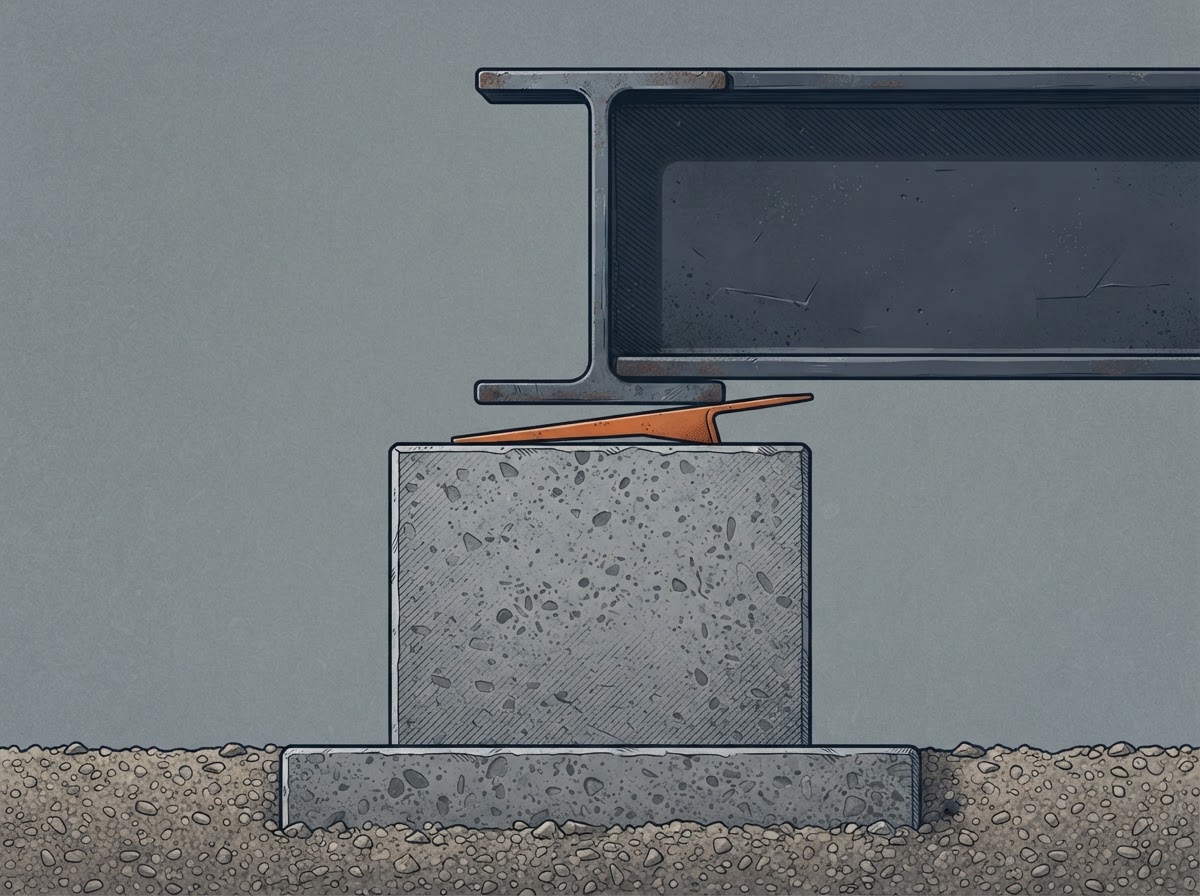
What Do Shims Do Under a Mobile Home?
Shims are the fine-adjustment layer of the support system. They do not carry the primary load — they fill the small gap between the frame and the pier so contact is solid and even.
Frame / Chassis
The structural steel frame of the home. The chassis or I-beam is what the supports beneath the home are meant to hold up evenly.
Pier / Support
The vertical component that transfers structural load downward. The pier sits beneath the frame; the shim sits between them.
Shim
A thin support-contact component placed between the frame and the pier to fine-tune contact and alignment. Shims fill small gaps; they are not the primary support.
Support Gap
An unexpected loss of contact at an intended support point. A visible gap between the frame and pier means that support is no longer carrying load the way it was designed to.
Why Do Mobile Home Shims Move, Loosen or Fall Out?
A shim loosens because the gap it was filling changed. That change almost always starts lower in the support system — at the pier, footing or soil — not at the shim itself.
Pier Settlement
When a pier drops, the gap between the frame and the pier widens. The shim that once fit snugly can loosen, slip or fall out as the support moves away from the beam.
Footing Movement
A footing that shifts or settles moves the pier above it, changing the contact at the top of the support — and the shim that filled the original gap.
Shifted Blocks
A block stack that leans or slides changes where the top of the support sits relative to the frame, loosening or displacing the shim.
Support-Base Movement
Any movement at the pad, footing or soil level travels up the support and changes the gap the shim was maintaining.
Home Releveling
When a home is releveled, supports are adjusted and gaps change. Shims that were correct before may no longer fit the new contact relationship.
Vibration & Movement
Normal movement of the home — walking, wind, traffic — can slowly work a poorly seated shim loose over time, especially if the support beneath it has shifted.
Marriage-Line Settlement
In a double-wide, centerline supports that settle change the gap at the marriage line, loosening the shims that maintain centerline contact.
Deterioration
Shims can crush, split or rot over time, especially if they were made from material not suited to long-term loaded contact. A deteriorated shim no longer fills its gap properly.
Reblocking Changes
When supports are reset or rebuilt during reblocking, the contact relationship changes and shims may need to be re-evaluated or replaced to match the new arrangement.
The Shim Is Usually the Symptom, Not the Cause
A loose or fallen shim is almost always telling you that something beneath it moved. Pushing the shim back into place without finding out why the gap changed does not fix the support — it hides the symptom until the shim loosens again. That is why shim problems are evaluated as part of the whole support system, not in isolation.
Loose Shims vs. Larger Foundation Problems
One loose shim can be a minor contact issue. Several loose shims, or shims that keep loosening, usually point to broader support movement that shimming alone will not solve.
Visible Condition → What May Need Evaluation
Repeated Shimming Is a Warning Sign
When shims keep loosening after being adjusted, the supports beneath them are still moving. Repeated shimming without identifying why the supports keep shifting — footing settlement, drainage, erosion, freeze-thaw — does not correct the cause. In that case, stabilization or drainage correction is a better long-term path than another round of shimming.
Related Shimming & Foundation Resources
Use these guides and services to understand your home's support contact and to request the correct evaluation.
Shimming & Shim Replacement
Mobile Home Leveling
Reblocking & Support Resetting
Frame & Chassis Support Repair
Pier Replacement
Marriage Line Adjustment & Support Repair
Related Problems & Guides
Mobile Home Shimming FAQs
Direct answers about what shims do, why they loosen, and when shim problems need professional evaluation.
A shim is a thin support-contact component placed between the home's structural frame and the top of a pier or support assembly. Its job is to fill the small gap between them so contact is solid, even and properly aligned. The shim fine-tunes the support; it does not carry the primary load.
Seeing Loose, Missing or Damaged Shims?
Tell us what you see — shims that have fallen out, gaps between the frame and piers, floors that bounce — and we will evaluate the supports beneath your home to find out why the contact has changed.