Mobile Home Leveling & Foundation Repair Waynesburg
Uniontown Mobile Home Leveling serves manufactured and mobile homes around Waynesburg with support-system services that go beyond a simple relevel — leveling, foundation stabilization, sinking piers, footings, reblocking, drainage and anchoring. Around Waynesburg, the questions that matter most are usually about stability: whether a settling support has a moving base beneath it, whether drainage or sloped ground is feeding the same symptoms back each season, and whether recurring movement needs stabilization rather than another round of leveling that will not hold. The work here focuses on identifying what is actually moving beneath the home before choosing the correction that fits the cause.
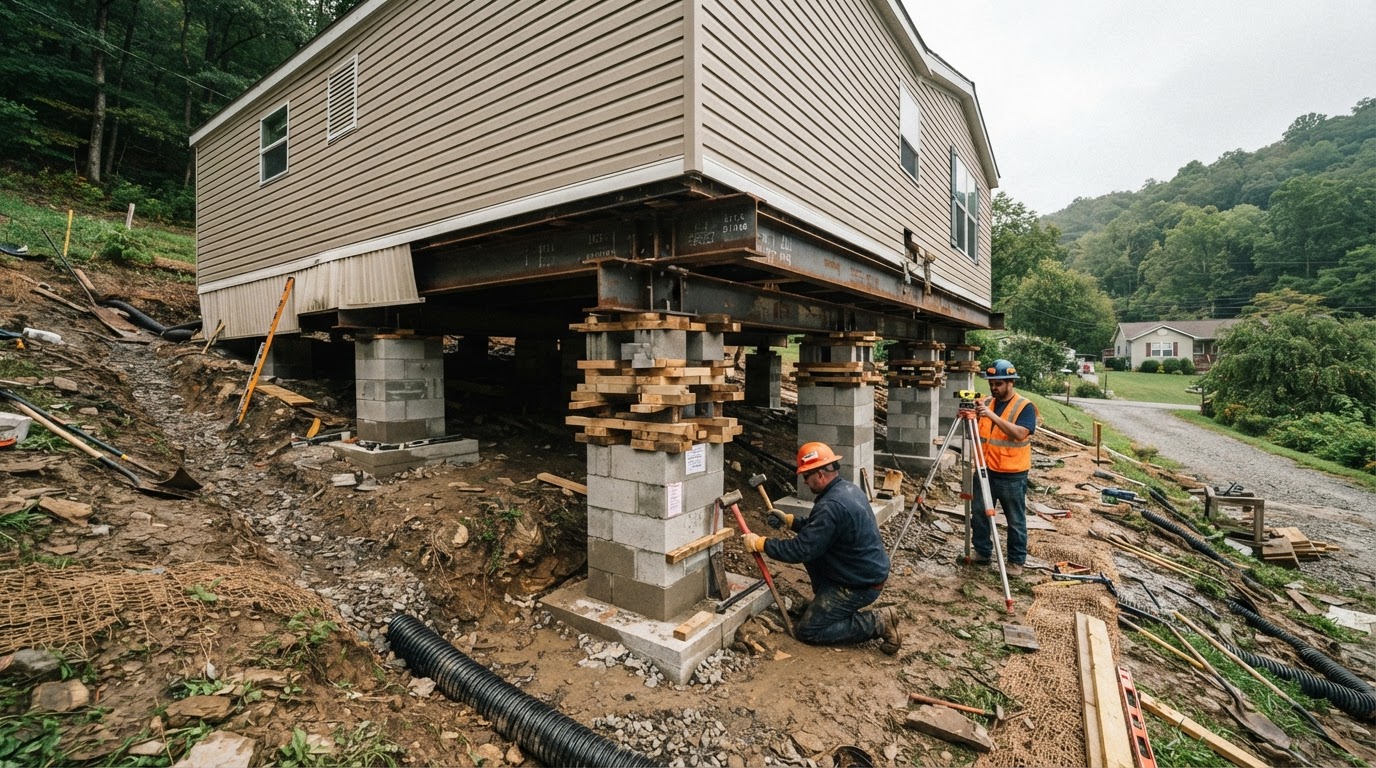
Mobile Home Settlement & Foundation Problems in Waynesburg
Around Waynesburg, the symptoms that bring a homeowner to call usually point back to stability rather than a one-time out-of-level event — and the same symptoms can return season after season when the base beneath the support keeps moving.
One Side Becoming Lower
When one end or one side of the home sits lower than the other, the cause is usually beneath the supports on that side — a footing, bearing soil or drainage condition that differs from the rest of the home.
Sloping Floors
A floor that develops a slope often follows a support point that has dropped. The slope is the visible result; the pier, block or footing beneath it is where the movement actually happened.
Sinking Piers
A pier loses elevation when the base beneath it — the footing, pad or bearing soil — softens, compresses or washes out. Releveling the home above it will not hold if the base keeps settling.
Loose or Missing Shims
Shims shift or fall when the gap they fill has changed. A loose shim is often the first visible sign that a support point beneath it has moved, not the root cause itself.
Shifted Block Stacks
A block stack that has leaned, rotated or slid no longer carries load straight down through the pier and into the footing. Reblocking resets that load path before it produces further movement.
Recurring Movement After Wet Weather
When symptoms return after rain, snowmelt or spring thaw, the supports are usually reacting to water at the base — saturated bearing soil, erosion or washout that changes the ground the home rests on.
Support Gaps
A gap between the chassis I-beam and the pier or shim below it means that support point is no longer carrying its share of the load — and neighboring supports are taking more than they should.
Drainage Around Supports
Water that runs toward the home or pools near supports can soften the bearing and erode material from around footings, producing the same settlement each wet season.
Double-Wide Alignment Changes
A sag, gap or mismatched elevation at the marriage line follows differential settlement between the two sections — one half settling or moving differently than the other.
Why does a mobile home keep settling?
Recurring settlement usually means the support base, footing, soil or drainage condition beneath the home is still moving after the home is releveled. Leveling corrects the elevation above the supports; it does not stop a footing, soft bearing or erosion problem underneath them from moving again. When the same symptoms return each season, the cause is usually still active — and stabilization, footing repair or drainage correction is what addresses it rather than repeating the same leveling that did not hold. Not every repeated level issue requires stabilization, but recurring movement is the signal that the cause deserves a closer look before the next relevel.
Mobile Home Leveling, Stabilization & Footing Repair Near Waynesburg
The Waynesburg service scope is grouped around stability — so the correction matches whether the home needs leveling, a footing or pier repair, or broader stabilization.
Leveling & Reblocking
Pier & Footing Repair
Recurring Settlement
How Recurring Foundation Movement Is Evaluated
When the same symptoms keep returning, the evaluation traces the movement down through the supports to the base — so the correction addresses what is actually moving, not just the floor elevation above it.
Identify Interior Symptoms
Uneven floors, sticking doors, a sagging centerline or a side that sits low — the interior signs that something has changed beneath the home.
Check Overall Level
Compare elevation across the home to see whether the movement is general, one-sided or concentrated at a few support points.
Inspect Piers, Blocks & Shims
Look for sinking piers, leaning or shifted block stacks, loose or missing shims, and gaps between the chassis and the supports below.
Evaluate Footings / Support Bases
Determine whether the base beneath a sinking support has softened, compressed, washed out or otherwise lost bearing.
Look for Water, Erosion or Soil Movement
Check runoff, pooling, washout and soft ground around supports — the conditions that can keep a base moving season after season.
Match the Repair to the Cause
Choose leveling, reblocking, pier or footing repair, stabilization or drainage correction based on what the evaluation actually found.
The point of tracing the movement is to avoid repeating the same relevel without understanding why the supports keep shifting. Releveling corrects the elevation; it does not correct a footing, soft bearing or drainage condition underneath the supports. When the cause is still active, the symptoms come back — which is why the evaluation looks past the floor and down to what is actually moving before a repair is selected.
Pier, Anchoring, Drainage & Inspection Services Near Waynesburg
A symptom-to-service view of the work that most often decides whether a Waynesburg leveling need is simple or part of a broader support correction.
| Symptom | Possible Service |
|---|---|
| One side sinking | Leveling + support-base evaluation |
| Pier dropping | Pier / footing repair |
| Blocks shifting | Reblocking |
| Recurring movement | Stabilization evaluation |
| Water around supports | Drainage & grading correction |
| Loose tie-down | Tie-down repair & replacement |
| Pulled or bent anchor | Ground anchor service |
| Unknown foundation condition | Foundation & anchoring inspection |
Pier Replacement
Failed or sinking piers replaced so the support above stops losing elevation.
Footing Repair
The base beneath a sinking support corrected so the pier above it stops settling.
Foundation Stabilization
Recurring movement addressed at the support base so the home stops settling each season.
Tie-Down Repair & Replacement
Loose, rusted, broken or missing straps corrected along with the connected anchor and chassis points.
Ground Anchor Installation & Replacement
Pulled, loose, bent or shifted anchors addressed at the anchor and the surrounding soil condition.
Drainage & Grading Correction
Runoff and surface water managed so water does not keep softening or eroding the bearing beneath supports.
Under-Home Water Drainage Correction
Standing water beneath the home corrected at the source so support areas are not repeatedly saturated.
Foundation & Anchoring Inspection
A visible evaluation of support and anchoring conditions before a repair or transaction is planned.
Preventive Foundation Maintenance
Condition-based monitoring so small support changes are caught before they become larger repair needs.
Site & Seasonal Conditions That Can Affect Manufactured Homes Around Waynesburg
Waynesburg sits in Greene County, where varied lot grades, rural sites and seasonal moisture can shape how a manufactured-home support system behaves — without every property sharing the same conditions.
Changing Lot Grades
Sloped or varied lot grades can direct runoff toward one side of a home more than the other, producing one-sided settlement or erosion around a few supports rather than uniform movement.
Water Across Sloped Property
On sloped ground, water tends to follow the grade and concentrate where it slows — often near or beneath a manufactured home — which can soften bearing and erode material from around footings.
Runoff & Erosion
Surface runoff that reaches the support area can wash soil out from beneath pads and footings, changing the bearing condition the home rests on and producing recurring settlement where the base is susceptible.
Heavy Rain & Wet Periods
Sustained rain can saturate bearing soil and reduce its capacity to hold a support, so a pier that was stable in dry weather can begin to settle during wet periods.
Spring Thaw & Freeze-Thaw
Freezing and thawing can lift and drop support points where moisture and soil allow, and spring thaw can soften bearing so a symptom hidden over winter becomes visible as the ground releases water.
Soft Ground Around Supports
Soft or muddy ground directly around a support can reflect saturated or disturbed bearing — a condition worth evaluating before another relevel is attempted over the same base.
These conditions can contribute where a property and its foundation are susceptible — they do not describe every Waynesburg home. A site-specific evaluation is what determines which conditions actually apply to a given property.
Waynesburg Mobile Home Foundation FAQs
Answers focused on settlement, stabilization, footings, drainage and anchoring around Waynesburg.
Yes. Uniontown Mobile Home Leveling serves manufactured-home owners around Waynesburg with leveling, reblocking, shimming and support-correction services. Request an estimate and describe what the home is doing so the evaluation can be matched to the actual symptoms.
Request Mobile Home Foundation Service Near Waynesburg
Tell us what the home is doing — one side lower, recurring settlement, a sinking pier, drainage or a sloped lot — and whether the symptoms follow the seasons. We'll trace the movement down to what is actually moving and match the right leveling, stabilization, footing repair or drainage correction.
Nearby Service Areas
Mobile Home Foundation Service Near Waynesburg
Describe what the home is doing, whether the symptoms recur each season, and whether drainage, erosion or a sloped lot is involved. We'll help identify what is actually moving beneath the home and match the right leveling, stabilization, footing repair or drainage correction.