Mobile Home Ground Anchor Installation & Replacement Uniontown
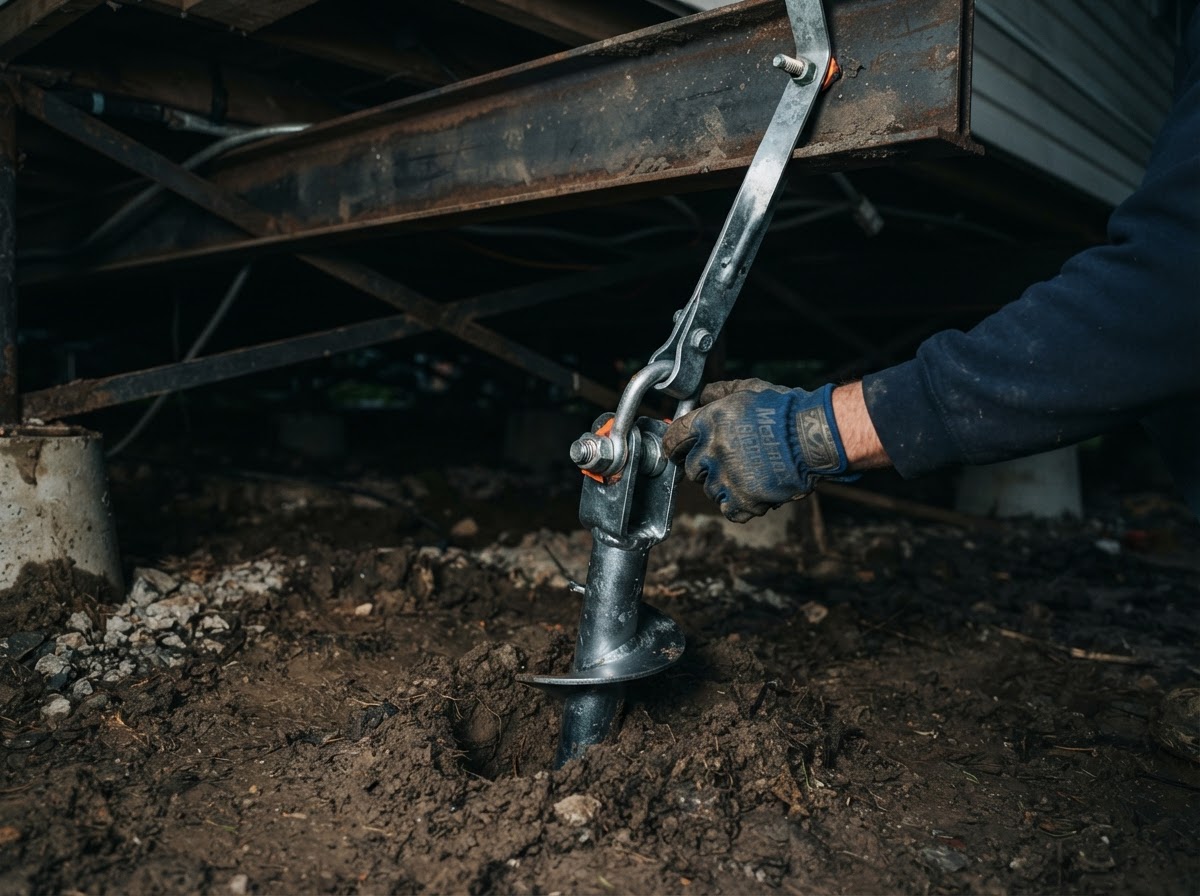
Ground anchors are the anchoring points that hold a manufactured home in place. A tie-down strap connects the home's steel frame to the anchor, but the anchor itself is what provides resistance in the ground. When an anchor is missing, bent, pulled loose, displaced or corroded, the anchoring relationship can no longer perform reliably. Uniontown Mobile Home Leveling evaluates ground anchor conditions across Uniontown and Fayette County, determining whether installation or replacement is appropriate and correcting the deficient anchor component so the complete anchoring system functions as intended.
Signs a Mobile Home Ground Anchor May Need Replacement
These signs point to the ground anchor itself — the component in the ground — rather than the strap that connects to it.
What is a mobile home ground anchor?
A ground anchor is the anchoring component installed into or connected with the ground that provides resistance against uplift and lateral movement forces on a manufactured home. The relationship runs from the home's steel frame, through the tie-down strap and connectors, down to the ground anchor. The strap is the link; the anchor is what holds. When the anchor pulls, bends or loses grip, the strap connected to it goes slack — and replacing the strap alone will not restore the anchoring relationship.
How Ground Anchor Problems Are Evaluated Near Uniontown
A loose strap does not automatically mean the anchor itself has failed — the evaluation identifies which component is the actual problem.
Inspect the Existing Anchor
Evaluate the anchor's visible position, damage, deterioration, connection hardware and its relationship to the strap.
Determine the Problem Source
Clarify whether the anchor or the strap is the problem. A slack strap can mean a failed anchor — not just a failed strap.
Installation or Replacement
Determine whether the situation calls for a missing anchor to be installed, a damaged anchor to be replaced, or a broader retrofit.
Install or Replace the Anchor
Install or replace the required anchor component, configured to the home, site and applicable requirements — not a fixed template.
Recheck the Complete Connection
Verify the full relationship: frame, strap, connector and anchor must all work together as one anchoring system.
We do not publish exact anchor depth, installation angle, anchor type or spacing on this page. Those values depend on the specific home, anchoring system, site soil conditions and applicable manufacturer, installation and regulatory requirements. The evaluation determines the appropriate configuration for your property. This page describes the professional process for homeowner understanding, not as a DIY guide.
Ground Anchors, Tie-Down Straps & Support Piers Explained
Anchoring components and foundation-support components perform different jobs. Confusing them leads to the wrong correction.
Ground Anchor
The anchoring component tied to the ground or associated foundation system. It provides the resistance that holds when the strap pulls — this page's focus.
Tie-Down Strap
Connects the home's steel frame to the ground anchor. The strap is the link, not the anchor — a sound strap with a failed anchor still leaves the system unreliable.
Frame Connection
Transfers anchoring forces to the manufactured home's steel chassis. The point where the strap engages the structure — a weak connection compromises the whole system.
Piers / Blocks
Carry vertical structural weight downward. Piers and blocks are part of the support system, not the anchoring system — they hold the home up, not in place.
Footings / Pads
Transfer support loads into the ground beneath the piers. Like piers, footings are part of the support system that carries weight, not the anchoring system.
Two Different Jobs
Anchoring components resist uplift and lateral movement. Foundation-support components carry the home's weight downward. They work together but perform different structural jobs.
Ground Anchor & Tie-Down Services Near Uniontown
The ground anchor is one component of the anchoring system. These related services address the other components and conditions that affect anchoring reliability.
Mobile Home Tie-Down Installation
Useful when straps are missing, not the anchor
Mobile Home Tie-Down Repair & Replacement
Useful for damaged, loose or corroded existing straps
Mobile Home Anchoring System Repair & Retrofit
Useful for multiple anchoring deficiencies together
Mobile Home Foundation & Anchoring Inspection
Useful to evaluate the full system condition
| Condition | Primary Service |
|---|---|
| Ground anchor missing or damaged | Ground Anchor Installation / Replacement |
| Strap is damaged | Tie-Down Repair |
| Tie-downs are missing | Tie-Down Installation |
| Multiple anchoring deficiencies | Anchoring System Retrofit |
| System condition is unknown | Foundation & Anchoring Inspection |
General guidance only, not remote diagnosis — an evaluation confirms the right service for your home.
Concerned About a Loose, Bent or Missing Ground Anchor?
If you can see a pulled, bent or corroded anchor beneath your home, or an anchor point that no longer grips reliably, the anchoring system may not be performing as intended. Request an evaluation and we'll determine whether installation or replacement is appropriate.
Mobile Home Ground Anchor FAQs
Answer-first explanations on what ground anchors do, how they differ from tie-down straps, when to replace an anchor and how anchor problems relate to the broader anchoring system.
A ground anchor is the anchoring component installed into or connected with the ground that provides resistance against uplift and lateral movement forces. The tie-down strap connects the home's frame to the anchor, and the anchor is what holds when the strap pulls. Without a reliable anchor, the strap has nothing to anchor to.
Request Ground Anchor Service in Uniontown
If you see a loose, bent, pulled or missing ground anchor beneath your home, the anchoring system may not be performing reliably. Request an evaluation and we'll determine whether installation or replacement is appropriate for your property.