Why Is Water Collecting Under My Mobile Home?
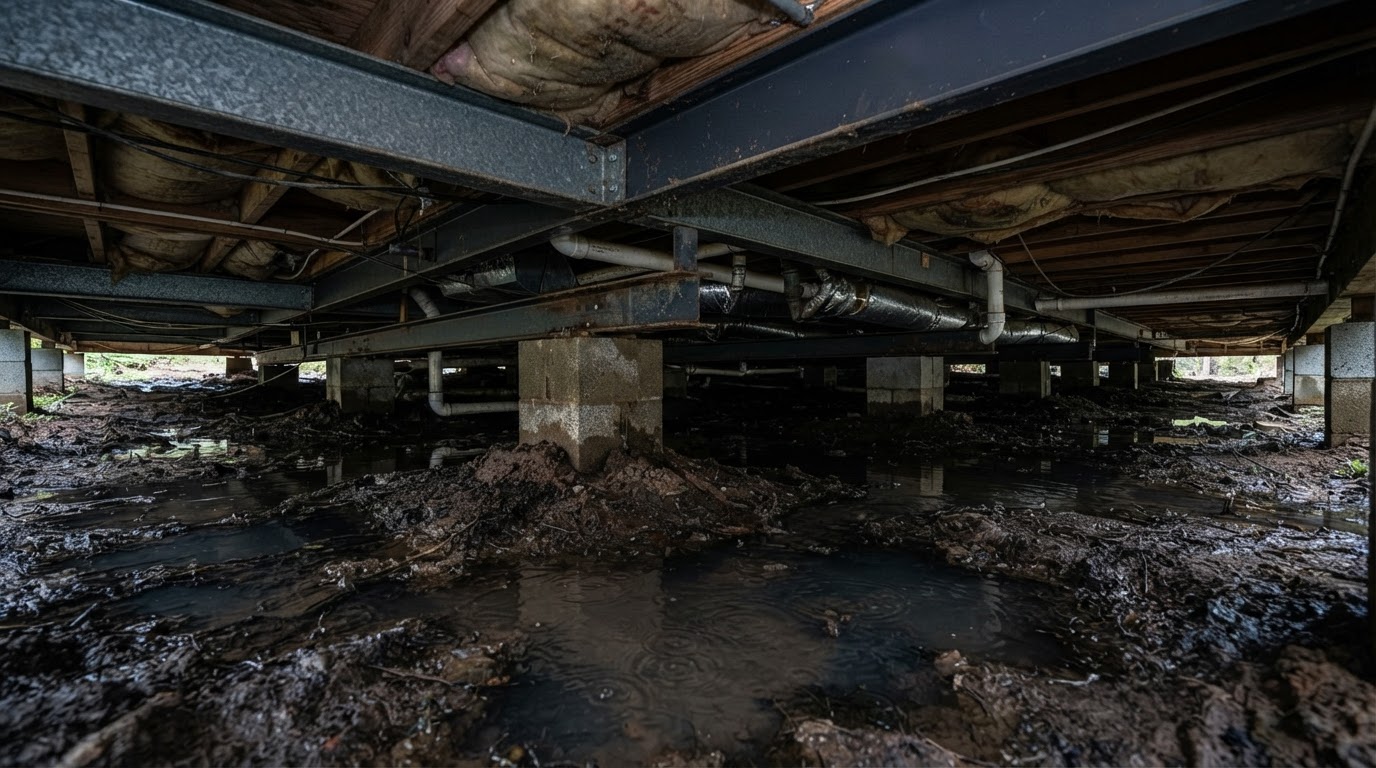
Water can collect beneath a mobile or manufactured home when surrounding grade, runoff, low areas or drainage conditions direct water toward the under-home space faster than it can leave. Common contributors include ground sloping toward the home, low spots beneath the home, uphill runoff, water entering around the perimeter, concentrated discharge, poor drainage paths and heavy rain. Water beneath the home does not automatically mean the foundation has failed — but it can become a foundation concern if it contributes to erosion, washout or changing support conditions.
Where Does Water Under a Mobile Home Come From?
Water beneath a home almost always arrives from a identifiable source. Knowing the source is the first step to correcting it.
Surface Runoff
Rainfall flowing across the lot can enter the under-home space if the ground directs it there rather than away from the home.
Poor Grading
When the ground around the home slopes toward it rather than away, water naturally collects against and beneath the structure.
Low Spots Beneath the Home
A depression under the home gives water a place to pool once it arrives, keeping the area wet long after rain ends.
Hillside Runoff
On sloped lots, water from uphill can flow beneath the home, especially where no drainage path intercepts it.
Concentrated Discharge
Downspouts, gutter outlets or other discharge points that release water near the home can direct a large volume under it.
Water Entering Beneath Skirting
Gaps at the perimeter, low skirting or missing barriers let surface water pass under the home and collect in the crawlspace.
Heavy Rain
Sustained or intense rainfall can overwhelm even adequate drainage, producing temporary ponding beneath the home.
Blocked or Ineffective Drainage Paths
Drainage that is clogged, misdirected or undersized cannot move water away fast enough, so it backs up under the home.
Plumbing Leaks (Possible)
A leaking supply or drain line can also introduce water beneath the home. If runoff is not the cause, a plumbing source should be considered.
Why is water collecting beneath my mobile home?
Water collects beneath a mobile home when surrounding grade, runoff, low areas or drainage conditions direct water toward the under-home space faster than it can leave. Ground sloping toward the home, uphill runoff, low spots, water entering around the perimeter, concentrated discharge and poor drainage paths are the most common contributors. The water itself is a drainage condition — it becomes a foundation concern only if it erodes soil or changes support conditions around piers and footings.
How Standing Water Can Affect Mobile Home Foundation Supports
Water beneath the home is not automatically a foundation problem. It becomes one when it changes the soil or support conditions that hold the home up.
This chain only runs when water actually changes soil or support conditions. Brief, infrequent moisture that drains quickly may never affect the supports.
Soft Soil
Saturated bearing soil loses strength, so pads and footings can sink slowly even without any visible erosion.
Erosion
Moving water carries soil away from around supports, exposing footings and pads and weakening their base.
Footing Exposure
As soil washes away, a footing that was buried becomes exposed — a visible sign that bearing conditions have changed.
Pier Settlement
A pier sitting on a softened or eroded base can lose elevation, dropping that support point relative to its neighbors.
Support Pad Movement
A pad that bears on saturated or eroded soil can shift, tilt or sink, changing the contact at the top of the support.
Recurring Level Change
If water keeps returning, the supports keep moving — so the home goes out of level repeatedly after wet weather.
Not All Standing Water Causes Structural Movement
Brief, infrequent moisture that drains away quickly may never affect the supports. What matters is whether water is recurring, whether it saturates or erodes the soil around supports, and whether the supports have already moved as a result. An evaluation separates a drainage nuisance from a condition that is actually affecting the foundation.
Rain, Snowmelt & Seasonal Water Around Manufactured Homes
Southwest Pennsylvania's weather creates several windows each year when under-home water becomes more likely. Recognizing them helps separate a one-time event from a recurring problem.
Heavy Rainfall
Sustained or intense rain can overwhelm drainage and produce temporary ponding beneath the home, especially on flat or poorly drained lots.
Spring Thaw
Melting snow and thawing ground release a large volume of moisture into the soil, a common time for under-home water to appear.
Snowmelt
A melting snowpack around the home can send a slow, steady flow of water beneath the structure over days.
Sloped Sites
On sloped lots, runoff from uphill naturally moves toward and under the home unless a drainage path intercepts it.
Freeze-Thaw Interaction
Frozen ground can shed water rather than absorb it, so winter and early-spring rain runs off quickly toward low areas and under the home.
Repeated Saturation
A lot that stays wet through multiple storms keeps the soil beneath the home saturated, so each new rain adds to an already wet condition.
Drainage Correction vs. Foundation Repair
Correcting the water — grading, drainage paths or under-home drainage — stops the source. Repairing the foundation — footings, piers, pads or stabilization — addresses damage the water has already caused. A home with under-home water often needs both: drainage correction to stop the water, and foundation repair if the supports have already moved. They are separate needs, and an evaluation determines which applies.
Related Drainage & Foundation Resources
Use these guides and services to understand what your home may need and to request the correct evaluation.
Under-Home Water Drainage Correction
Drainage & Grading Correction
Crawlspace Foundation Repair
Foundation Stabilization
Footing Repair
Related Problems & Guides
Water Under Mobile Home FAQs
Direct answers about why water collects beneath a mobile home and what to do about it.
Rainfall is being directed toward or beneath the home faster than it can drain away. Ground sloping toward the home, uphill runoff, low spots, concentrated discharge from downspouts, or blocked drainage paths can all send water under the structure. The water itself is a drainage condition; it becomes a foundation concern only if it erodes soil or changes support conditions.
Water Collecting Beneath Your Mobile Home?
Tell us what you are seeing — standing water after rain, muddy soil around supports, erosion near a footing — and we will evaluate both the drainage and the supports beneath your home to determine what is happening and what to do about it.