How Much Does Mobile Home Pier & Block Repair Cost?
Pier and block repair cost depends on whether the problem affects one damaged component or a larger support arrangement, whether the footing or pad underneath is stable, how much reblocking is required, and whether the home also needs releveling after the repair. A single cracked block and a row of shifted piers on a settling footing are very different projects. This guide explains the repair types and cost factors without invented dollar figures.
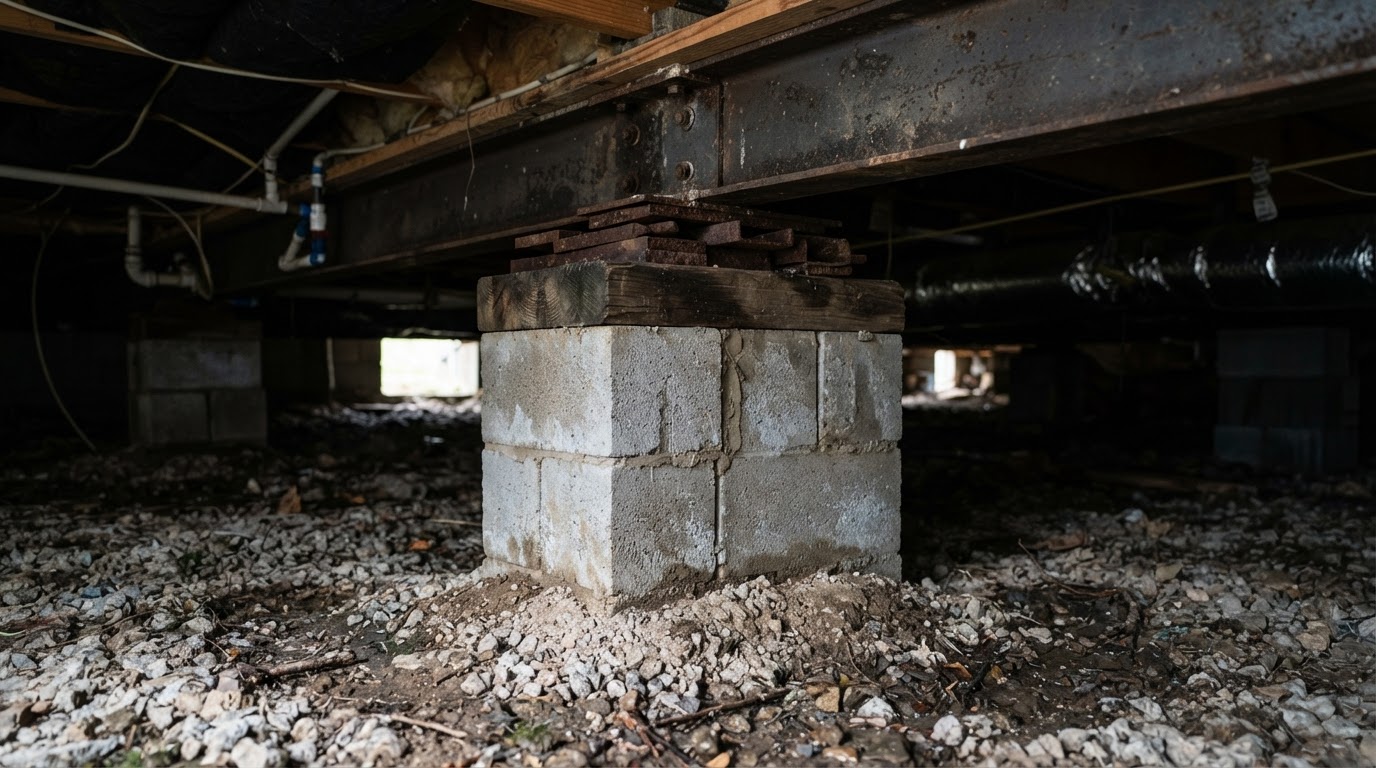
Different Pier & Block Repairs Have Different Costs
These services overlap — a reblocking job often includes shimming and leveling — but they are not the same scope.
Cracked Block Replacement
Removing a damaged concrete block and replacing it within an otherwise sound stack — the most localized pier/block repair.
Pier Replacement
Replacing a full pier assembly that has failed, deteriorated or can no longer provide reliable bearing.
Reblocking
Resetting or rebuilding the pier and block support stacks when several supports have shifted or lost alignment.
Shim / Cap Correction
Restoring contact at the top of the support — replacing the cap or shims that sit between the pier and the I-beam.
Support Pad Replacement
Replacing a cracked, deteriorated or displaced pad that distributes the pier's load onto the ground.
Footing Repair
Correcting the base beneath the support when the footing itself has settled or moved.
Leveling After Repair
Once a support is repaired or replaced, the home above it usually needs releveling to restore an even plane.
Multiple Support Repair
When several piers are damaged or shifted, the scope grows from a single component to a broader support project.
Stabilization
When the same pier keeps settling, stabilization addresses the recurring cause rather than replacing the block again.
What affects pier and block repair cost?
Pier and block repair cost is driven by the number of supports affected, the severity of damage, the condition of the footing and support pad beneath the pier, crawl space access, whether the home needs releveling afterward, the number of sections, surrounding soil, and drainage. A single cracked block is a localized repair; a row of shifted piers on a settling footing is a much larger project — so there is no flat per-block price.
What Affects Mobile Home Pier & Block Repair Cost?
The same visible symptom — a shifted or cracked block — can have a different scope depending on what is happening beneath it.
Number of Supports
One damaged pier is localized; several affected supports across the home is a broader project.
Severity of Damage
A hairline crack, a broken corner and a crushed block each call for a different response.
Footing Condition
If the base beneath the pier has moved, the footing needs repair before the block above it will hold.
Support Pad Condition
A cracked or displaced pad distributes load poorly and may need replacement alongside the block.
Access
Tight clearance, skirting, plumbing and slope affect how long the repair takes.
Home Level
Most pier repairs require releveling the home afterward to restore an even plane.
Number of Sections
A double-wide adds marriage-line supports and more pier points to evaluate.
Surrounding Soil
Soft, saturated or eroded soil around the base can mean the cause extends beyond the block itself.
Drainage
Active water movement may need correction or the repaired pier will settle again.
| Problem | Possible Repair |
|---|---|
| One cracked block | Localized block repair |
| Leaning stack | Reblocking / base evaluation |
| Sinking pier | Pier + footing evaluation |
| Multiple shifted piers | Broader reblocking |
| Broken cap / pad | Cap / pad replacement |
| Recurring pier settlement | Stabilization / footing work |
Scope categories, not prices. The actual repair depends on what the evaluation finds at the base of the support.
Why Footings & Soil Conditions Can Change Pier Repair Cost
A pier is only as stable as what sits beneath it. If the base is moving, replacing the block above it does not solve the problem.
The Load Path Beneath a Mobile Home
Load travels from the home down through the chassis, the shim contact, the pier and block, the pad and footing, and into the ground. When the base — the pad, footing or soil — is moving, replacing a block higher up the path only fixes a symptom. The repair has to address the lowest failing component, or the pier will settle again.
Soil Washout
Runoff can carry supporting soil away from a footing or pad, leaving the pier with less bearing and causing it to settle or lean.
Soft Soil
Saturated or weak bearing soil lets a pad or footing sink gradually under the weight of the home, even without obvious erosion.
Erosion
Moving water around the support base can undermine the footing over time, so a repaired pier drops again after the next rain.
Footing Settlement
When the footing itself has dropped, the entire pier and the floor above it move down — and the footing must be corrected, not just the block.
Drainage
Recurring water around the base means drainage correction is part of the pier repair, or the same pier will fail again.
Freeze-Thaw
Seasonal ground movement can lift and drop a footing over multiple cycles, loosening the pier above it.
Related Pier & Block Repair Resources
Use these services and guides to understand your pier and block repair options.
Mobile Home Pier & Block Repair Cost FAQs
Direct answers about pier and block repair cost and why the base matters.
It depends on whether the footing and pad beneath the pier are stable, the pier's location, access, and whether the home needs releveling afterward. A single pier with a sound base is a localized repair; the same pier on a settling footing becomes a larger project. There is no flat per-pier price.
Need a Pier or Block Repair Estimate Near Uniontown?
Tell us what you see under the home — a cracked block, a leaning stack, a sinking pier — and we will evaluate the support and the base beneath it to scope the correct repair. No invented pricing, just an honest assessment.